
Paruline vermivore vs Paruline hochequeue
Helmitheros vermivorum contre Parkesia motacilla
Faire un quiz avec Paruline vermivore et Paruline hochequeue
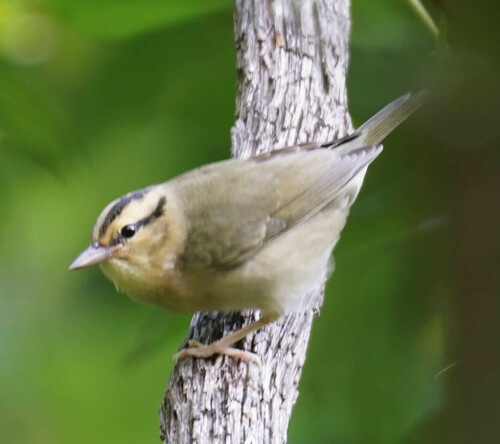 Paruline vermivore
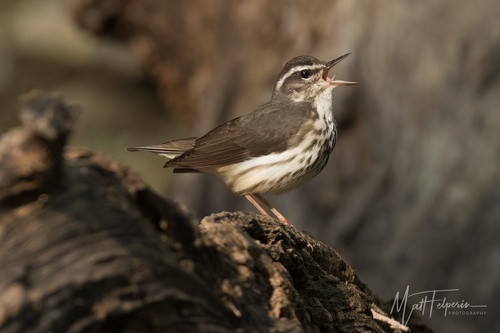 Paruline hochequeue
En bref
La Paruline vermivore et la Paruline hochequeue peuvent être distinguées par leur comportement et leurs préférences d'habitat. La Paruline vermivore est connue pour son plumage subtil et sa préférence pour la recherche de nourriture dans le sous-bois, tandis que la Paruline hochequeue est reconnue pour son chant fort et son comportement distinctif de balancement de la queue près des ruisseaux.
Conseils d’identification
- Recherchez le comportement de balancement de la queue de la Paruline hochequeue près des ruisseaux.
- Notez le plumage subtil et la recherche de nourriture dans le sous-bois de la Paruline vermivore.
- Écoutez le chant fort de la Paruline hochequeue dans les habitats en bord de ruisseau.
Plumage
La Paruline vermivore a un plumage plus uniforme et subtil avec des couleurs atténuées, tandis que la Paruline hochequeue a une apparence plus proche de celle des grives avec un supercilium distinct et des parties inférieures striées.
Comportement
La Paruline vermivore saute à travers le sous-bois et fouille dans les feuilles mortes à la recherche de nourriture. En revanche, la Paruline hochequeue est connue pour balancer constamment sa queue dans un mouvement d'équilibre en marchant sur le sol.
Habitat
La Paruline vermivore recherche de la nourriture dans le sous-bois des forêts, tandis que la Paruline hochequeue se trouve généralement près des ruisseaux forestiers et est souvent associée à l'eau.
Voix
La Paruline hochequeue a un chant fort, résonnant et clair qui porte au-dessus du bruit de l'eau en mouvement, tandis que les vocalisations de la Paruline vermivore ne sont pas mises en avant comme une caractéristique distinctive.
Paruline vermivore · Paruline hochequeue · Mes oiseaux difficiles