
Acadian Flycatcher vs Cedar Waxwing
Empidonax virescens contro Bombycilla cedrorum
Fai un quiz con Acadian Flycatcher e Cedar Waxwing
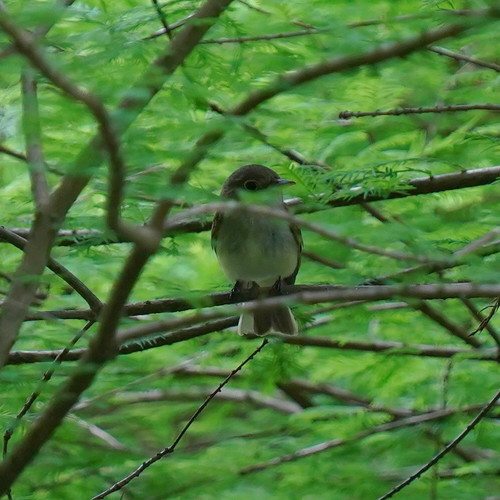 Acadian Flycatcher
 Cedar Waxwing
In breve
L'Acadian Flycatcher e il Cedar Waxwing sono facilmente distinguibili per la loro struttura e comportamento. L'Acadian Flycatcher è un piccolo uccello insettivoro con un becco sottile e una preferenza per gli habitat forestali, mentre il Cedar Waxwing è un uccello di dimensioni medie con una cresta distintiva e una dieta ricca di frutta, spesso trovato in boschi aperti e giardini.
Consigli di identificazione
Cerca il becco sottile dell'Acadian Flycatcher e la sua preferenza per le aree forestali. Al contrario, la cresta del Cedar Waxwing e il suo comportamento sociale e frugivoro sono identificatori chiave.
Taglia
Il Cedar Waxwing è più grande e robusto rispetto al più piccolo e delicato Acadian Flycatcher.
Piumaggio
Gli Acadian Flycatchers hanno un piumaggio più sobrio, verde oliva, mentre i Cedar Waxwings sono noti per il loro piumaggio elegante e setoso con una cresta, una maschera nera e punte rosse cerose sulle loro penne alari.
Comportamento
Gli Acadian Flycatchers si nutrono principalmente raccogliendo insetti dalla vegetazione, mentre i Cedar Waxwings si nutrono spesso di frutta e possono essere visti in stormi.
Habitat
Gli Acadian Flycatchers si trovano tipicamente in foreste decidue mature, spesso vicino all'acqua, mentre i Cedar Waxwings abitano boschi aperti, giardini e frutteti.
Acadian Flycatcher · Cedar Waxwing · I miei uccelli difficili