
Rondone maggiore vs Sordone
Tachymarptis melba contro Prunella collaris
Fai un quiz con Rondone maggiore e Sordone
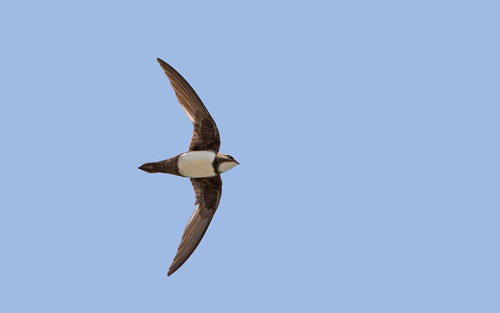 Rondone maggiore
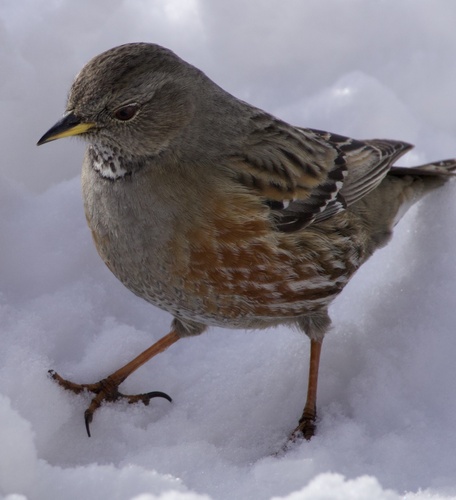 Sordone
In breve
Il Rondone maggiore e il Sordone sono facilmente distinguibili per la loro struttura e comportamento. Il rondone è un grande uccello veloce con lunghe ali appuntite e un corpo aerodinamico, mentre il sordone è un piccolo uccello terrestre con una forma più tipica di passeriforme. I loro habitat e comportamenti sono anche notevolmente diversi.
Consigli di identificazione
Look for flight behavior: I Rondoni maggiori sono costantemente in volo con movimenti rapidi e agili. Check the habitat: I Sordoni si trovano solitamente a terra o su posatoi bassi in aree rocciose. Observe the structure: I rondoni hanno lunghe ali appuntite e un corpo aerodinamico; i sordoni hanno una forma di uccello piccolo più tipica.
Taglia
Il Rondone maggiore è significativamente più grande con un'apertura alare che può superare i 50 cm, mentre il Sordone è più piccolo, delle dimensioni di un passero.
Piumaggio
Il Rondone maggiore ha un corpo marrone scuro con un ventre bianco, mentre il Sordone ha un motivo più complesso con piumaggio striato marrone e grigio.
Comportamento
I Rondoni maggiori sono quasi esclusivamente aerei, trascorrendo la maggior parte del loro tempo in volo. Al contrario, i Sordoni sono spesso visti cercare cibo a terra o appollaiati sulle rocce.
Habitat
I Rondoni maggiori si trovano tipicamente in cieli aperti sopra regioni montuose, mentre i Sordoni abitano aree alpine e subalpine rocciose, spesso ad alte altitudini.