
Rondone maggiore vs Finsch's Wheatear
Tachymarptis melba contro Oenanthe finschii
Fai un quiz con Rondone maggiore e Finsch's Wheatear
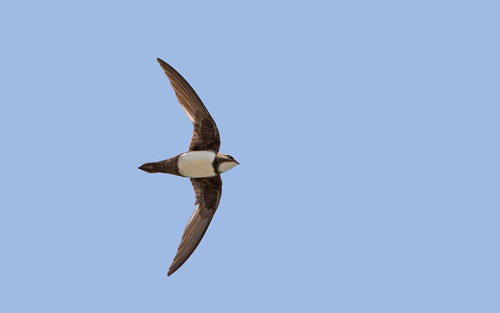 Rondone maggiore
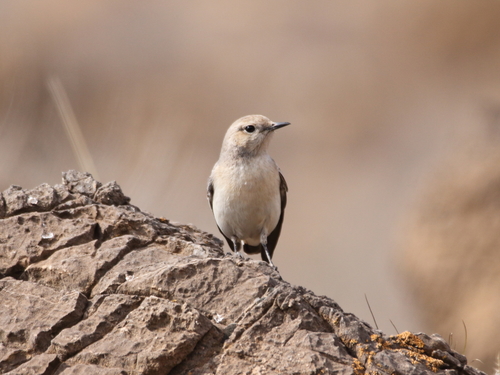 Finsch's Wheatear
In breve
Rondone maggiore e Finsch's Wheatear sono distinti sia nell'aspetto che nel comportamento. Il Rondone maggiore è un grande uccello veloce con un corpo aerodinamico e lunghe ali, mentre il Finsch's Wheatear è un uccello più piccolo, terrestre, con una postura più eretta. Queste differenze li rendono facili da distinguere sul campo.
Consigli di identificazione
Controlla il comportamento in volo: il Rondone maggiore è sempre in volo, mentre il Finsch's Wheatear è spesso a terra. Cerca i modelli del piumaggio: il Rondone maggiore ha un ventre bianco, in contrasto con il suo corpo scuro, mentre il Finsch's Wheatear ha una maschera nera distintiva e un sottocoda bianco. Considera l'habitat: il Rondone maggiore si vede nei cieli aperti, mentre il Finsch's Wheatear si trova in aree rocciose.
Taglia
Il Rondone maggiore è significativamente più grande con un'apertura alare che può raggiungere fino a 55 cm, mentre il Finsch's Wheatear è molto più piccolo, tipicamente intorno ai 15 cm di lunghezza.
Piumaggio
Il Rondone maggiore ha un corpo marrone scuro con un ventre bianco in contrasto, mentre il Finsch's Wheatear presenta un piumaggio bianco e nero con una maschera nera distintiva e un sottocoda bianco.
Comportamento
I Rondoni maggiori sono quasi sempre visti in volo, spesso in alto nel cielo, mentre i Finsch's Wheatears si trovano tipicamente a terra o appollaiati su rocce.
Habitat
I Rondoni maggiori si trovano di solito nei cieli aperti sopra regioni montuose, mentre i Finsch's Wheatears preferiscono paesaggi rocciosi e aridi.
Rondone maggiore · Finsch's Wheatear · I miei uccelli difficili