
Bushtit vs Ruby-crowned Kinglet
Psaltriparus minimus contro Corthylio calendula
Fai un quiz con Bushtit e Ruby-crowned Kinglet
 Bushtit
 Ruby-crowned Kinglet
In breve
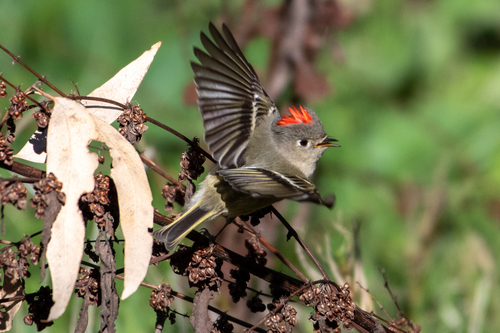
Il segno distintivo più affidabile per separare il Bushtit dal Ruby-crowned Kinglet è la presenza di barre alari bianche audaci e di un anello oculare bianco interrotto sul kinglet, che sono completamente assenti nel Bushtit. Il Bushtit è un uccello minuscolo, di un grigio-bruno semplice, con una lunga coda e senza barre alari o anello oculare, mentre il Ruby-crowned Kinglet è leggermente più grande, di colore verde oliva, e mostra due barre alari bianche distinte e un anello oculare interrotto; i maschi adulti possono mostrare una macchia di corona rossa nascosta. In volo o posato, il modello delle ali del kinglet e il comportamento più attivo e frenetico sono indizi forti. Entrambe le specie sono piccole, ma il Bushtit è ancora più piccolo e rotondo, spesso si muove in gruppi compatti e chiacchieroni, mentre i kinglet sono solitari o in gruppi misti e sono più irrequieti. Se vedi un uccello senza barre alari e con una coda lunga e sottile, è un Bushtit; se vedi barre alari e un anello oculare interrotto, è un Ruby-crowned Kinglet.
Consigli di identificazione
- Wingbars: Il Ruby-crowned Kinglet mostra sempre due barre alari bianche nette su ciascuna ala (inclusi immaturi e femmine); il Bushtit non mostra mai barre alari a nessuna età. Se vedi barre alari, è un kinglet.
- Eye-ring: Il kinglet ha un anello oculare bianco interrotto, che conferisce un aspetto occhialuto; il Bushtit non ha alcun anello oculare o segni facciali. Questo è visibile in tutte le livree.
- Crown Patch: I maschi adulti di kinglet a volte mostrano una macchia di corona rossa scarlatta, ma questa è spesso nascosta. Le femmine e gli immaturi non hanno la macchia, quindi l'assenza di rosso non esclude il kinglet.
- Overall Color: Il Bushtit è di un grigio-bruno semplice sopra e sotto, senza contrasto. Il kinglet è verde oliva sopra e oliva-buffo sotto, con più contrasto e un aspetto complessivamente più luminoso.
- Bill Shape: Il Bushtit ha un becco molto corto e tozzo; il becco del kinglet è leggermente più lungo e più appuntito, anche se rimane fine e piccolo.
- Tail: Il Bushtit ha una coda proporzionalmente lunga e sottile che è spesso sollevata o scossa; la coda del kinglet è più corta e meno prominente.
- Body Shape: Il Bushtit appare estremamente piccolo, rotondo e con una testa paffuta, con una testa grande rispetto al corpo e un aspetto compatto e soffice. Il kinglet è più allungato e meno rotondo.
- Behavior: I Bushtit si muovono in gruppi compatti e rumorosi, spesso appesi a testa in giù o muovendosi acrobaticamente tra i rami. I kinglet sono solitari o in gruppi sciolti, sempre scotendo le ali e muovendosi irrequieti.
- Flight Style: I kinglet hanno un volo rapido, scattoso ed erratico con battiti d'ali rapidi; i Bushtit volano debolmente e tendono a muoversi in brevi salti fluttuanti tra i cespugli.
- Habitat: I Bushtit preferiscono boschi aperti con sottobosco cespuglioso, specialmente a Ovest; i kinglet nidificano in foreste di conifere ma svernano in una varietà di habitat boschivi, a volte sovrapponendosi con il Bushtit.
- Flock Size: Se vedi un gruppo di 10+ uccelli minuscoli muoversi insieme, è probabile che sia un Bushtit. I kinglet raramente si trovano in gruppi così grandi e compatti.
- Vocalizations: Non diagnostico dalle note fornite, ma in pratica, il Bushtit emette richiami alti, sottili e sibilanti, mentre i richiami del kinglet sono più acuti, più variati e includono note rapide "jidit-jidit".
- Seasonal Context: Durante la stagione di nidificazione, i kinglet si trovano in foreste di conifere, spesso lontano dall'habitat del Bushtit. In inverno, entrambi possono trovarsi insieme in giardini e parchi a Ovest.
- Nest Structure: Non visibile sul campo, ma il Bushtit costruisce un nido distintivo appeso; il nido del kinglet è a forma di coppa, spesso nascosto tra le conifere.
- Pitfalls: I kinglet immaturi mostrano ancora barre alari e anello oculare; il Bushtit non lo fa mai. Non fare affidamento solo sulla presenza o assenza della macchia di corona rossa.
Taglia
Il Bushtit è tra i passeriformi nordamericani più piccoli, notevolmente più piccolo del Ruby-crowned Kinglet. Il Bushtit ha un becco molto corto e tozzo e una coda lunga e stretta che accentua il suo corpo piccolo e rotondo. Il Ruby-crowned Kinglet è ancora molto piccolo (9–11 cm di lunghezza, 5–10 g) ma è leggermente più grande e più allungato, con una coda proporzionalmente più corta e un becco leggermente più grande e appuntito. In un confronto diretto, il Bushtit appare più minuto, con una testa più piccola e ali più corte rispetto alla dimensione del corpo. [wikipedia][avonet]
Piumaggio
I Bushtit giovanili e adulti di tutte le età sono di un grigio-bruno semplice sopra e sotto, senza barre alari, senza anello oculare e senza segni facciali. La loro livrea è uniforme e priva di contrasto, facendoli apparire morbidi e privi di caratteristiche. Il Ruby-crowned Kinglet di tutte le età (inclusi immaturi e femmine) mostra due barre alari bianche nette su ciascuna ala, con la barra delle copritrici maggiore che è più ampia e separata da una banda scura. Il kinglet ha anche un anello oculare bianco interrotto, che conferisce un aspetto occhialuto. I maschi adulti possono mostrare una macchia di corona rossa scarlatta nascosta, ma questa è spesso nascosta; le femmine e gli immaturi non hanno la macchia di corona ma altrimenti sembrano identici. La livrea del kinglet è verde oliva sopra e oliva-buffo sotto, con un viso semplice a parte l'anello oculare. In volo, le barre alari del kinglet sono particolarmente evidenti, mentre il Bushtit rimane uniformemente semplice. [wikipedia]
Comportamento
I Bushtit sono altamente sociali, muovendosi in gruppi compatti e chiacchieroni di 10–40 uccelli, spesso visti mentre foraggiano acrobaticamente in cespugli e alberi, a volte appesi a testa in giù. Sono generalmente silenziosi tranne che per i loro richiami acuti e raramente scuotono le ali. I Ruby-crowned Kinglets sono più solitari o in gruppi misti sciolti, estremamente attivi e costantemente scuotono le ali mentre foraggiano. Il loro movimento è descritto come rapido, scattoso ed erratico, con frequenti brevi salti e esplosioni di battiti d'ali rapidi. I kinglet sono meno probabili da vedere in gruppi compatti e più probabili da vedere da soli o con pochi altri piccoli insetti. [wikipedia]
Habitat
I Bushtit si trovano tipicamente in boschi aperti misti, specialmente con querce e cespugli, ma si trovano anche in giardini e parchi nel ovest degli Stati Uniti e fino in America Centrale. Preferiscono aree con vegetazione densa e bassa. I Ruby-crowned Kinglets nidificano in foreste di abete-nero del nord e delle montagne del Nord America, ma sono migratori diffusi e svernano in una varietà di habitat boschivi, comprese foreste decidue e miste, parchi e giardini. In inverno, i kinglet sono più propensi a trovarsi in una gamma più ampia di habitat, inclusi quelli utilizzati dai Bushtit, ma i Bushtit sono generalmente assenti dalle foreste di conifere dove nidificano i kinglet. [wikipedia]