
Great Knot vs Short-billed Gull
Calidris tenuirostris contro Larus brachyrhynchus
Fai un quiz con Great Knot e Short-billed Gull
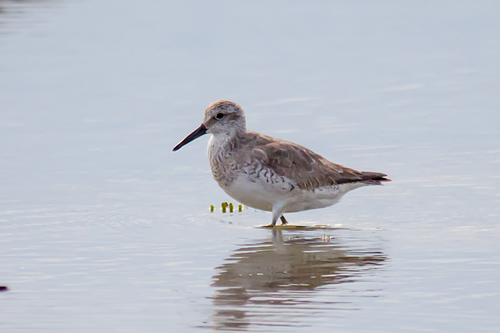 Great Knot
 Short-billed Gull
In breve
Il Great Knot e il Short-billed Gull si distinguono facilmente per le loro dimensioni e preferenze di habitat. Il Great Knot è un uccello costiero con un becco lungo e distintivo, mentre il Short-billed Gull è un gabbiano di piccole dimensioni con una struttura più compatta e si trova spesso in ambienti costieri e estuarini.
Consigli di identificazione
1. Bill Shape: Il Great Knot ha un becco lungo e sottile; il Short-billed Gull ha un becco più corto e spesso. 2. Habitat: Cerca i Great Knot nelle pianure fangose; i Short-billed Gull sono più probabili in aree costiere e estuarine. 3. Plumage: I Great Knot hanno un piumaggio maculato; i Short-billed Gull hanno un aspetto pulito e con testa bianca.
Taglia
Il Great Knot è più piccolo e più snello rispetto al Short-billed Gull, che è il più piccolo dei gabbiani 'con testa bianca' in Nord America.
Piumaggio
Il Great Knot ha un piumaggio più criptico e maculato tipico degli uccelli costieri, mentre il Short-billed Gull ha un aspetto più pulito e con testa bianca.
Habitat
I Great Knot si trovano tipicamente nelle pianure fangose e sulle spiagge sabbiose, mentre i Short-billed Gull frequentano le acque costiere, le lagune e gli estuari dei fiumi, spesso visti intorno a stagni di trattamento delle acque reflue e scarichi.