
Falaropo beccosottile vs Piro piro culbianco
Phalaropus lobatus contro Tringa ochropus
Fai un quiz con Falaropo beccosottile e Piro piro culbianco
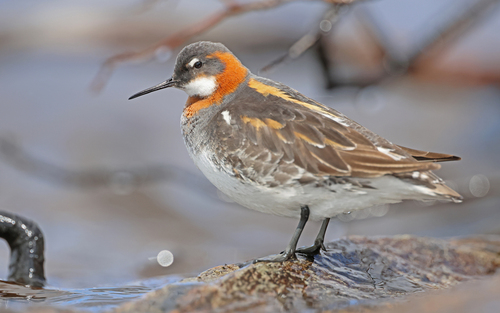 Falaropo beccosottile
 Piro piro culbianco
In breve
Il Falaropo beccosottile e il Piro piro culbianco differiscono significativamente nella struttura e nel comportamento. Il Falaropo beccosottile è un uccello piccolo e delicato con un becco fine, spesso visto girare sulla superficie dell'acqua, mentre il Piro piro culbianco è più grande con una struttura più robusta e tipicamente trovato in habitat di acqua dolce.
Consigli di identificazione
- Cerca il becco fine e il comportamento di girare sull'acqua per il Falaropo beccosottile.
- Nota la dimensione maggiore e la preferenza per habitat di acqua dolce per il Piro piro culbianco.
Taglia
Il Falaropo beccosottile è più piccolo e più delicato rispetto al più grande e robusto Piro piro culbianco.
Piumaggio
I Falaropi beccosottile hanno mantelli grigi e sorprendenti macchie nere sugli occhi, mentre i Piro piro culbianco non presentano queste caratteristiche e hanno un aspetto più tipico da piro piro.
Comportamento
I Falaropi beccosottile sono noti per il loro unico comportamento di girare sull'acqua per nutrirsi, mentre i Piro piro culbianco non mostrano questo comportamento.
Habitat
I Falaropi beccosottile si trovano spesso in fronti oceanografici e convergenze, mentre i Piro piro culbianco si trovano tipicamente in habitat di acqua dolce.
Falaropo beccosottile · Piro piro culbianco · I miei uccelli difficili