
Allodola golagialla vs Western Meadowlark
Eremophila alpestris contro Sturnella neglecta
Fai un quiz con Allodola golagialla e Western Meadowlark
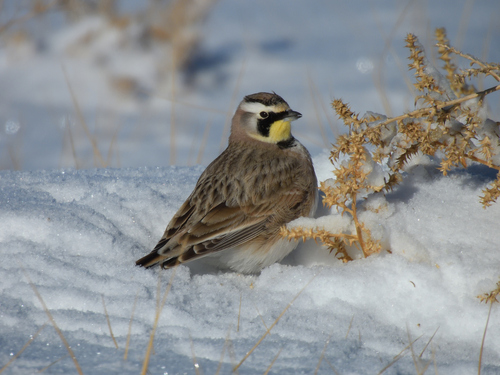 Allodola golagialla
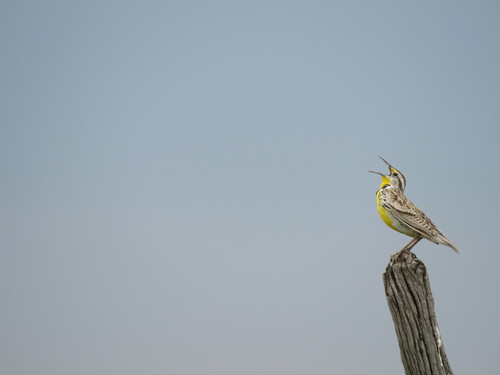 Western Meadowlark
In breve
L'Allodola golagialla e il Western Meadowlark sono distinti sia nell'aspetto che nell'habitat. L'Allodola golagialla è caratterizzata da segni facciali distintivi e ciuffi di piume simili a corna, mentre il Western Meadowlark è noto per il suo vibrante petto giallo con un bavero nero a forma di V. I loro habitat raramente si sovrappongono, con l'Allodola golagialla che predilige la tundra aperta e il Western Meadowlark che abita le praterie.
Consigli di identificazione
Cerca i segni facciali neri dell'Allodola golagialla e i ciuffi di piume sulla testa. Il Western Meadowlark è meglio identificato dal suo petto giallo con un bavero nero a forma di V. I loro habitat sono anche un indicatore chiave: Allodole golagialla nella tundra, Western Meadowlark nelle praterie.
Piumaggio
L'Allodola golagialla ha un volto pallido con una maschera nera sorprendente e 'corna' di piume sulla testa, mentre il Western Meadowlark presenta un petto giallo brillante con un audace bavero nero a forma di V e margini bianchi della coda.
Habitat
L'Allodola golagialla si trova nella tundra aperta e nelle aree costiere, mentre il Western Meadowlark è comune nelle praterie e nei campi aperti.
Allodola golagialla · Western Meadowlark · I miei uccelli difficili