
Wandering Tattler vs Western Bluebird
Tringa incana contro Sialia mexicana
Fai un quiz con Wandering Tattler e Western Bluebird
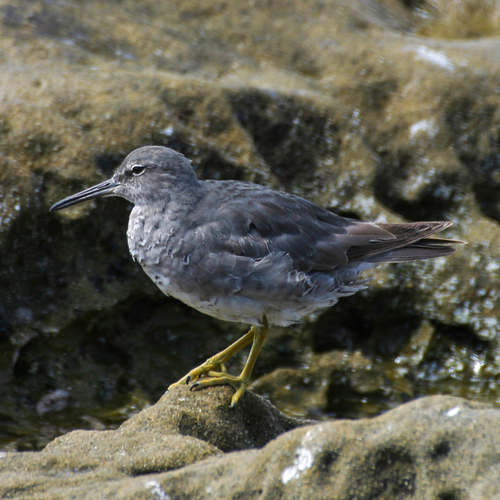 Wandering Tattler
 Western Bluebird
In breve
Il Wandering Tattler e il Western Bluebird sono facilmente distinguibili per habitat e comportamento. Il Tattler è un uccello di riva spesso trovato su coste rocciose, mentre il Bluebird è un passeriforme trovato in boschi aperti e campi. Il loro piumaggio e la loro struttura sono anche notevolmente diversi, con il Tattler che ha un aspetto più criptico e grigio e il Bluebird che mostra colori blu brillanti e ruggine.
Consigli di identificazione
- Look for the habitat: Tattlers on rocky coasts, Bluebirds in open woodlands.
- Plumage: Tattlers are gray and cryptic; Bluebirds are blue and rust-colored.
- Behavior: Tattlers are solitary; Bluebirds may have helpers at the nest.
Piumaggio
I Wandering Tattlers sono generalmente grigi, fondendosi con ambienti costieri rocciosi, mentre i Western Bluebirds hanno un blu brillante sulle teste, ali e code, con petti color ruggine. Le femmine di Bluebird sono più opache con più marrone e grigio.
Comportamento
I Wandering Tattlers sono solitari e spesso visti cercare cibo su substrati rocciosi, mentre i Western Bluebirds sono monogami socialmente e possono avere aiutanti al nido, spesso visti a cercare insetti e bacche.
Habitat
I Wandering Tattlers si trovano tipicamente su coste rocciose e barre di ghiaia fluviali, mentre i Western Bluebirds abitano boschi aperti e campi, in particolare dove le coltivazioni di bacche sono abbondanti.
Wandering Tattler · Western Bluebird · I miei uccelli difficili