
White-browed/Burchell's Coucal vs Black-crowned Tchagra
Centropus superciliosus contro Tchagra senegalus
Fai un quiz con White-browed/Burchell's Coucal e Black-crowned Tchagra
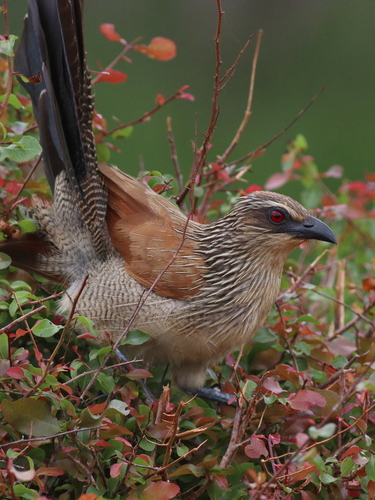 White-browed/Burchell's Coucal
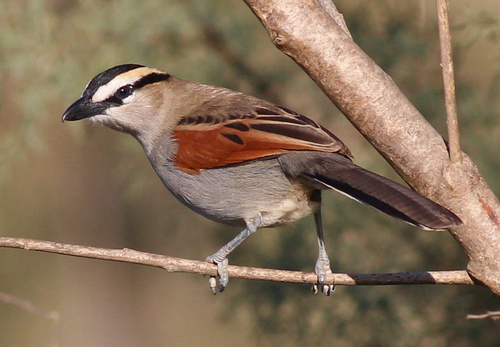 Black-crowned Tchagra
In breve
Il segno distintivo più affidabile è la dimensione e la struttura: il White-browed/Burchell's Coucal è molto più grande e massiccio del Black-crowned Tchagra, con un corpo più pesante e una coda più lunga. I coucals juvenili mostrano striature rugginose sulla corona e parti superiori barrate, mentre i tchagras giovani hanno un cappello marrone e un becco giallo pallido. Entrambe le specie hanno un supercilio bianco, ma quello del coucal è più ampio e delimitato da una corona nerognola, mentre quello del tchagra è bordato da una corona nera e strisce oculari nere. In volo o posati, nota le parti inferiori bianco-cremose e le ali castagne del coucal rispetto alle parti inferiori grigie pallide e alle ali castagne del tchagra. È possibile una sovrapposizione degli habitat, ma il coucal preferisce una copertura più densa. Usa dimensione, struttura e controlli dettagliati del piumaggio per una separazione sicura.
Consigli di identificazione
- Dimensione e Struttura: Il White-browed/Burchell's Coucal è molto più grande e pesante del Black-crowned Tchagra. Se l'uccello appare delle dimensioni di un corvo o ha una coda molto lunga e pesante, sospetta il coucal.
- Lunghezza e Forma della Coda: La coda del coucal è lunga, nera con una lucentezza verde e una punta bianca; la coda del tchagra è più corta, nera e anch'essa punta bianca ma priva della lucentezza verde.
- Supercilio e Corona: Entrambi hanno un supercilio bianco, ma quello del coucal è ampio e delimitato da una corona nerognola e da una nuca, mentre quello del tchagra è bordato sopra da una corona nera e sotto da una striscia oculare nera, dando un modello facciale più nettamente definito.
- Piumaggio Giovanile: Il coucal giovanile ha striature rugginose sulla corona e parti superiori barrate; il tchagra giovanile ha un cappello marrone semplice e un becco giallo pallido. Se vedi una corona striata e barrata sopra, è un giovane coucal.
- Colore del Becco: Entrambi gli adulti hanno becchi neri, ma solo il tchagra giovanile ha un becco giallo pallido. Questo è un controllo utile per i giovani uccelli.
- Colore delle Parti Inferiori: Le parti inferiori del coucal sono bianco-cremose; quelle del tchagra sono grigie pallide. In buona luce, questa può essere una distinzione sottile ma utile.
- Parti Superiori e Ali: Il coucal ha un dorso rugginoso-marrone e ali castagne, con un sottocoda nerognolo; il tchagra ha parti superiori marrone pallido e ali castagne, ma nel complesso appare più chiaro sopra.
- Colore degli Occhi: L'adulto coucal ha occhi rossi; il colore degli occhi del tchagra varia a seconda della sottospecie ed è meno distintivo.
- Comportamento: Il coucal è solitamente basso in copertura densa, muovendosi lentamente e spesso nascosto; il tchagra può posarsi nei cespugli, rispondendo a volte ai richiami, ma è meno appariscente dei veri laniidi.
- Stile di Volo: Il coucal vola con battiti d'ala pesanti e laboriosi e una lunga coda che si trascina; il volo del tchagra è più diretto e meno pesante.
- Habitat: La copertura densa e ingarbugliata indica il coucal; aree più aperte di cespugli, boschi o terreni coltivati suggeriscono il tchagra.
- Voce: Se senti un fischio discendente 'chee-chee chee cheroo cheroo,' è il tchagra. Le chiamate del coucal non sono descritte qui.
- Sessi: Entrambe le specie sono simili nel piumaggio tra i sessi, quindi non fare affidamento sul sesso per la separazione.
- Stagione: Non sono state notate forti differenze di piumaggio stagionali per nessuna delle due specie; i segni legati all'età sono più importanti.
- Trappola Comune: Il supercilio bianco condiviso e l'ala castagna possono causare confusione, specialmente in visioni rapide, ma dimensione, struttura e modello della corona sono decisivi se controllati con attenzione.
Taglia
Il White-browed/Burchell's Coucal è significativamente più grande e pesante (massa corporea ~170g [wikidata]) e misura 36–42 cm di lunghezza, rendendolo un uccello robusto e dalla lunga coda. Il Black-crowned Tchagra è molto più piccolo e snello, misurando 19–22 cm, con una struttura più leggera e una coda più corta. Anche a distanza, la massa e la lunghezza del coucal sono distintive, specialmente quando è posato o si muove attraverso la vegetazione. Il tchagra è più delle dimensioni di un falco passeriforme e appare generalmente più delicato.
Piumaggio
- Giovanili: Il giovanile White-browed/Burchell's Coucal mostra striature rugginose sulla corona, un supercilio buffo tenue, parti superiori barrate e parti inferiori più scure. Il giovanile Black-crowned Tchagra ha un cappello marrone (non striato), un becco giallo pallido e un modello altrimenti simile a quello degli adulti.
- Adulti: Entrambi hanno un supercilio bianco, ma quello del coucal è più ampio e delimitato da una corona nerognola e da una nuca; il supercilio del tchagra è bordato sopra da una corona nera e sotto da una striscia oculare nera. Le parti superiori del coucal sono rugginoso-marroni con ali castagne, sottocoda nerognolo e una lunga coda nera con lucentezza verde e punta bianca. Le parti superiori del tchagra sono marrone pallido, le ali sono castagne e la coda è nera con punta bianca. Le parti inferiori del coucal sono bianco-cremose; quelle del tchagra sono grigie pallide. Il colore degli occhi è rosso nell'adulto coucal, variabile nelle sottospecie di tchagra. Il becco è nero in entrambi gli adulti, ma solo i giovanili di tchagra hanno un becco giallo pallido.
Comportamento
Il White-browed/Burchell's Coucal è riservato, muovendosi attraverso la fitta vegetazione e spesso nascondendosi in basso. È meno probabile che si posi in modo appariscente. Il Black-crowned Tchagra, pur preferendo anche la copertura, caccia da posatoi nei cespugli ed è più probabile essere visto in posizione elevata, anche se meno apertamente rispetto ai veri laniidi. Il tchagra risponde ai richiami imitati e può eseguire un volo di esibizione. Il coucal è più probabile essere visto arrampicarsi attraverso grovigli o volare basso tra la copertura.
Habitat
Entrambe le specie possono verificarsi in aree con cespugli e macchia, ma il White-browed/Burchell's Coucal è più strettamente legato a una fitta vegetazione e a cespugli, inclusi i cespugli costieri. Il Black-crowned Tchagra è più adattabile, trovato in cespugli, boschi aperti, semi-deserto e aree coltivate, spesso in copertura meno densa rispetto al coucal. Se l'habitat è molto denso e ingarbugliato, è più probabile trovare il coucal; in cespugli o boschi più aperti, il tchagra è favorito.
Voce
Il Black-crowned Tchagra ha un canto distintivo discendente fischiante, spesso descritto come 'chee-chee chee cheroo cheroo,' ed è reattivo alla riproduzione o all'imitazione. Le vocalizzazioni del White-browed/Burchell's Coucal non sono descritte nelle note fornite, quindi la voce è diagnostica solo se si sente il canto del tchagra.
White-browed/Burchell's Coucal · Black-crowned Tchagra · I miei uccelli difficili