
Wing-barred Piprites vs White-throated Spadebill
Piprites chloris contro Platyrinchus mystaceus
Fai un quiz con Wing-barred Piprites e White-throated Spadebill
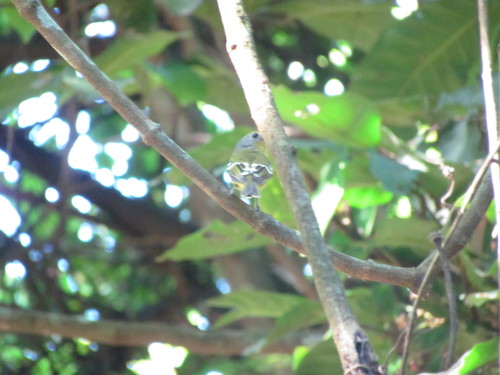 Wing-barred Piprites
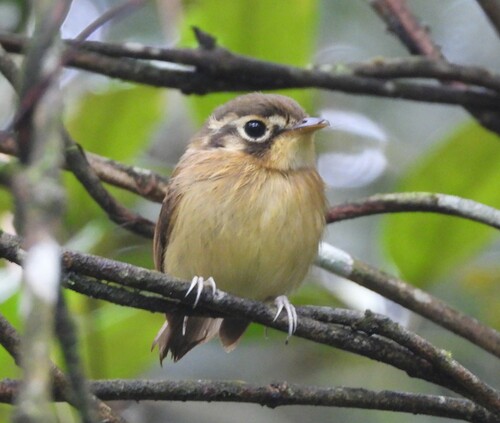 White-throated Spadebill
In breve
Il Wing-barred Piprites e il White-throated Spadebill possono essere distinti dalla loro struttura e dalle preferenze di habitat. Il Wing-barred Piprites è più rotondo con una coda e un becco corti, abitante della chioma delle foreste umide, mentre il White-throated Spadebill si trova nel sottobosco e ha una forma più tipica da cattura insetti.
Consigli di identificazione
Cerca la forma rotonda e la coda e il becco corti del Wing-barred Piprites nella chioma. Per il White-throated Spadebill, cerca nel sottobosco e ascolta le sue vocalizzazioni.
Piumaggio
Il Wing-barred Piprites ha un modello di piumaggio che può assomigliare a un tirannide o a un vireo, mentre il piumaggio del White-throated Spadebill non è dettagliato qui, ma è generalmente noto per la sua gola bianca.
Habitat
Il Wing-barred Piprites abita la chioma e i bordi delle foreste primarie umide e delle foreste secondarie più vecchie. Al contrario, il White-throated Spadebill si trova nel sottobosco delle foreste umide di pianura e montane, così come in boschi di seconda crescita alti e gallerie.
Voce
La vocalizzazione del White-throated Spadebill è spesso necessaria per localizzarlo, suggerendo che potrebbe essere più vocale o avere un richiamo distintivo rispetto al Wing-barred Piprites.
Wing-barred Piprites · White-throated Spadebill · I miei uccelli difficili