
Piro piro boschereccio vs Wood Stork
Tringa glareola contro Mycteria americana
Fai un quiz con Piro piro boschereccio e Wood Stork
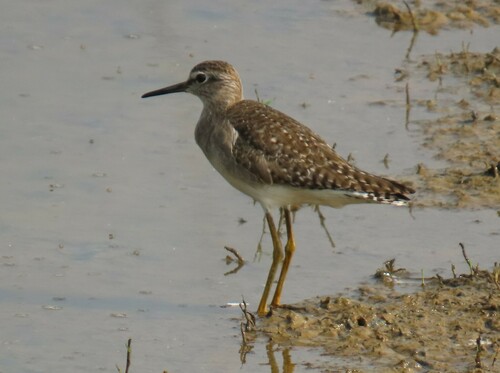 Piro piro boschereccio
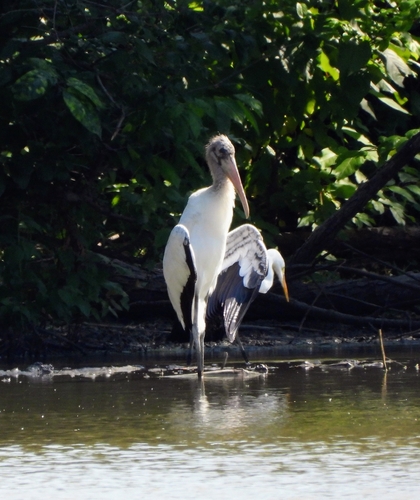 Wood Stork
In breve
Il Piro piro boschereccio e il Wood Stork si distinguono facilmente per dimensioni e struttura. Il Piro piro boschereccio è un wader piccolo e snello con un becco delicato, mentre il Wood Stork è un grande uccello robusto con un becco massiccio e una testa nuda distintiva.
Consigli di identificazione
Look for the size difference: Wood Stork è molto più grande. Check the bill structure: Piro piro boschereccio ha un becco snello, mentre Wood Stork ha un becco massiccio e spesso. Note the head appearance: Wood Stork ha una testa nuda e squamosa, a differenza della testa piumata del Piro piro boschereccio.
Taglia
Il Piro piro boschereccio è molto più piccolo del Wood Stork, somigliando a un tipico piro piro in dimensioni, mentre il Wood Stork è un grande uccello, simile in dimensioni ad altri cicogne.
Piumaggio
I Piro piro boscherecci hanno un piumaggio più uniforme marrone e bianco con un supercilium distintivo, mentre i Wood Stork hanno piume scure iridescenti sulle ali e sulla coda e una testa nuda e squamosa.
Comportamento
I Piro piro boscherecci sono alimentatori visivi, spesso visti cercare cibo in acque poco profonde. Al contrario, i Wood Stork sono alimentatori tattili, catturando cibo per tatto nelle zone umide.
Habitat
I Piro piro boscherecci si trovano tipicamente in zone umide d'acqua dolce e paludi, mentre i Wood Stork abitano zone umide più grandi con prede concentrate, spesso in regioni più tropicali.
Piro piro boschereccio · Wood Stork · I miei uccelli difficili