Birdr

Chocofluittiran vs Witstuitfluittiran

Sirystes albogriseus versus Sirystes albocinereus

Speel een quiz met Chocofluittiran en Witstuitfluittiran
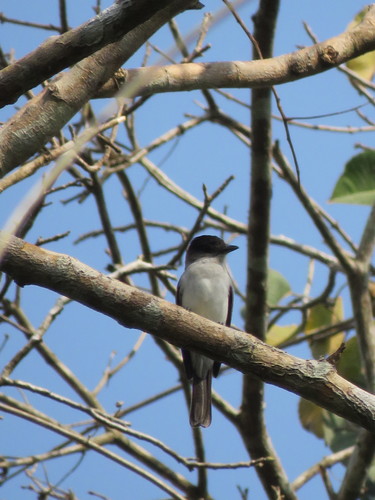
Chocofluittiran (Sirystes albogriseus) Chocofluittiran
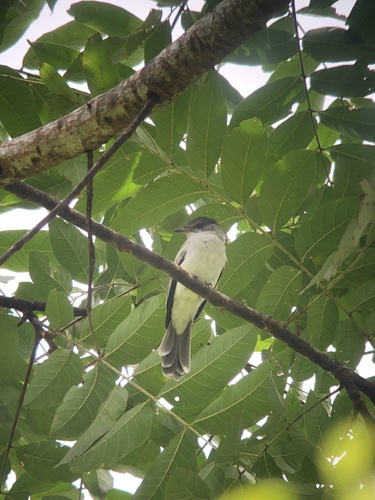
Witstuitfluittiran (Sirystes albocinereus) Witstuitfluittiran

Media

Laden…

Kort gezegd

De Chocofluittiran en Witstuitfluittiran zijn vergelijkbaar in structuur, beide hebben een slanke, licht gekroonde uitstraling die typisch is voor vliegenvangers. Het meest betrouwbare veldkenmerk is de prominentie van de witte vleugelrand bij de Chocofluittiran, terwijl de Witstuitfluittiran een meer opvallende lichte stuit heeft.

Herkenningstips

Zoek naar de prominente witte vleugelrand om de Chocofluittiran te identificeren, vooral in zijn verspreidingsgebied van oostelijk Panama tot noordwest Ecuador. In tegenstelling tot de lichte stuit, die meer opvalt bij de Witstuitfluittiran, die voorkomt in het westelijke Amazonebekken.

Verenkleed

Beide soorten zijn boven grijs met een zwarte kroon, vleugels en staart, en hebben witte randen op de vleugelbedekkingen en secundair. De Chocofluittiran heeft bijzonder prominente witte vleugelranden, terwijl de Witstuitfluittiran bekend staat om zijn bijzonder prominente lichte stuit.

Gedrag

Beide soorten delen de gewoonte om in boomholtes te nestelen.

Stuur een betere beschrijving

Gebruik dezelfde onderdelen als de vergelijking. Je tekst staat meteen live.

The Choco Sirystes and White-rumped Sirystes are similar in structure, both having a slender, slightly crested appearance typical of flycatchers. The most reliable field mark is the prominence of the white wing edging in the Choco Sirystes, while the White-rumped Sirystes has a more noticeable pale rump.

Look for the prominent white wing edging to identify the Choco Sirystes, especially in its range from eastern Panama to northwestern Ecuador. In contrast, the pale rump is more noticeable in the White-rumped Sirystes, which is found in the western Amazon Basin.

Both species are gray above with a black crown, wings, and tail, and have white edging to the wing coverts and secondaries. The Choco Sirystes features particularly prominent white wing edging, whereas the White-rumped Sirystes is noted for its especially prominent pale rump.

Both species share the habit of nesting in tree cavities.

Wijzigingen weggooien?

Je hebt niet-opgeslagen wijzigingen. Als je nu weggaat, gaan die verloren.

Chocofluittiran · Witstuitfluittiran · Mijn lastige vogels