
Kuiforopendola vs Zwarte buidelspreeuw
Psarocolius decumanus versus Cacicus solitarius
Speel een quiz met Kuiforopendola en Zwarte buidelspreeuw
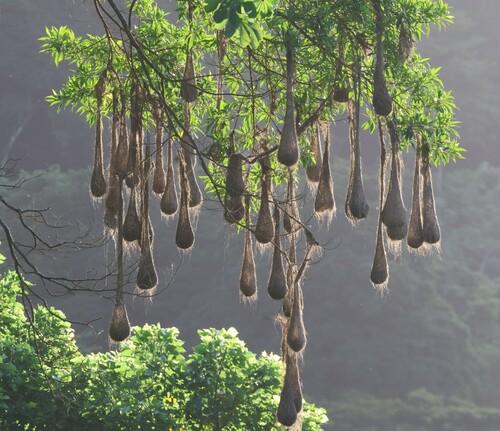 Kuiforopendola
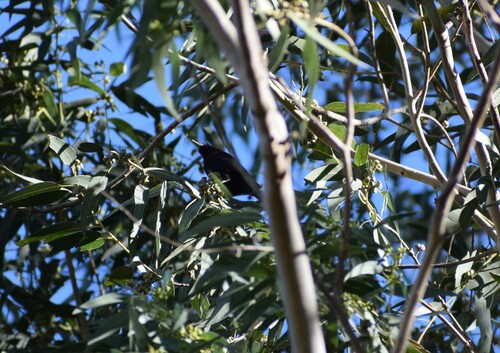 Zwarte buidelspreeuw
Kort gezegd
De Kuiforopendola wordt gekenmerkt door zijn grotendeels zwarte verenkleed met een kastanjebruine staart en gele staart, terwijl de Zwarte buidelspreeuw volledig zwart is met een bijna witte snavel. De Kuiforopendola heeft blauwe irissen, in contrast met de donkere ogen van de Zwarte buidelspreeuw.
Herkenningstips
- Let op de gele staart en kastanjebruine staart van de Kuiforopendola.
- Merk het volledig zwarte verenkleed en de bijna witte snavel van de Zwarte buidelspreeuw op.
- Controleer de oogkleur: blauw bij Kuiforopendola, donker bij Zwarte buidelspreeuw.
- Observeer het gedrag: Kuiforopendola in kolonies, Zwarte buidelspreeuw alleen of in paren.
Verenkleed
De Kuiforopendola lijkt grotendeels zwart met een kastanjebruine staart en gele staart, en heeft blauwe irissen. De Zwarte buidelspreeuw is volledig zwart met een bijna witte snavel en donkere ogen.
Gedrag
De Kuiforopendola wordt vaak in kolonies aangetroffen, terwijl de Zwarte buidelspreeuw meestal alleen of in paren wordt gezien.
Habitat
De Kuiforopendola wordt gevonden onder de 1000 m maar kan tot 2600 m in Colombia komen, vaak nabij kolonies van Grote koevogels. De Zwarte buidelspreeuw bewoont moerassige bossen of bossen dicht bij water, vaak in de ondergroei tot het midden van het bos.
Geluid
De Zwarte buidelspreeuw heeft een breed scala aan vocalisaties, waaronder langzame, methodische geluiden, en staat bekend om het imiteren van andere soorten. De vocalisaties van de Kuiforopendola zijn niet gedetailleerd in de notities.