Birdr

Struikfeetiran vs Grijze phoebe

Empidonax oberholseri versus Sayornis phoebe

Speel een quiz met Struikfeetiran en Grijze phoebe
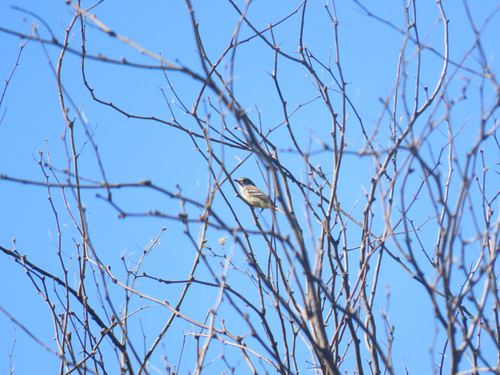
Struikfeetiran (Empidonax oberholseri) Struikfeetiran
Grijze phoebe (Sayornis phoebe) Grijze phoebe

Media

Laden…

Kort gezegd

De Struikfeetiran en Grijze phoebe kunnen worden onderscheiden op basis van hun structuur en gedrag. De Struikfeetiran heeft een compacter postuur dat typisch is voor Empidonax-voetangels, terwijl de Grijze phoebe groter en robuuster is. Het observeren van hun staartbewegingen en voorkeur voor habitats kan ook helpen bij de identificatie.

Herkenningstips

1. Structuur: Let op het robuustere postuur van de Grijze phoebe in vergelijking met de compacte Struikfeetiran. 2. Staartbeweging: Let op de kenmerkende staartbeweging van de Grijze phoebe. 3. Habitat: Overweeg de geografische locatie en habitatvoorkeur; Struikfeetiranen zijn waarschijnlijker in montane bossen van het westen, terwijl Grijze phoebes worden aangetroffen in open bossen van het oosten.

Grootte

De Grijze phoebe is groter en robuuster in vergelijking met de kleinere, compactere Struikfeetiran.

Gedrag

De Grijze phoebe pompt vaak zijn staart naar beneden, een gedrag dat niet typisch is voor de Struikfeetiran.

Habitat

Struikfeetiranen worden typisch aangetroffen in het westen van Noord-Amerika, vaak in montane bossen, terwijl Grijze phoebes de voorkeur geven aan open bossen en gebruikelijker zijn in oostelijke regio's.

Stuur een betere beschrijving

Gebruik dezelfde onderdelen als de vergelijking. Je tekst staat meteen live.

The Dusky Flycatcher and Eastern Phoebe can be distinguished by their structure and behavior. The Dusky Flycatcher has a more compact build typical of Empidonax flycatchers, while the Eastern Phoebe is larger and more robust. Observing their tail movements and preferred habitats can also aid in identification.

1. Structure: Look for the more robust build of the Eastern Phoebe compared to the compact Dusky Flycatcher. 2. Tail Movement: Note the Eastern Phoebe's distinctive tail pumping. 3. Habitat: Consider the geographical location and habitat preference; Dusky Flycatchers are more likely in montane forests of the west, while Eastern Phoebes are found in open woodlands of the east.

The Eastern Phoebe is larger and more robust compared to the smaller, more compact Dusky Flycatcher.

The Eastern Phoebe frequently pumps its tail downward, a behavior not typical of the Dusky Flycatcher.

Dusky Flycatchers are typically found in western North America, often in montane forests, while Eastern Phoebes prefer open woodlands and are more common in eastern regions.

Wijzigingen weggooien?

Je hebt niet-opgeslagen wijzigingen. Als je nu weggaat, gaan die verloren.

Struikfeetiran · Grijze phoebe · Mijn lastige vogels