Birdr

Bonte baardkoekoek vs Kleine trappist

Notharchus tectus versus Micromonacha lanceolata

Speel een quiz met Bonte baardkoekoek en Kleine trappist
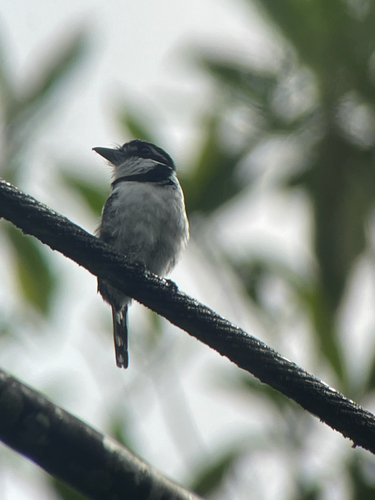
Bonte baardkoekoek (Notharchus tectus) Bonte baardkoekoek
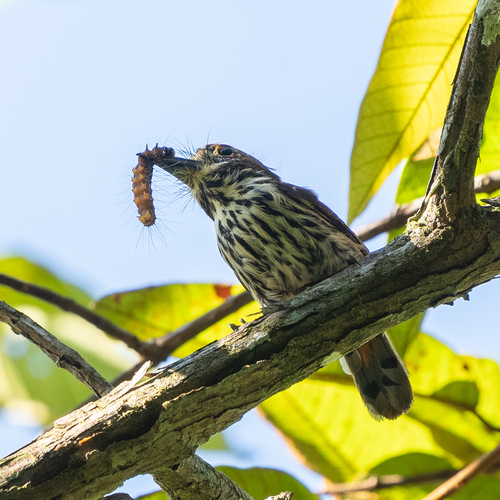
Kleine trappist (Micromonacha lanceolata) Kleine trappist

Media

Laden…

Kort gezegd

De Bonte baardkoekoek en Kleine trappist kunnen worden onderscheiden op basis van hun verenkleed en habitatvoorkeuren. De Bonte baardkoekoek heeft een kenmerkende smalle witte supercilium en een smallere borstband, terwijl de Kleine trappist deze kenmerken mist. Beide soorten bewonen laaglandbossen, maar de Bonte baardkoekoek is veelzijdiger in zijn habitatkeuzes.

Herkenningstips

Let op de smalle witte supercilium en borstband van de Bonte baardkoekoek. Controleer het habitat: de Bonte baardkoekoek is waarschijnlijker te zien in diverse bosrijke omgevingen.

Verenkleed

De Bonte baardkoekoek heeft een smalle witte supercilium en een smallere borstband, met wit op de schouderveren. De Kleine trappist heeft deze specifieke markeringen niet.

Habitat

De Bonte baardkoekoek wordt aangetroffen in een verscheidenheid aan bosrijke habitats, waaronder tropische loofbossen, hoge tweede groei, open plekken, plantages en mangroven. De specifieke habitatvoorkeuren van de Kleine trappist worden hier niet gedetailleerd, maar het is ook een laaglandsoort.

Stuur een betere beschrijving

Gebruik dezelfde onderdelen als de vergelijking. Je tekst staat meteen live.

The Pied Puffbird and Lanceolated Monklet can be distinguished by their plumage and habitat preferences. The Pied Puffbird has a distinctive narrow white supercilium and a narrower breast-band, while the Lanceolated Monklet lacks these features. Both species inhabit lowland forests, but the Pied Puffbird is more versatile in its habitat choices.

Look for the narrow white supercilium and breast-band on the Pied Puffbird. Check the habitat: the Pied Puffbird is more likely to be seen in diverse wooded environments.

The Pied Puffbird features a narrow white supercilium and a narrower breast-band, with white on the scapulars. The Lanceolated Monklet does not have these specific markings.

The Pied Puffbird is found in a variety of wooded habitats, including tropical evergreen forests, tall second growth, clearings, plantations, and mangroves. The Lanceolated Monklet's specific habitat preferences are not detailed here, but it is also a lowland species.

Wijzigingen weggooien?

Je hebt niet-opgeslagen wijzigingen. Als je nu weggaat, gaan die verloren.

Bonte baardkoekoek · Kleine trappist · Mijn lastige vogels