
Senegalese trap vs Blauwe trap
Eupodotis senegalensis versus Eupodotis caerulescens
Speel een quiz met Senegalese trap en Blauwe trap
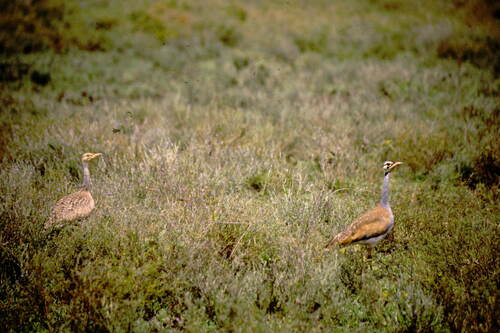 Senegalese trap
 Blauwe trap
Kort gezegd
De Senegalese trap en Blauwe trap kunnen worden onderscheiden op basis van hun verenkleed en vocalisaties. De Senegalese trap heeft een opvallend zwart-wit gezicht, terwijl de stem van de Blauwe trap onregelmatig is en tot 3 km afstand te horen kan zijn.
Herkenningstips
- Zoek naar het zwart-witte gezicht van de Senegalese trap.
- Luister naar de onregelmatige en luide roep van de Blauwe trap, hoorbaar over lange afstanden.
Verenkleed
De Senegalese trap heeft een opvallend zwart-wit gezicht, terwijl de Blauwe trap bekend staat om zijn doffere uiterlijk met tawny oorbedekking.
Gedrag
Senegalese trappen komen vaak voor in paren of kleine familiegroepen, met coöperatief broedgedrag.
Geluid
De Blauwe trap heeft een relatief onregelmatige en discordante roep die tot 3 km afstand te horen kan zijn.