
codornizão-africano vs three-banded courser
Crecopsis egregia versus Rhinoptilus cinctus
Jogue um quiz com codornizão-africano e three-banded courser
 codornizão-africano
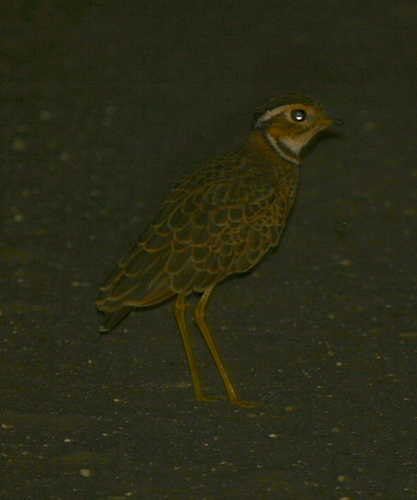 three-banded courser
Em resumo
A codornizão-africano é uma ave terrestre frequentemente encontrada em campos, enquanto o three-banded courser é uma ave noturna com marcas faciais ousadas e partes inferiores intrincadas, tipicamente encontrada em regiões abertas e áridas. A codornizão é mais provável de ser vista durante o dia, enquanto o courser é principalmente ativo à noite.
Dicas de identificação
Procure pelas marcas faciais ousadas e partes inferiores intrincadas do three-banded courser, especialmente em habitats abertos e áridos à noite. Durante o dia em campos, a codornizão-africano é mais provável de ser vista.
Plumagem
A codornizão-africano não possui as marcas faciais ousadas e partes inferiores intrincadas vistas no three-banded courser. A plumagem do courser ajuda-o a se misturar ao seu ambiente árido, apesar de seus padrões marcantes.
Comportamento
A codornizão-africano é mais provável de ser observada durante o dia, enquanto o three-banded courser é principalmente noturno, tornando mais desafiador observá-lo.
Habitat
Codornizões-africanos são tipicamente encontrados em campos, enquanto three-banded coursers habitam regiões abertas e áridas.
codornizão-africano · three-banded courser · Minhas aves difíceis