
galeirão-americano vs frango-d’água-africano
Fulica americana versus Porphyrio alleni
Jogue um quiz com galeirão-americano e frango-d’água-africano
 galeirão-americano
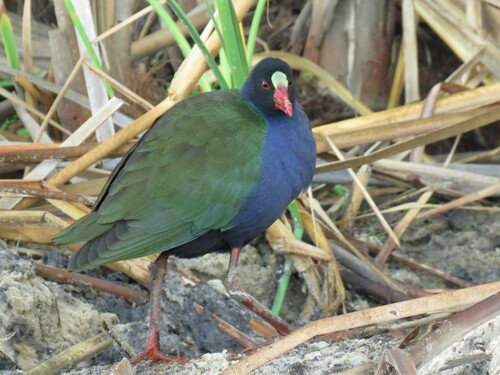 frango-d’água-africano
Em resumo
O galeirão-americano e o frango-d’água-africano podem ser distinguidos principalmente pelo seu bico e escudo frontal: o galeirão-americano tem um bico e escudo frontal brancos distintos, enquanto o frango-d’água-africano apresenta um bico mais colorido. O galeirão é mais aquático, frequentemente encontrado em grandes grupos em águas abertas, enquanto o frango-d’água é menos aquático e mais propenso a ser visto em vegetação densa.
Dicas de identificação
- Procure pelo bico e escudo frontal brancos do galeirão-americano.
- Observe o habitat: os galeirões estão frequentemente em águas abertas, enquanto os frangos-d’água preferem vegetação densa.
- Note o comportamento: os galeirões nadam e mergulham frequentemente, os frangos-d’água são menos aquáticos.
Plumagem
O galeirão-americano é cinza-escuro com uma cabeça e pescoço pretos, enquanto o frango-d’água-africano tem uma aparência mais colorida, frequentemente com um brilho esverdeado ou azulado.
Comportamento
Os galeirões-americanos são nadadores e mergulhadores habilidosos, frequentemente vistos em grandes grupos em águas abertas. Em contraste, o frango-d’água-africano é menos aquático e mais propenso a ser visto forrageando em vegetação densa.
Habitat
Os galeirões-americanos são encontrados em uma ampla variedade de áreas úmidas, incluindo lagos de água doce, lagoas e pântanos, e podem formar grandes grupos em águas abertas. O frango-d’água-africano prefere vegetação densa e é menos propenso a ser visto em águas abertas.
Voz
O galeirão-americano é conhecido por seus gritos altos, grunhidos e coaxos, frequentemente ouvidos de dentro de densas formações de vegetação aquática emergente. Não há informações específicas sobre vocalização fornecidas para o frango-d’água-africano.
galeirão-americano · frango-d’água-africano · Minhas aves difíceis