
talha-mar vs trinta-réis-grande
Rynchops niger versus Phaetusa simplex
Jogue um quiz com talha-mar e trinta-réis-grande
 talha-mar
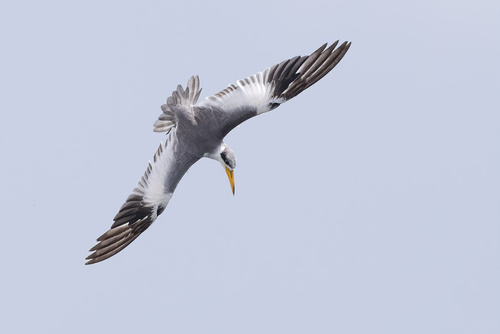 trinta-réis-grande
Em resumo
A talha-mar e o trinta-réis-grande podem ser distinguidos principalmente por seus bicos e comportamento alimentar. A talha-mar tem um bico único, comprimido lateralmente, com uma mandíbula inferior mais longa, enquanto o trinta-réis-grande tem um bico pesado, mais convencional de andorinha. Ambas as espécies frequentemente compartilham habitats, mas têm estilos de voo e alimentação distintos.
Dicas de identificação
Formato do bico: A talha-mar tem um bico comprimido lateralmente com uma mandíbula inferior mais longa, enquanto o trinta-réis-grande tem um bico grande e pesado. Comportamento alimentar: Observe o estilo de alimentação único da talha-mar, que se alimenta na superfície. Plumagem: Note o padrão de asas distinto do trinta-réis-grande, com primárias pretas e secundárias brancas.
Plumagem
O trinta-réis-grande tem um padrão de asas impressionante, com primárias pretas, secundárias brancas e um dorso cinza. A plumagem da talha-mar não é detalhada aqui, mas seu bico e comportamento alimentar são mais distintivos.
Comportamento
As talhas-mar são conhecidas por seu comportamento alimentar único, voando baixo sobre a água com sua mandíbula inferior cortando a superfície para pegar peixes. Os trinta-réis-grande não exibem esse comportamento e são mais típicos em seu estilo de alimentação.
Habitat
Ambas as espécies podem ser encontradas em colônias mistas, mas a talha-mar é mais costeira, enquanto o trinta-réis-grande é frequentemente encontrado ao longo de rios e lagos interiores durante a temporada de reprodução.