Birdr

bacurau vs andorinhão-do-buriti

Nyctidromus albicollis versus Tachornis squamata

Jogue um quiz com bacurau e andorinhão-do-buriti
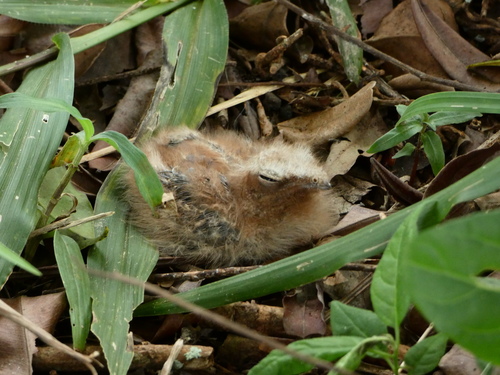
bacurau (Nyctidromus albicollis) bacurau
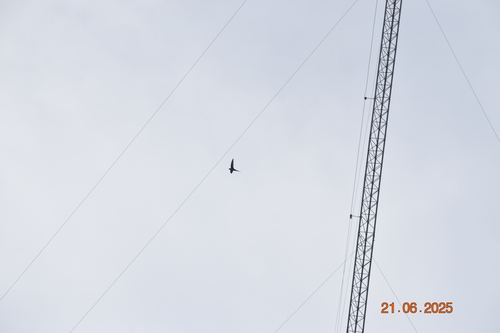
andorinhão-do-buriti (Tachornis squamata) andorinhão-do-buriti

Mídia

Carregando…

Em resumo

O bacurau é um grande noitibó-rabilongo com asas arredondadas e truncadas e uma distinta faixa branca nas primárias, enquanto o andorinhão-do-buriti é um pássaro menor com uma cauda profundamente bifurcada e corpo aerodinâmico. Essas espécies diferem significativamente em estrutura e comportamento, tornando-as distinguíveis no campo.

Dicas de identificação

Verifique a forma da cauda: O bacurau tem uma cauda longa e arredondada com branco, enquanto o andorinhão-do-buriti tem uma cauda profundamente bifurcada. Observe o comportamento: O bacurau é frequentemente visto no chão ao crepúsculo, enquanto o andorinhão-do-buriti está quase sempre em voo.

Tamanho

O bacurau é maior e mais robusto em comparação com o menor e mais esguio andorinhão-do-buriti.

Plumagem

O bacurau possui padrões intrincados de marrons, buff, cinzas e preto com substancial branco na cauda, enquanto o andorinhão-do-buriti é mais uniformemente colorido e não possui o padrão complexo do bacurau.

Comportamento

O bacurau é crepuscular e terrestre, frequentemente forrageando no chão, enquanto o andorinhão-do-buriti é aéreo, passando a maior parte do tempo em voo.

Voz

O bacurau é conhecido por sua canção 'hip-hip hip-hip hip-hip-hooray', um som essencial das baixadas tropicais. As notas não fornecem detalhes de vocalização para o andorinhão-do-buriti.

Enviar uma descrição melhor

Use as mesmas seções da comparação. Seu texto é publicado na hora.

The Common Pauraque is a large, long-tailed nightjar with blunt, rounded wings and a distinctive white band across the primaries, while the Fork-tailed Palm Swift is a smaller bird with a deeply forked tail and streamlined body. These species differ significantly in structure and behavior, making them distinguishable in the field.

Check tail shape: Pauraque has a long, rounded tail with white, while the Palm Swift has a deeply forked tail. Observe behavior: Pauraque is often seen on the ground at dusk, whereas the Palm Swift is almost always in flight.

The Common Pauraque is larger and more robust compared to the smaller, more slender Fork-tailed Palm Swift.

The Pauraque has intricate patterns of browns, buffs, grays, and black with substantial white in the tail, whereas the Palm Swift is more uniformly colored and lacks the Pauraque's complex patterning.

The Pauraque is crepuscular and terrestrial, often foraging on the ground, while the Palm Swift is aerial, spending most of its time in flight.

The Pauraque is known for its breezy 'hip-hip hip-hip hip-hip-hooray' song, a quintessential sound of tropical lowlands. The notes do not provide vocalization details for the Palm Swift.

Descartar as alterações?

Você tem edições não salvas. Se sair agora, elas serão perdidas.

bacurau · andorinhão-do-buriti · Minhas aves difíceis