
welcome swallow vs andorinha-ariel
Hirundo neoxena versus Petrochelidon ariel
Jogue um quiz com welcome swallow e andorinha-ariel
 welcome swallow
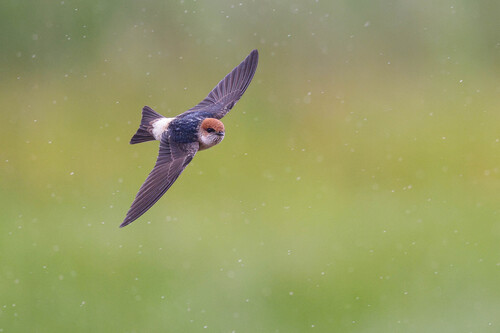 andorinha-ariel
Em resumo
A marca de campo mais confiável para distinguir o welcome swallow da andorinha-ariel é a cauda: o welcome swallow tem uma cauda profundamente bifurcada, enquanto a andorinha-ariel tem uma cauda quadrada. Ambas as espécies são pequenas andorinhas com padrões de voo semelhantes, mas sua plumagem e forma da cauda são diferenças chave.
Dicas de identificação
- Forma da cauda: Procure a cauda profundamente bifurcada do welcome swallow em comparação com a cauda quadrada da andorinha-ariel.
- Cor da cabeça e garganta: Note a testa e a garganta ruivas do welcome swallow, que estão ausentes na andorinha-ariel.
- Cor do corpo superior: O welcome swallow tem um corpo superior azul-preto brilhante, enquanto a andorinha-ariel tem uma aparência mais pálida e amarelada.
Plumagem
O welcome swallow tipicamente tem um corpo superior azul-preto brilhante com uma testa e garganta ruivas, contrastando com a cabeça e nuca pálidas e amareladas da andorinha-ariel. A andorinha-ariel não possui a distinta garganta ruiva do welcome swallow.