
white-fronted tern vs hutton's shearwater
Sterna striata versus Puffinus huttoni
Jogue um quiz com white-fronted tern e hutton's shearwater
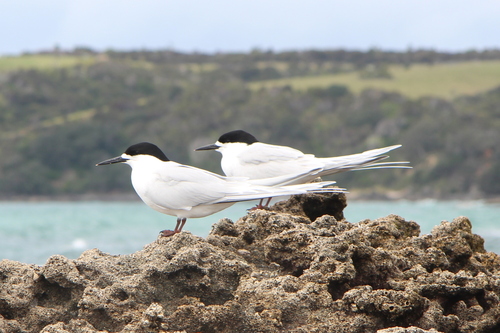 white-fronted tern
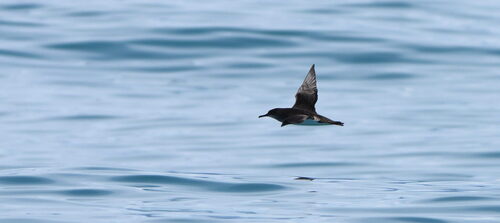 hutton's shearwater
Em resumo
A andorinha-de-peito-branco e o pardal-de-hutton são distintos tanto em aparência quanto em comportamento. A andorinha é uma ave costeira com um corpo esguio e cauda longa, enquanto o pardal é uma espécie pelágica com um corpo mais robusto e cauda mais curta. Observar seu habitat e padrões de voo pode ajudar a diferenciá-los.
Dicas de identificação
Procure pela testa branca e boné preto da andorinha-de-peito-branco. Note o habitat costeiro e o voo pairado. Para o pardal-de-hutton, observe a plumagem mais escura e o voo planado sobre o oceano aberto.
Tamanho
A andorinha-de-peito-branco é geralmente menor e mais esguia do que o pardal-de-hutton, que tem um corpo mais robusto.
Plumagem
A andorinha-de-peito-branco tem uma distinta testa branca e boné preto, enquanto o pardal-de-hutton é geralmente mais escuro com uma coloração mais uniforme.
Comportamento
A andorinha-de-peito-branco é frequentemente vista pairando ou mergulhando para pegar peixes perto da costa, enquanto o pardal-de-hutton é tipicamente observado planando sobre águas oceânicas abertas.
Habitat
A andorinha-de-peito-branco é comumente encontrada ao longo de regiões costeiras, enquanto o pardal-de-hutton é uma espécie pelágica, mais frequentemente vista longe da terra.
white-fronted tern · hutton's shearwater · Minhas aves difíceis