
African Shrike-flycatcher vs Black-and-white Shrike-flycatcher
Megabyas flammulatus versus Bias musicus
Play a quiz with African Shrike-flycatcher and Black-and-white Shrike-flycatcher
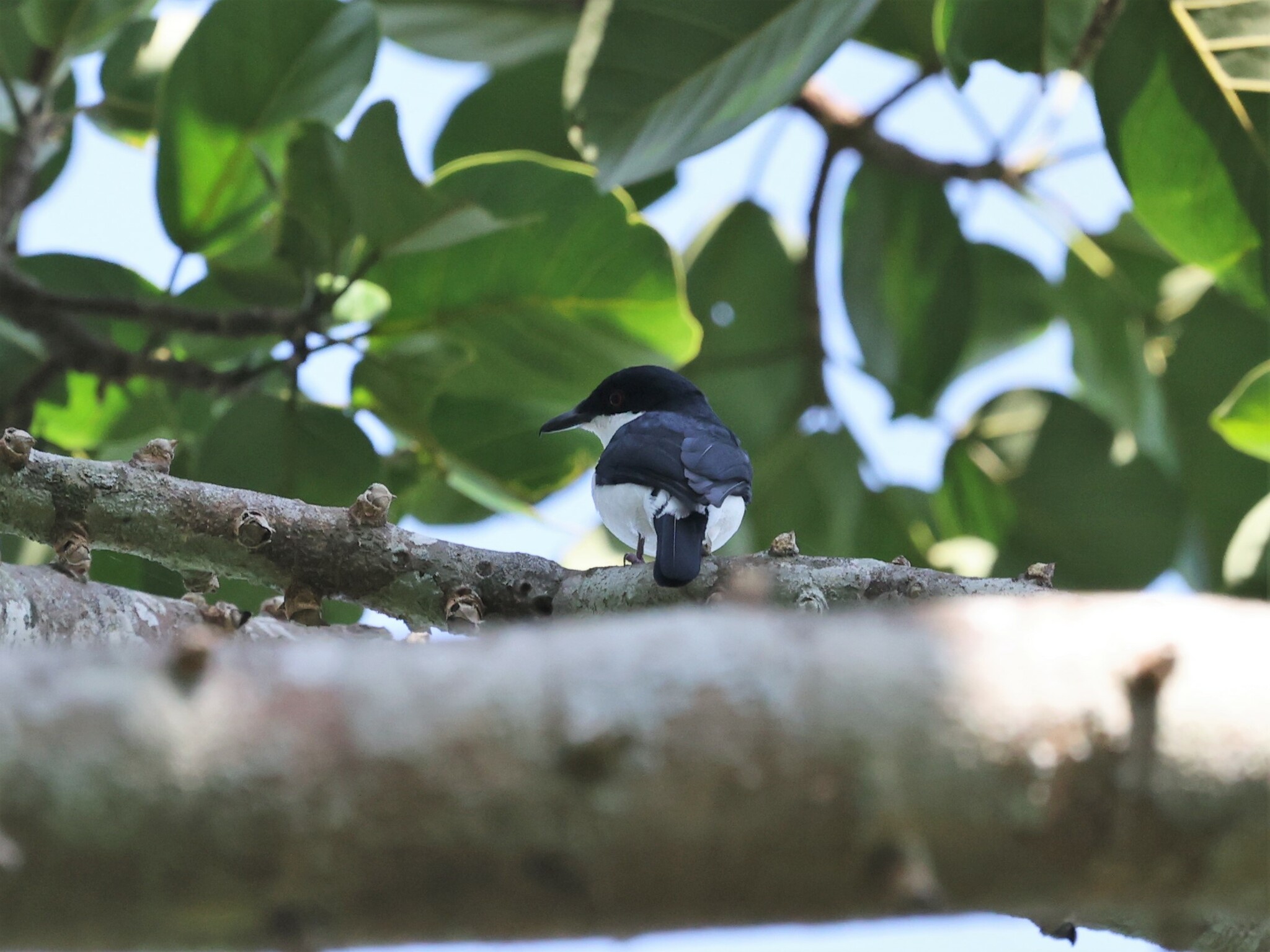 African Shrike-flycatcher
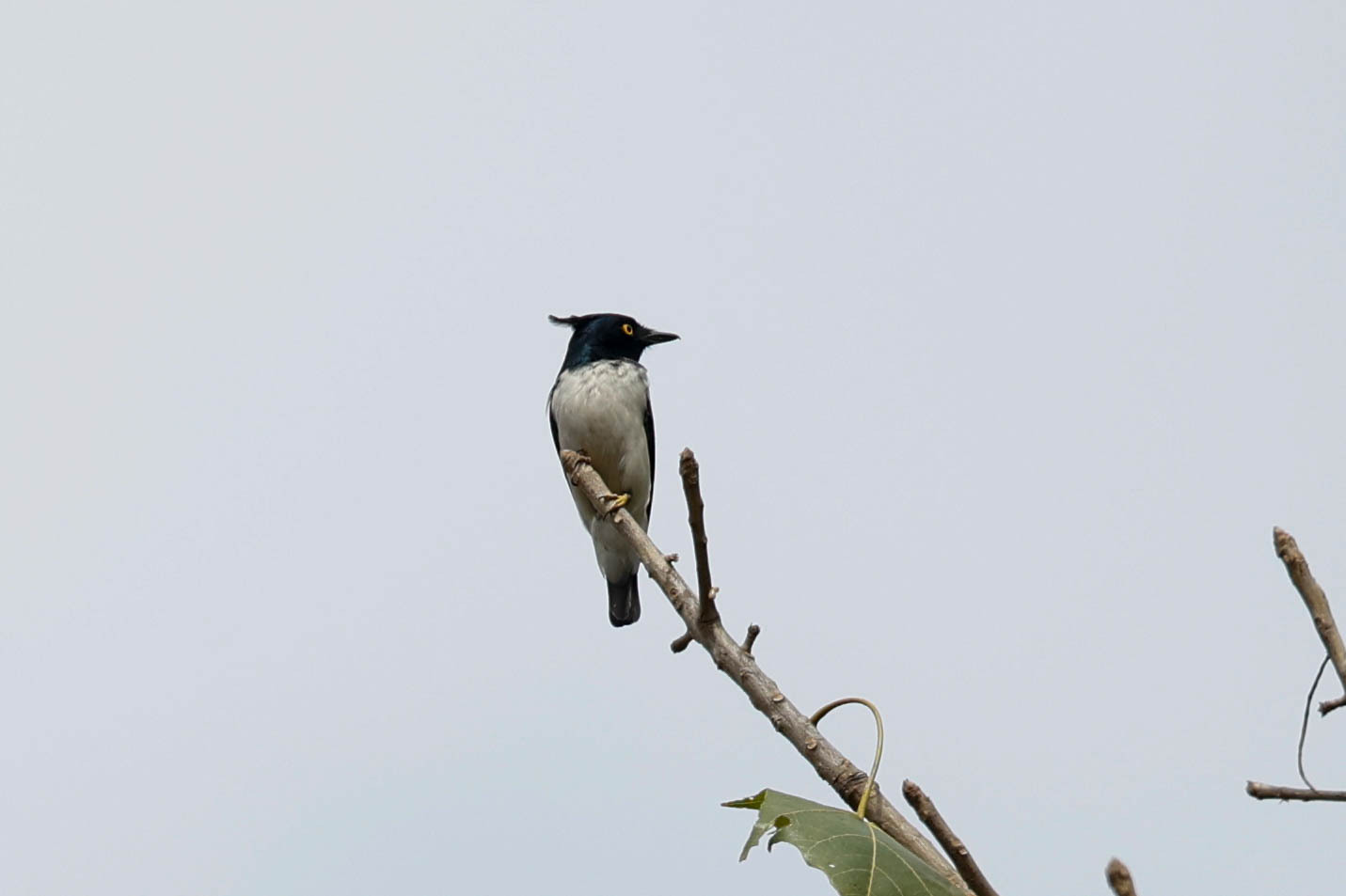 Black-and-white Shrike-flycatcher
In short
The African Shrike-flycatcher and Black-and-white Shrike-flycatcher are both members of the Vangidae family, but they can be distinguished by their plumage and behavior. The African Shrike-flycatcher typically shows more uniform coloration, while the Black-and-white Shrike-flycatcher has a striking black-and-white contrast. Observing their behavior and habitat can also aid in identification.
Identification tips
- Look for plumage contrast: The Black-and-white Shrike-flycatcher has a distinctive black-and-white pattern, especially in males.
- Observe behavior: Both species are active, but the Black-and-white Shrike-flycatcher's bold plumage may make it more noticeable.
- Check habitat: Both species prefer forest canopies, so location alone may not be a reliable differentiator.
- Listen for calls: If vocalizations are heard, note any differences, though specifics are not well-documented.
Size
Both species are similar in size, typical of small to medium-sized passerines.
Plumage
The African Shrike-flycatcher generally has a more uniform and less contrasting plumage compared to the Black-and-white Shrike-flycatcher, which displays a bold black-and-white pattern. This contrast is most noticeable in the male Black-and-white Shrike-flycatcher.
Behaviour
Both species are active and agile, often seen flitting through the canopy. The Black-and-white Shrike-flycatcher may be more conspicuous due to its striking plumage.
Habitat
Both species inhabit similar forested environments, often in the canopy of tropical forests. They can sometimes be found in mixed-species flocks.
Voice
Vocalizations are not well-documented for these species, but they may differ subtly. Observers should note any distinctive calls or songs when possible.
African Shrike-flycatcher · Black-and-white Shrike-flycatcher · My Tricky Birds