Birdr

Arabian Partridge vs Eurasian Bittern

Alectoris melanocephala versus Botaurus stellaris

Play a quiz with Arabian Partridge and Eurasian Bittern

Arabian Partridge (Alectoris melanocephala) Arabian Partridge
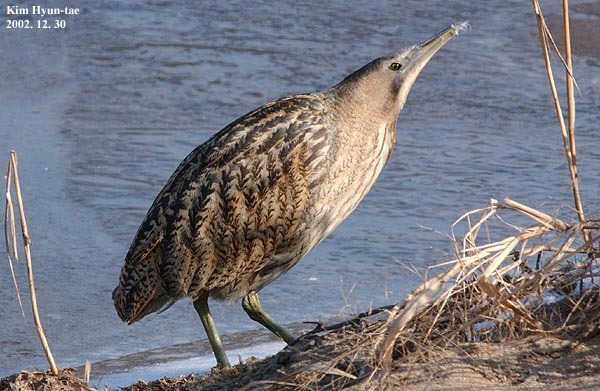
Eurasian Bittern (Botaurus stellaris) Eurasian Bittern

Media

Loading…

In short

The Arabian Partridge and the Eurasian Bittern are unlikely to be confused due to their distinct habitats and appearances. The Arabian Partridge is a ground-dwelling bird with a striking black and white head pattern, while the Eurasian Bittern is a large, cryptically colored heron-like bird often found in reed beds. Observing their behavior and habitat can quickly resolve any confusion.

Identification tips

1. Habitat: Check the surroundings; partridges are in dry, rocky areas, bitterns in wetlands. 2. Size and Shape: Bitterns are larger with elongated necks. 3. Plumage: Look for the partridge's bold head pattern versus the bittern's streaked camouflage. 4. Behavior: Partridges are more active and visible on the ground; bitterns are secretive and often motionless. 5. Vocalization: Listen for the bittern's booming call in wetlands or the partridge's cackling in arid regions.

Size

The Eurasian Bittern is significantly larger than the Arabian Partridge, with a more elongated body and neck typical of herons.

Plumage

The Arabian Partridge has a distinctive black and white head pattern with a grayish body, whereas the Eurasian Bittern has a streaked brown and buff plumage that provides camouflage in reeds.

Behaviour

Arabian Partridges are often seen walking on the ground in open areas, while Eurasian Bitterns are more secretive, often standing motionless or slowly moving through reed beds.

Habitat

Arabian Partridges inhabit arid and rocky areas, whereas Eurasian Bitterns are found in wetlands and marshes with dense reed beds.

Voice

The Eurasian Bittern is known for its deep, booming call, especially during the breeding season, whereas the Arabian Partridge has a series of loud, cackling calls.

Submit a better description

Use the same sections as the comparison. Your text is published immediately.

The Arabian Partridge and the Eurasian Bittern are unlikely to be confused due to their distinct habitats and appearances. The Arabian Partridge is a ground-dwelling bird with a striking black and white head pattern, while the Eurasian Bittern is a large, cryptically colored heron-like bird often found in reed beds. Observing their behavior and habitat can quickly resolve any confusion.

1. Habitat: Check the surroundings; partridges are in dry, rocky areas, bitterns in wetlands. 2. Size and Shape: Bitterns are larger with elongated necks. 3. Plumage: Look for the partridge's bold head pattern versus the bittern's streaked camouflage. 4. Behavior: Partridges are more active and visible on the ground; bitterns are secretive and often motionless. 5. Vocalization: Listen for the bittern's booming call in wetlands or the partridge's cackling in arid regions.

The Eurasian Bittern is significantly larger than the Arabian Partridge, with a more elongated body and neck typical of herons.

The Arabian Partridge has a distinctive black and white head pattern with a grayish body, whereas the Eurasian Bittern has a streaked brown and buff plumage that provides camouflage in reeds.

Arabian Partridges are often seen walking on the ground in open areas, while Eurasian Bitterns are more secretive, often standing motionless or slowly moving through reed beds.

Arabian Partridges inhabit arid and rocky areas, whereas Eurasian Bitterns are found in wetlands and marshes with dense reed beds.

The Eurasian Bittern is known for its deep, booming call, especially during the breeding season, whereas the Arabian Partridge has a series of loud, cackling calls.

Discard your changes?

You have unsaved edits. If you leave now, those changes will be lost.

Arabian Partridge · Eurasian Bittern · My Tricky Birds