
Bachman's Warbler vs Morelet's Seedeater
Vermivora bachmanii versus Sporophila morelleti
Play a quiz with Bachman's Warbler and Morelet's Seedeater
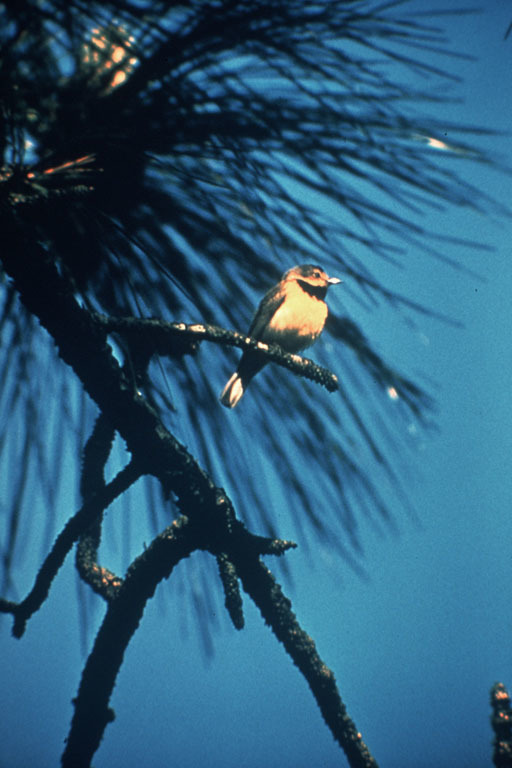 Bachman's Warbler
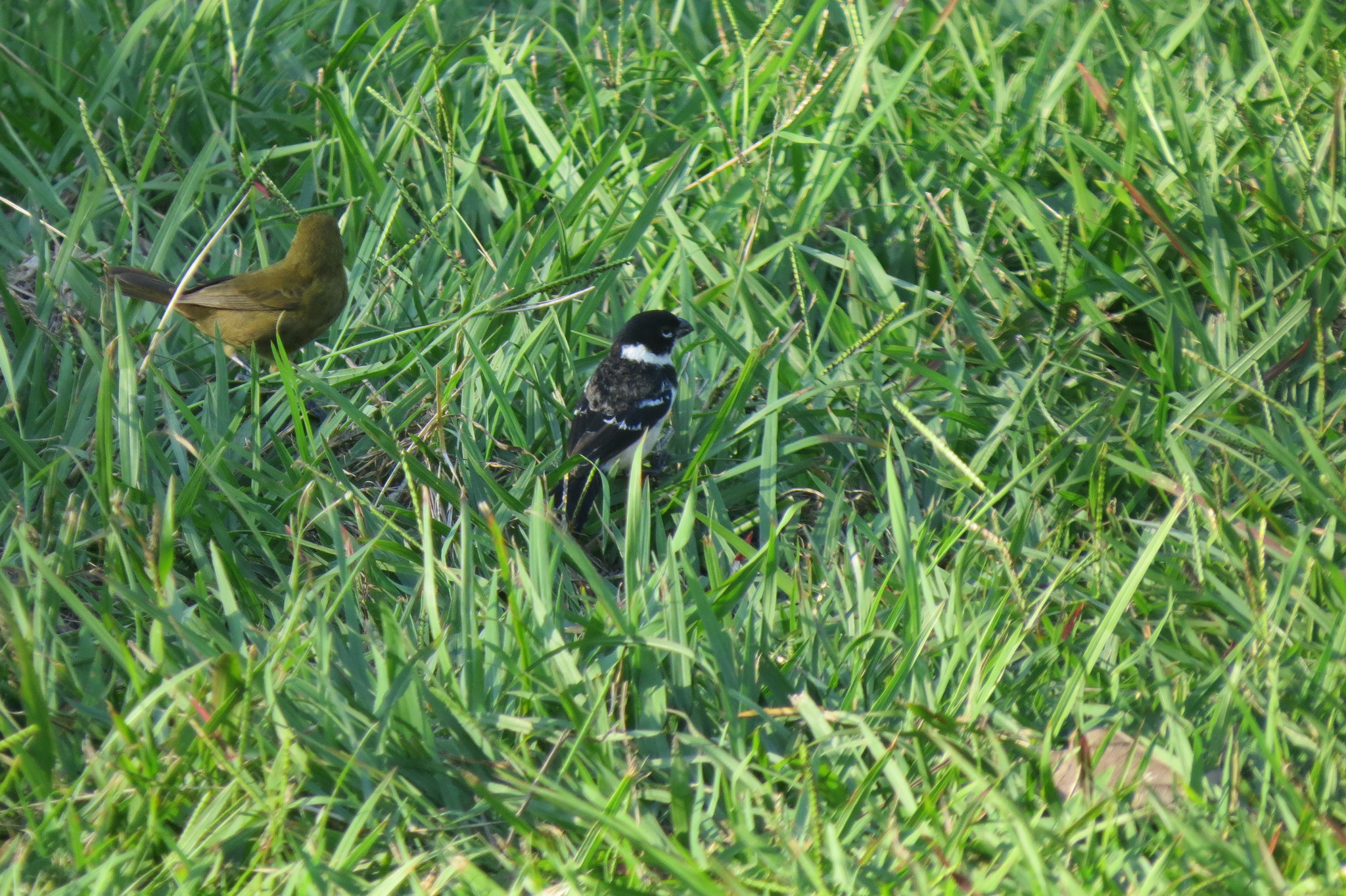 Morelet's Seedeater
In short
Bachman's Warbler and Morelet's Seedeater are distinct in appearance and habitat. Bachman's Warbler, now likely extinct, had a distinctive yellow and black plumage, while Morelet's Seedeater males are black and white. Their habitats also differ significantly, with the warbler historically found in swampy areas and the seedeater in savannas and pastures.
Identification tips
- Bachman's Warbler: Look for the yellow forehead and black crown in males. Females are paler and lack the black throat patch.
- Morelet's Seedeater: Males are black and white; females are more drab and can be confused with other seedeaters.
- Consider habitat: Bachman's Warbler was found in swampy areas, while Morelet's Seedeater prefers open fields and pastures.
Size
Both species are small passerines, but size is not a reliable distinguishing feature.
Plumage
Adult male Bachman's Warbler had a yellow forehead, black crown, and black throat patch, with a yellow eye-ring. Females were paler and lacked the black throat patch. Morelet's Seedeater males are black and white, with females being more drab and similar to other seedeater species.
Behaviour
Morelet's Seedeater males are often seen singing from March to October, while females are more secretive. Bachman's Warbler behavior is less documented due to its likely extinction.
Habitat
Bachman's Warbler was historically found in swampy areas, whereas Morelet's Seedeater inhabits savannas, pastures, and brushy fields, often near water.
Voice
Vocalizations are not well-documented for Bachman's Warbler. Morelet's Seedeater males are known for their singing during the breeding season.