
Band-tailed Antshrike vs Dusky-throated Antshrike
Thamnophilus melanothorax versus Thamnomanes ardesiacus
Play a quiz with Band-tailed Antshrike and Dusky-throated Antshrike
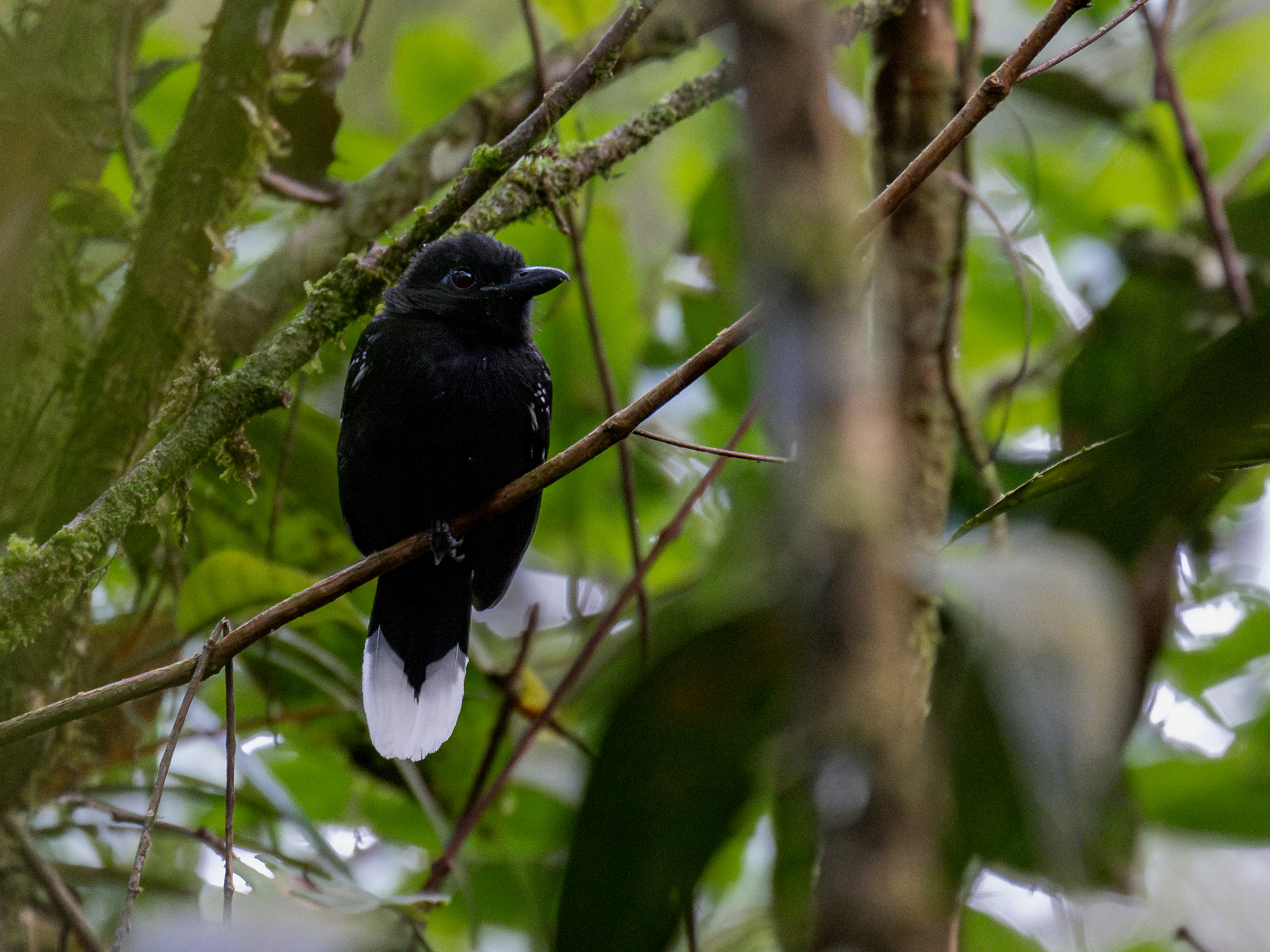 Band-tailed Antshrike
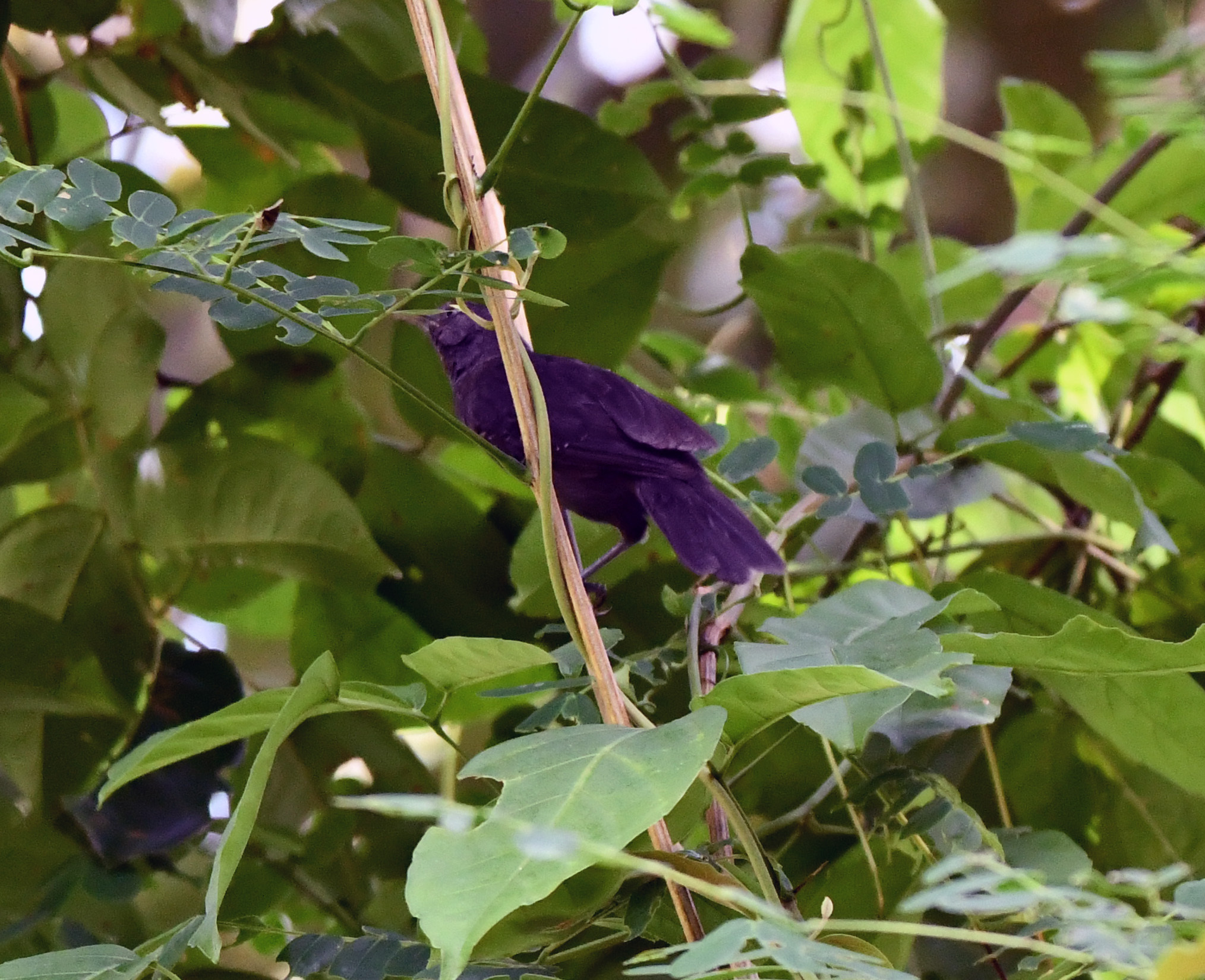 Dusky-throated Antshrike
In short
The Band-tailed Antshrike and Dusky-throated Antshrike can be distinguished by their plumage and behavior. The Band-tailed Antshrike has a distinctive black back and tail bands, while the Dusky-throated Antshrike is more uniformly gray or brown with a dusky throat patch in males. Both species are found in similar habitats, but their vocalizations and foraging behaviors differ.
Identification tips
1. Look for the black back and tail bands of the Band-tailed Antshrike. 2. Note the dusky throat patch in male Dusky-throated Antshrikes. 3. Observe behavior: Band-tailed Antshrikes are often in pairs, while Dusky-throated Antshrikes join mixed-species flocks. 4. Listen for vocal differences, as Band-tailed Antshrikes have a more distinctive song.
Size
Both species are similar in size, typical of small antbirds.
Plumage
The Band-tailed Antshrike has a black back and distinctive tail bands. In contrast, the Dusky-throated Antshrike is mostly gray in males, with a small dusky throat patch, and dull brown in females.
Behaviour
Band-tailed Antshrikes are more likely to be seen foraging in pairs, while Dusky-throated Antshrikes often join mixed-species flocks and are more active in the mid-story.
Habitat
Both species inhabit lowland tropical forests, but the Dusky-throated Antshrike is more frequently associated with mixed-species flocks.
Voice
The Band-tailed Antshrike has a distinctive song and call, while the Dusky-throated Antshrike's vocalizations are less conspicuous and more subdued.
Band-tailed Antshrike · Dusky-throated Antshrike · My Tricky Birds