
Birdr

Band-tailed Pigeon vs Peruvian Pigeon

Patagioenas fasciata versus Patagioenas oenops

Play a quiz with Band-tailed Pigeon and Peruvian Pigeon
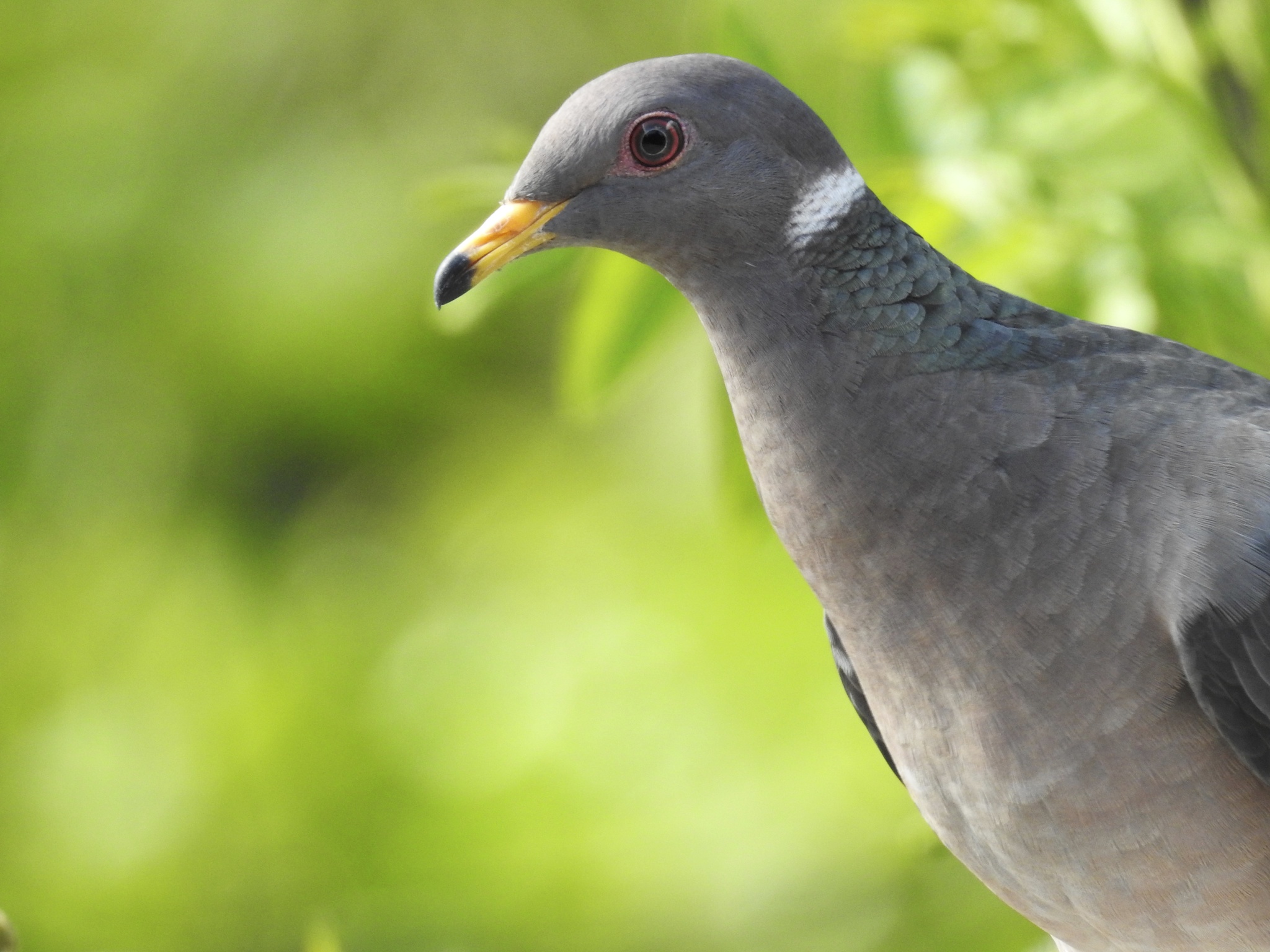
Band-tailed Pigeon (Patagioenas fasciata) Band-tailed Pigeon
Peruvian Pigeon (Patagioenas oenops) Peruvian Pigeon

Media

Loading…

In short

The Band-tailed Pigeon and Peruvian Pigeon are both large pigeons of the Patagioenas genus, but they differ in key features such as tail and neck markings. The Band-tailed Pigeon is notable for its white neck crescent and broad gray band on the tail, while the Peruvian Pigeon lacks these features, having a more uniform plumage.

Identification tips

Look for the white neck crescent and broad gray tail band to identify the Band-tailed Pigeon. In contrast, the Peruvian Pigeon will have a more uniform appearance without these distinct markings. Consider the habitat: Band-tailed Pigeons are more widespread and adaptable to different environments, while Peruvian Pigeons are typically found in the Andes.

Size

Both species are similar in size, but the Band-tailed Pigeon may appear slightly bulkier due to its broader tail band.

Plumage

The Band-tailed Pigeon has a distinctive white crescent on the nape and a broad gray band on the tail. The Peruvian Pigeon lacks these features, showing a more uniform grayish plumage without distinct neck or tail markings.

Behaviour

Both species are generally similar in behavior, often seen in flocks and feeding on fruits and seeds. However, the Band-tailed Pigeon is more likely to be found in mixed habitats including urban areas.

Habitat

The Band-tailed Pigeon inhabits montane forests and can be found from Alaska to South America, while the Peruvian Pigeon is more restricted to the Andean regions of Peru.

Voice

Vocalizations are not well-documented for both species in the notes, but Band-tailed Pigeons are known for a soft cooing sound.

Submit a better description

Use the same sections as the comparison. Your text is published immediately.

The Band-tailed Pigeon and Peruvian Pigeon are both large pigeons of the Patagioenas genus, but they differ in key features such as tail and neck markings. The Band-tailed Pigeon is notable for its white neck crescent and broad gray band on the tail, while the Peruvian Pigeon lacks these features, having a more uniform plumage.

Look for the white neck crescent and broad gray tail band to identify the Band-tailed Pigeon. In contrast, the Peruvian Pigeon will have a more uniform appearance without these distinct markings. Consider the habitat: Band-tailed Pigeons are more widespread and adaptable to different environments, while Peruvian Pigeons are typically found in the Andes.

Both species are similar in size, but the Band-tailed Pigeon may appear slightly bulkier due to its broader tail band.

The Band-tailed Pigeon has a distinctive white crescent on the nape and a broad gray band on the tail. The Peruvian Pigeon lacks these features, showing a more uniform grayish plumage without distinct neck or tail markings.

Both species are generally similar in behavior, often seen in flocks and feeding on fruits and seeds. However, the Band-tailed Pigeon is more likely to be found in mixed habitats including urban areas.

The Band-tailed Pigeon inhabits montane forests and can be found from Alaska to South America, while the Peruvian Pigeon is more restricted to the Andean regions of Peru.

Vocalizations are not well-documented for both species in the notes, but Band-tailed Pigeons are known for a soft cooing sound.

Discard your changes?

You have unsaved edits. If you leave now, those changes will be lost.

Band-tailed Pigeon · Peruvian Pigeon · My Tricky Birds