Birdr

Bar-headed Goose vs Hazel Grouse

Anser indicus versus Tetrastes bonasia

Play a quiz with Bar-headed Goose and Hazel Grouse

Bar-headed Goose (Anser indicus) Bar-headed Goose
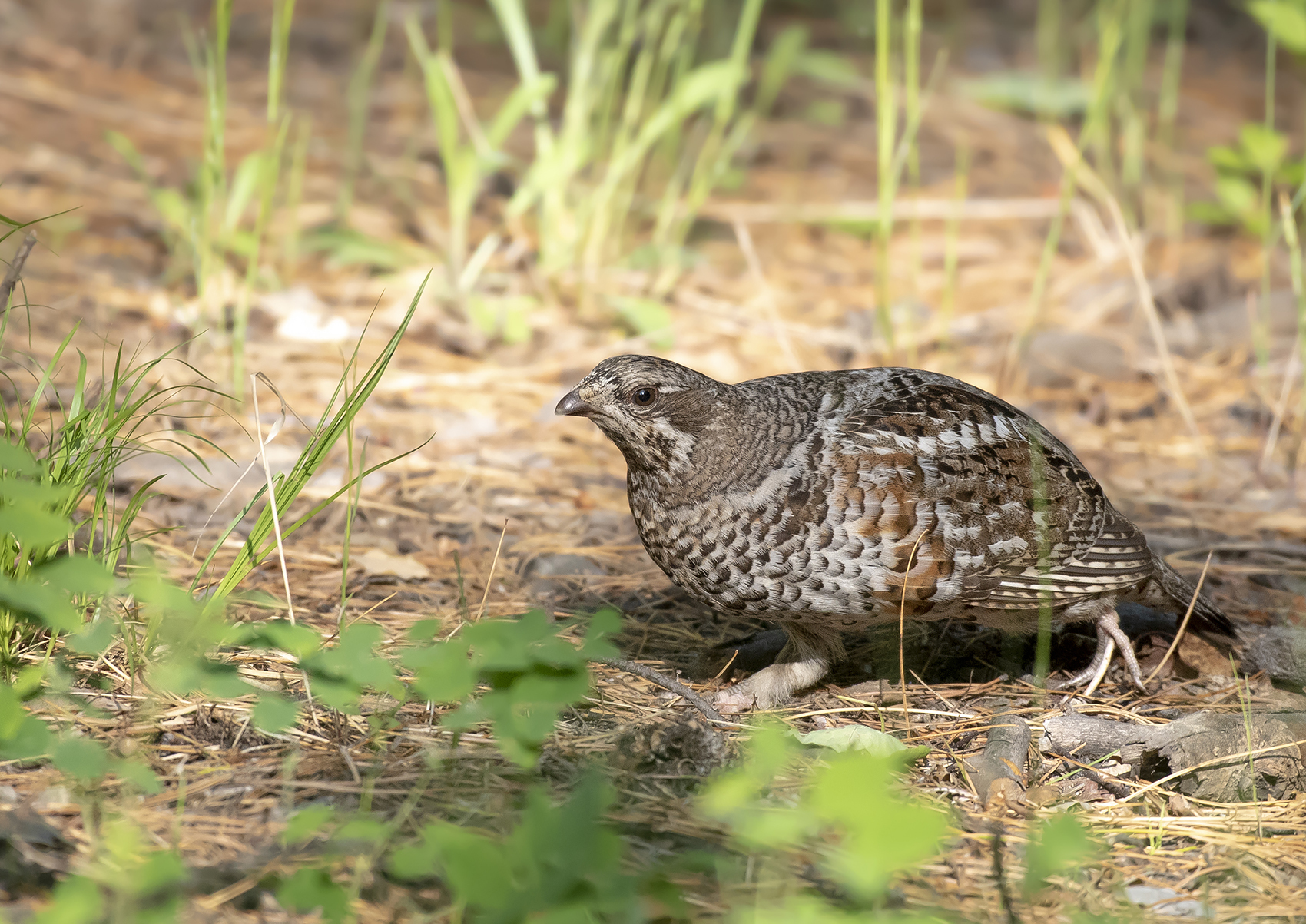
Hazel Grouse (Tetrastes bonasia) Hazel Grouse

Media

Loading…

In short

The Bar-headed Goose and Hazel Grouse are easily distinguished by size and habitat. The Bar-headed Goose is a large waterfowl, while the Hazel Grouse is a small forest bird. They do not overlap in habitat, with the goose favoring wetlands and the grouse preferring dense forests.

Identification tips

To distinguish these species, first consider the habitat: geese are in open wetlands, grouse in forests. Size is a clear differentiator, with the goose being much larger. Look for the goose's white head with black bars and the grouse's cryptic forest plumage. Listen for the goose's honks versus the grouse's whistles.

Size

The Bar-headed Goose is significantly larger, with a wingspan of about 140–160 cm, compared to the much smaller Hazel Grouse, which has a wingspan of around 40–45 cm.

Plumage

The Bar-headed Goose has a distinctive white head with two black bars and a gray body, whereas the Hazel Grouse has a cryptic brown and gray plumage with intricate patterns that help it blend into forest environments.

Behaviour

Bar-headed Geese are often seen in large flocks in open wetlands, while Hazel Grouse are solitary or in pairs, often skulking in dense undergrowth.

Habitat

Bar-headed Geese are typically found in high-altitude wetlands and lakes, whereas Hazel Grouse inhabit dense, mixed or coniferous forests.

Voice

The Bar-headed Goose has a loud, honking call, while the Hazel Grouse produces a soft, whistling song that is often heard rather than seen.

Submit a better description

Use the same sections as the comparison. Your text is published immediately.

The Bar-headed Goose and Hazel Grouse are easily distinguished by size and habitat. The Bar-headed Goose is a large waterfowl, while the Hazel Grouse is a small forest bird. They do not overlap in habitat, with the goose favoring wetlands and the grouse preferring dense forests.

To distinguish these species, first consider the habitat: geese are in open wetlands, grouse in forests. Size is a clear differentiator, with the goose being much larger. Look for the goose's white head with black bars and the grouse's cryptic forest plumage. Listen for the goose's honks versus the grouse's whistles.

The Bar-headed Goose is significantly larger, with a wingspan of about 140–160 cm, compared to the much smaller Hazel Grouse, which has a wingspan of around 40–45 cm.

The Bar-headed Goose has a distinctive white head with two black bars and a gray body, whereas the Hazel Grouse has a cryptic brown and gray plumage with intricate patterns that help it blend into forest environments.

Bar-headed Geese are often seen in large flocks in open wetlands, while Hazel Grouse are solitary or in pairs, often skulking in dense undergrowth.

Bar-headed Geese are typically found in high-altitude wetlands and lakes, whereas Hazel Grouse inhabit dense, mixed or coniferous forests.

The Bar-headed Goose has a loud, honking call, while the Hazel Grouse produces a soft, whistling song that is often heard rather than seen.

Discard your changes?

You have unsaved edits. If you leave now, those changes will be lost.

Bar-headed Goose · Hazel Grouse · My Tricky Birds