
Bar-tailed Lark vs Greater Short-toed Lark
Ammomanes cinctura versus Calandrella brachydactyla
Play a quiz with Bar-tailed Lark and Greater Short-toed Lark
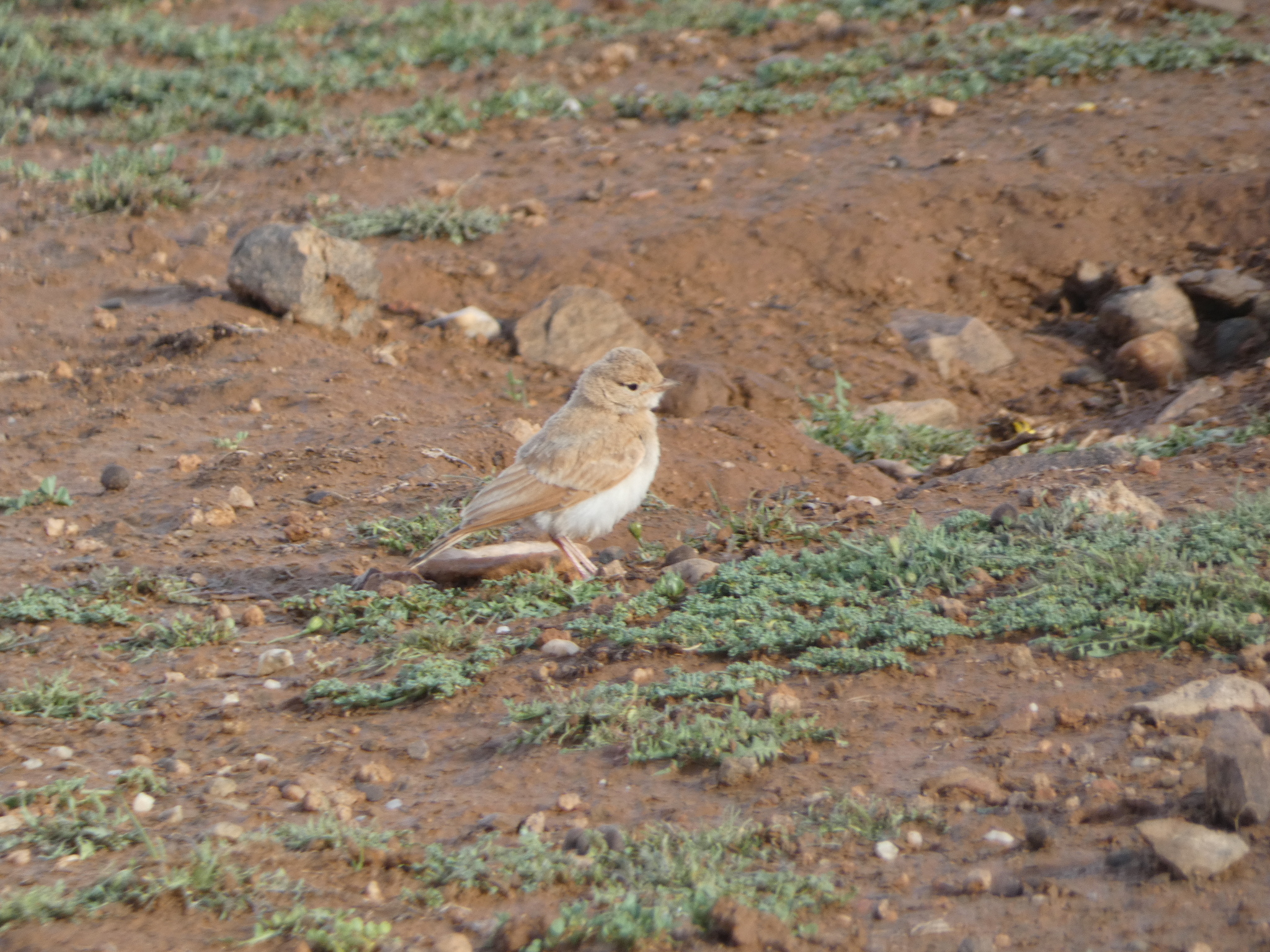 Bar-tailed Lark
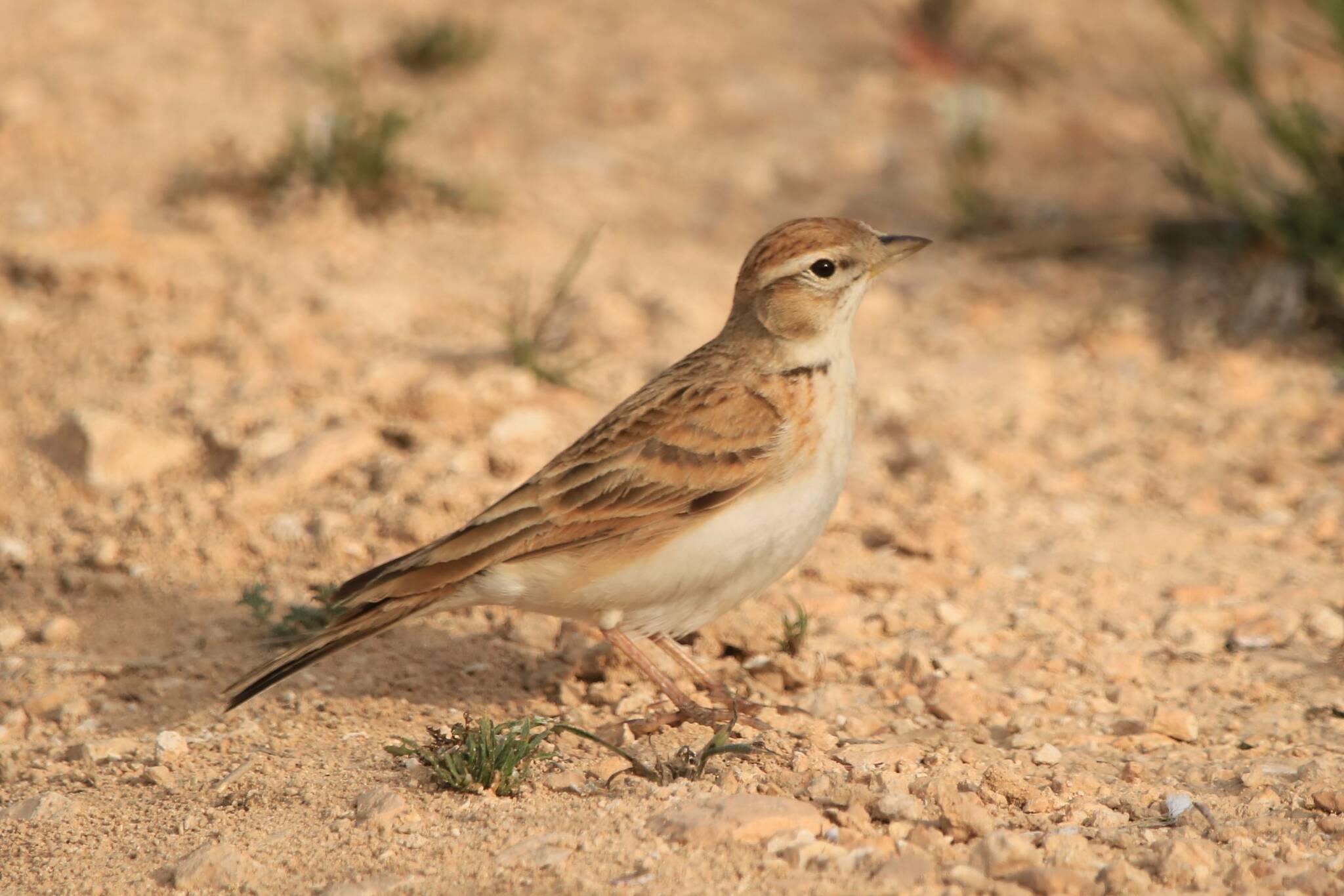 Greater Short-toed Lark
In short
The Bar-tailed Lark and Greater Short-toed Lark can be distinguished by their structure and plumage. The Bar-tailed Lark has a more robust bill and a distinctive tail pattern, while the Greater Short-toed Lark is generally more compact with a shorter bill. Both species inhabit arid regions, but their vocalizations and behaviors can also aid in identification.
Identification tips
- Bill shape: Bar-tailed Lark has a stouter bill; Greater Short-toed Lark's bill is shorter and more slender.
- Tail pattern: Look for the blackish tail band in Bar-tailed Lark.
- Vocalizations: Listen for the more melodious song of the Bar-tailed Lark compared to the complex song of the Greater Short-toed Lark.
- Habitat preference: Note the habitat, as Bar-tailed Larks are more associated with sandy deserts.
Size
The Bar-tailed Lark is slightly larger and more robust compared to the more compact Greater Short-toed Lark.
Plumage
Bar-tailed Lark has a pale sandy-brown plumage with a distinctive blackish tail band. The Greater Short-toed Lark is more uniformly brown with less contrast in the tail.
Behaviour
Both species forage on the ground, but the Bar-tailed Lark may appear more deliberate in its movements compared to the more active Greater Short-toed Lark.
Habitat
Both species prefer arid and semi-arid environments, but the Bar-tailed Lark is more often found in sandy deserts, while the Greater Short-toed Lark can be found in a variety of open, dry habitats.
Voice
The Bar-tailed Lark's song is a series of melodious whistles, while the Greater Short-toed Lark has a more varied and complex song. Calls are often the best way to distinguish them when seen at a distance.