
Barn Swallow vs Capped Wheatear
Hirundo rustica versus Oenanthe pileata
Play a quiz with Barn Swallow and Capped Wheatear
 Barn Swallow
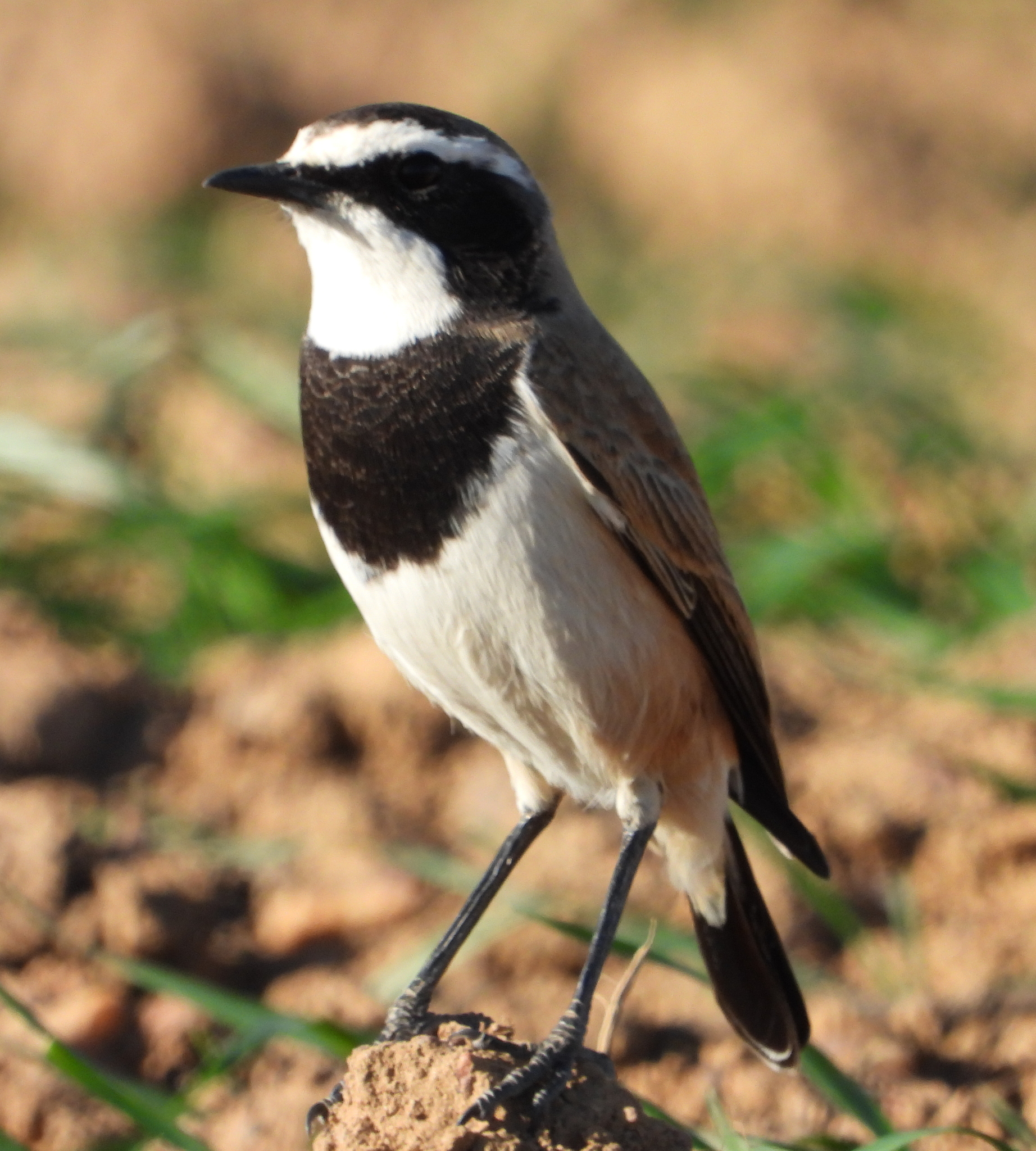 Capped Wheatear
In short
The Barn Swallow and Capped Wheatear are easily distinguished by their structure and plumage. The Barn Swallow is a sleek, fork-tailed hirundinid, while the Capped Wheatear is a stockier, upright passerine with a distinctive black cap and white supercilium.
Identification tips
- Look for the long forked tail of the Barn Swallow, absent in the Capped Wheatear. 2. Note the glossy blue upperparts and rufous throat of the Barn Swallow. 3. Observe the black cap and white supercilium of the Capped Wheatear. 4. Consider habitat: Barn Swallows near water and human structures, Capped Wheatears in open grasslands. 5. Listen for the Barn Swallow's twittering calls versus the Capped Wheatear's varied whistles.
Size
The Barn Swallow is medium-sized with a long, deeply forked tail, whereas the Capped Wheatear is slightly smaller and more robust with a shorter tail.
Plumage
Barn Swallows have glossy steel-blue upperparts and rufous-chestnut throats with a broad steel-blue breastband. In contrast, Capped Wheatears have a black cap, white supercilium, and a contrasting white throat and belly.
Behaviour
Barn Swallows are agile fliers often seen swooping for insects, while Capped Wheatears are more terrestrial, often seen hopping on the ground or perching upright.
Habitat
Barn Swallows are typically found in open areas near water and human settlements, while Capped Wheatears prefer open grasslands and semi-arid regions.
Voice
Barn Swallows have a series of twittering calls, whereas Capped Wheatears have a more varied song with whistles and trills.