
Black-backed Butcherbird vs Scaly-breasted Munia
Cracticus mentalis versus Lonchura punctulata
Play a quiz with Black-backed Butcherbird and Scaly-breasted Munia
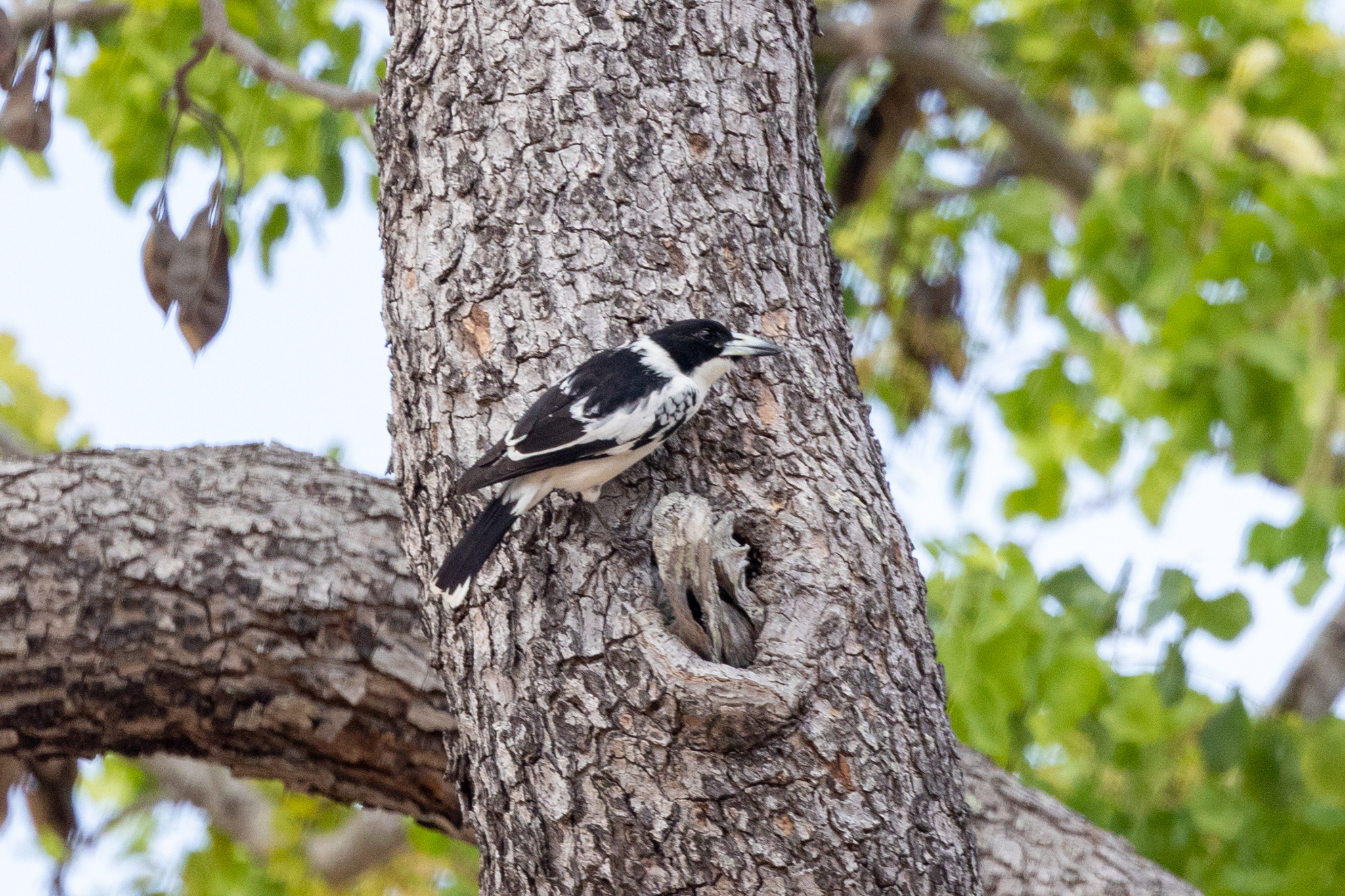 Black-backed Butcherbird
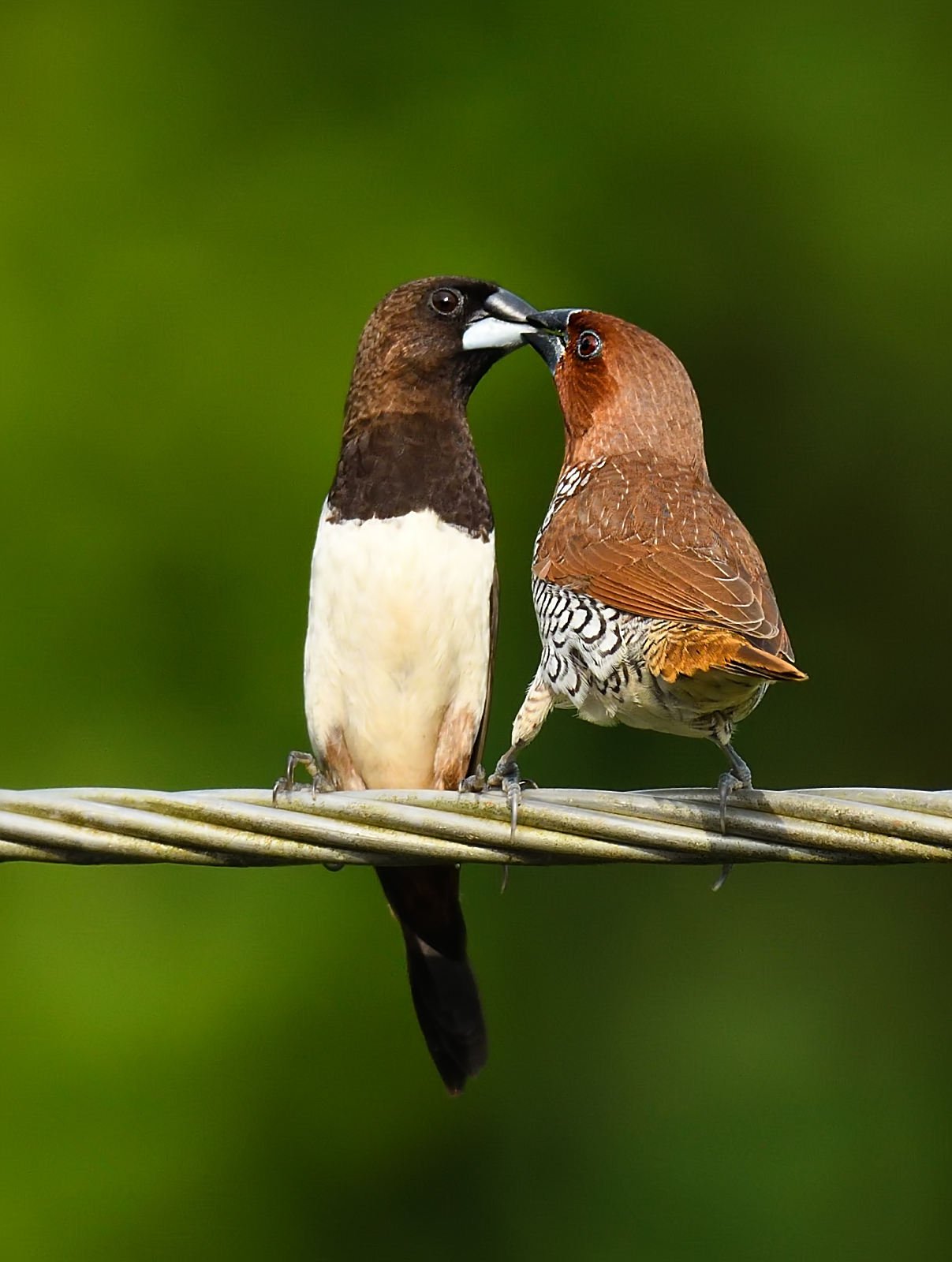 Scaly-breasted Munia
In short
The Black-backed Butcherbird and Scaly-breasted Munia are distinct in both appearance and behavior. The butcherbird is a larger, more robust bird with a strong, hooked bill, while the munia is smaller with a conical bill and distinctive scaly pattern on its underparts. These differences make them relatively easy to distinguish in the field.
Identification tips
Look for the butcherbird's larger size and bold black and white plumage. The munia's distinctive scaly pattern on the underparts is a key feature. Note the habitat: butcherbirds in woodlands, munias in grassy or agricultural areas. Listen for the butcherbird's varied calls compared to the munia's soft chirps.
Size
The Black-backed Butcherbird is significantly larger and more robust than the Scaly-breasted Munia.
Plumage
The butcherbird has a predominantly black and white plumage with a striking black back, whereas the munia is mostly brown with heavily scalloped pale underparts, giving it a 'scaly' appearance.
Behaviour
Black-backed Butcherbirds are often seen perched conspicuously and may exhibit predatory behavior, while Scaly-breasted Munias are more likely to be found in flocks feeding on seeds.
Habitat
Butcherbirds prefer open woodlands and forest edges, while munias are typically found in grasslands, agricultural areas, and gardens.
Voice
The butcherbird's calls are varied and can include melodious notes, while the munia's calls are more subdued, consisting of soft chirps and twitters.
Black-backed Butcherbird · Scaly-breasted Munia · My Tricky Birds