
Black-chinned Hummingbird vs White-eared Hummingbird
Archilochus alexandri versus Basilinna leucotis
Play a quiz with Black-chinned Hummingbird and White-eared Hummingbird
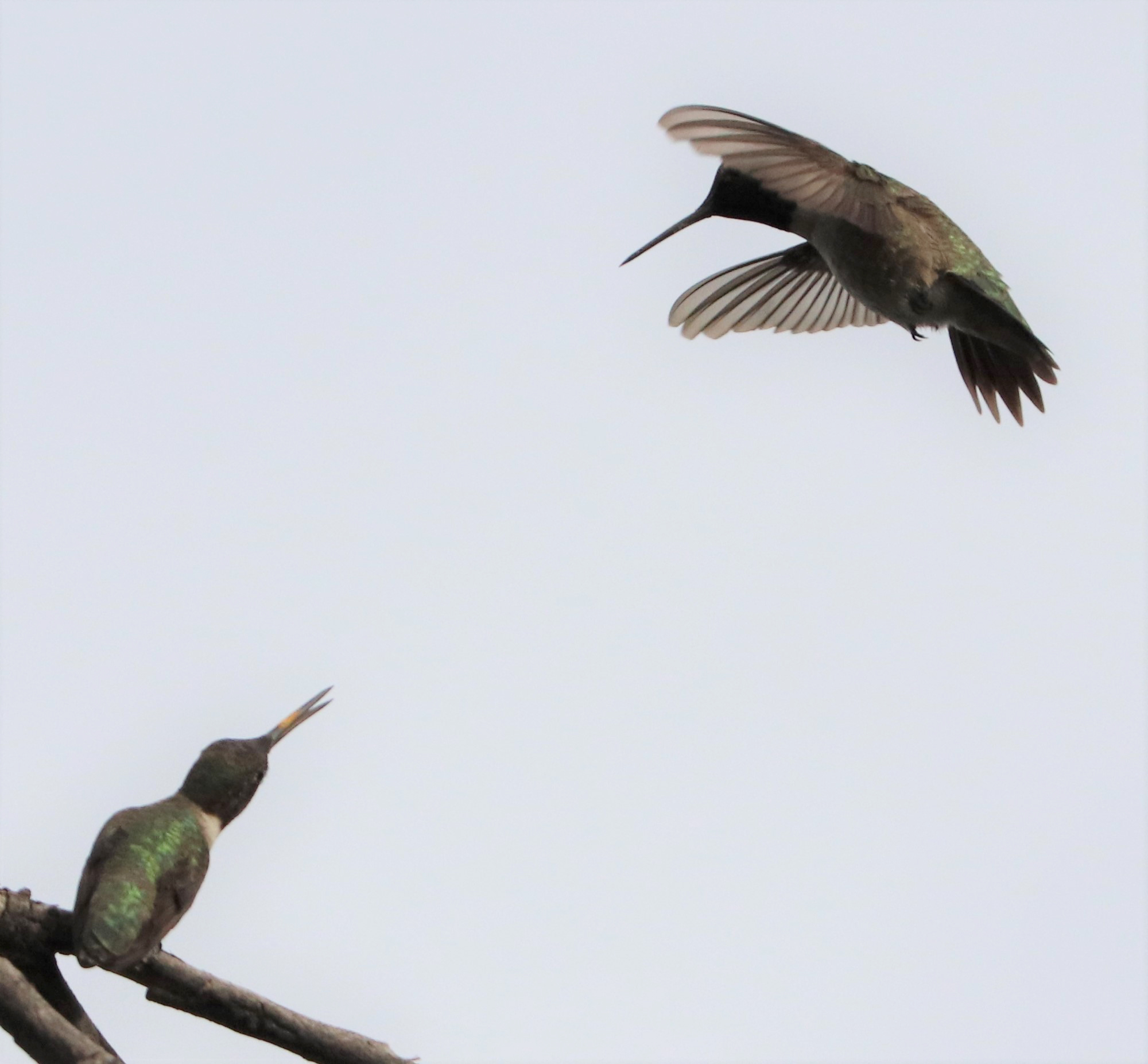 Black-chinned Hummingbird
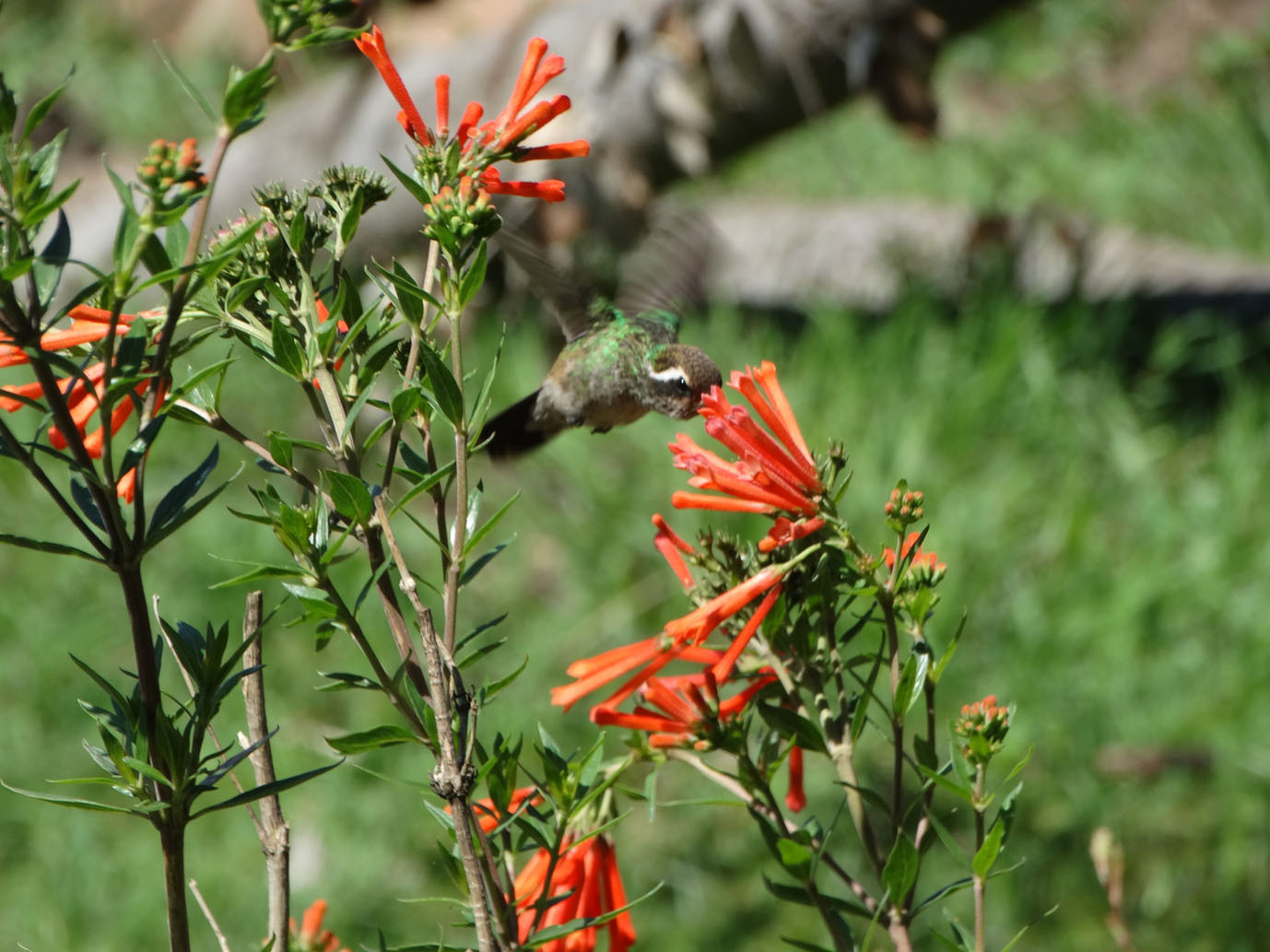 White-eared Hummingbird
In short
The Black-chinned Hummingbird and White-eared Hummingbird can be distinguished primarily by their facial markings and throat colors. The Black-chinned has a distinctive black throat with a thin purple band, while the White-eared features a bold white stripe behind the eye. Both species are small and agile, but their differing habitats and vocalizations can aid identification.
Identification tips
- Look for the black throat with purple band on Black-chinned Hummingbirds. 2. Note the white stripe behind the eye on White-eared Hummingbirds. 3. Observe habitat: Black-chinned in urban/open areas, White-eared in montane forests. 4. Listen for vocalizations, though not always reliable for White-eared. 5. Consider nesting behavior if observed: White-eared may nest closely and reuse nests.
Size
Both species are similar in size, typical of small hummingbirds, with no significant size difference to aid in identification.
Plumage
The Black-chinned Hummingbird has a black throat with a thin iridescent purple band, while the White-eared Hummingbird has a striking white stripe behind the eye and a green throat. The White-eared also shows more vibrant green on the body compared to the more subdued tones of the Black-chinned.
Behaviour
Both species exhibit typical hummingbird behavior, such as rapid flight and hovering at flowers. However, the White-eared Hummingbird may be observed nesting in close proximity to others, sometimes reusing old nests.
Habitat
Black-chinned Hummingbirds are adaptable and often found in urban areas and open woodlands, while White-eared Hummingbirds prefer montane forests and are often resident in their range, with some altitudinal movements.
Voice
Black-chinned Hummingbirds have distinct agonistic vocalizations, while the White-eared Hummingbird's vocalizations are less documented but are not noted as a primary distinguishing feature.
Black-chinned Hummingbird · White-eared Hummingbird · My Tricky Birds