
Blue-cheeked Bee-eater vs European Pied Flycatcher
Merops persicus versus Ficedula hypoleuca
Play a quiz with Blue-cheeked Bee-eater and European Pied Flycatcher
 Blue-cheeked Bee-eater
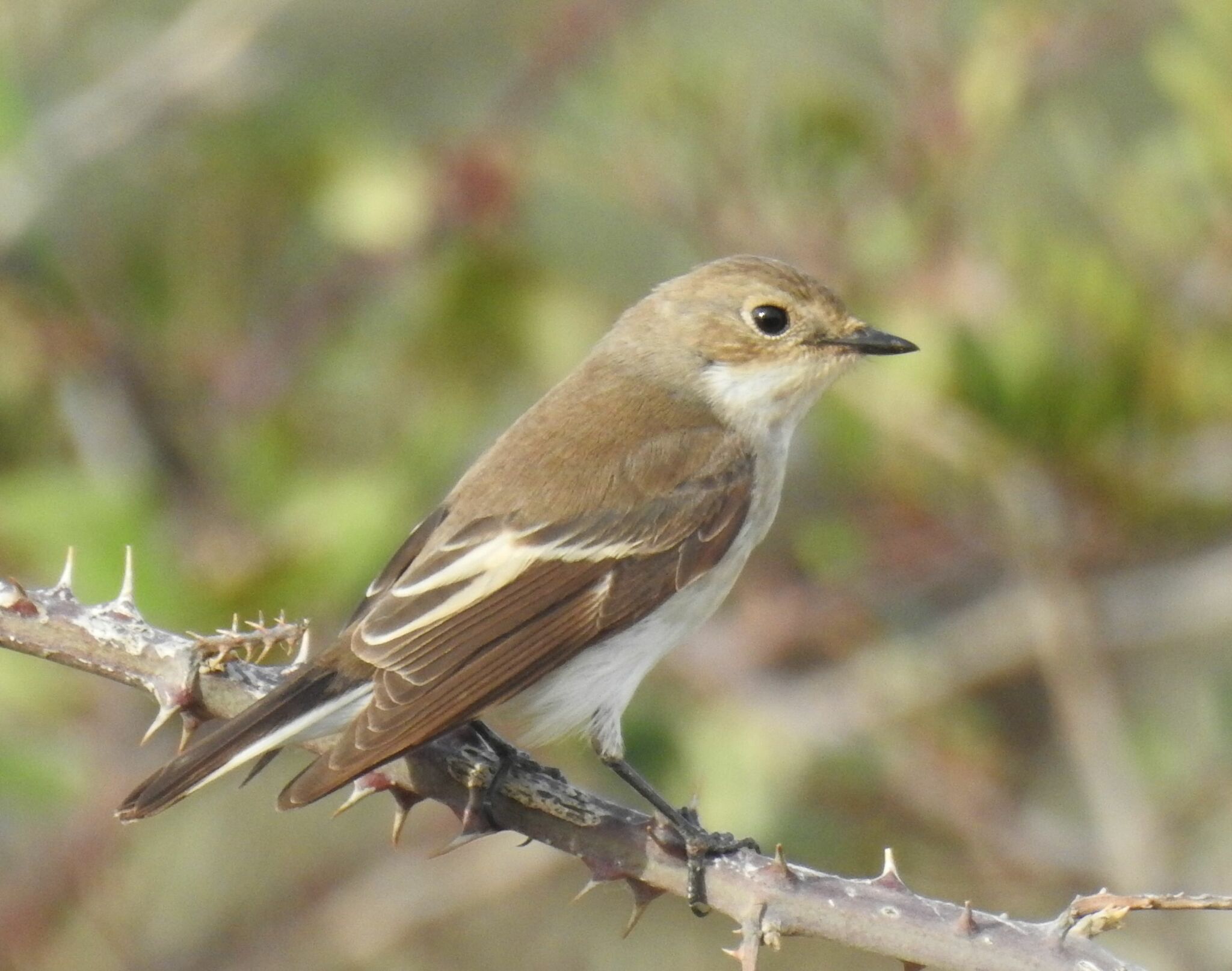 European Pied Flycatcher
In short
The Blue-cheeked Bee-eater (Merops persicus chrysocercus) and the European Pied Flycatcher (Ficedula hypoleuca iberiae) are both distinct in their size, plumage, behavior, and habitat preferences. The former is a vibrant, colorful bird known for its bee-catching abilities, while the latter is a more subtly colored songbird that exhibits different breeding and foraging behaviors.
Identification tips
- Birds of the World Similar-Species Diagnostics:
-
The Blue-cheeked Bee-eater is noted for its "distinctive blue cheek patch, which is particularly prominent and contrasts with its yellow throat" (source: Birds of the World). In contrast, "the European Pied Flycatcher has a simpler color scheme with a black and white pattern that is less vibrant and more subdued" (source: Birds of the World).
-
AI Field Diagnostics:
- Size: Pay attention to size differences; the bee-eater is significantly larger than the flycatcher, which is compact and small.
- Plumage: Look for the striking blue and green colors of the bee-eater, especially the blue cheek, which is absent in the flycatcher. The flycatcher’s black and white coloration is more muted and blends with its wooded habitat.
- Behavior: Observe foraging behaviors: the bee-eater actively hunts in the air and is often seen in groups, while the flycatcher typically sits quietly before darting out to catch insects.
- Habitat: If you are in a wooded area, you are more likely encountering the European Pied Flycatcher. In open fields or near water, keep an eye out for the Blue-cheeked Bee-eater.
- Vocalization: The bee-eater's loud, sharp calls contrast with the more melodic, softer notes of the flycatcher. Listening to their calls can provide valuable identification clues in the field.
By focusing on these key characteristics, birdwatchers can effectively distinguish between the Blue-cheeked Bee-eater and the European Pied Flycatcher in their natural habitats.
Size
-
Blue-cheeked Bee-eater: Measures approximately 26-28 cm in length with a wingspan of around 40-45 cm. They have a slender body and long, pointed wings which aid in their agile flight.
-
European Pied Flycatcher: Smaller, at about 12.5-13.5 cm in length with a wingspan of 20-24 cm. They have a more compact body shape, which is characteristic of flycatcher species.
Plumage
-
Blue-cheeked Bee-eater: This species is strikingly colorful, featuring a combination of bright green, yellow, and blue plumage. Notably, it has a distinctive blue cheek patch and a yellow throat, making it easily identifiable.
-
European Pied Flycatcher: Exhibits a more muted coloration, with males having a black upper body and white underparts. Females and juveniles are brownish with less contrast, making them less conspicuous compared to the vibrant coloration of the bee-eater.
Behaviour
-
Blue-cheeked Bee-eater: Known for its aerial foraging, this species catches insects mid-flight, primarily bees and wasps. They often perch in exposed locations to hunt and are social birds, often seen in small groups.
-
European Pied Flycatcher: Exhibits a behavior typical of flycatchers, often seen perched quietly, waiting to catch flying insects. They are more solitary compared to the bee-eaters and tend to forage in a more sedentary manner, often from low branches.
Habitat
-
Blue-cheeked Bee-eater: Prefers open habitats such as grasslands, savannas, and edges of forests where they can easily spot their prey. They are often found near water sources as well.
-
European Pied Flycatcher: Typically inhabits deciduous forests and woodland edges. They favor areas with dense foliage for nesting and foraging, preferring more wooded environments compared to the bee-eater.
Voice
-
Blue-cheeked Bee-eater: Their calls are described as a series of sharp, high-pitched sounds, often likened to "cree-cree" or "chack-chack" which can be quite loud and can carry over distances.
-
European Pied Flycatcher: Their vocalizations are softer and more melodic, often described as a series of short, sweet notes that can be more subdued compared to the bee-eater's calls.
Blue-cheeked Bee-eater · European Pied Flycatcher · My Tricky Birds