
Blue-winged Kookaburra vs Rufous-bellied Kookaburra
Dacelo leachii versus Dacelo gaudichaud
Play a quiz with Blue-winged Kookaburra and Rufous-bellied Kookaburra
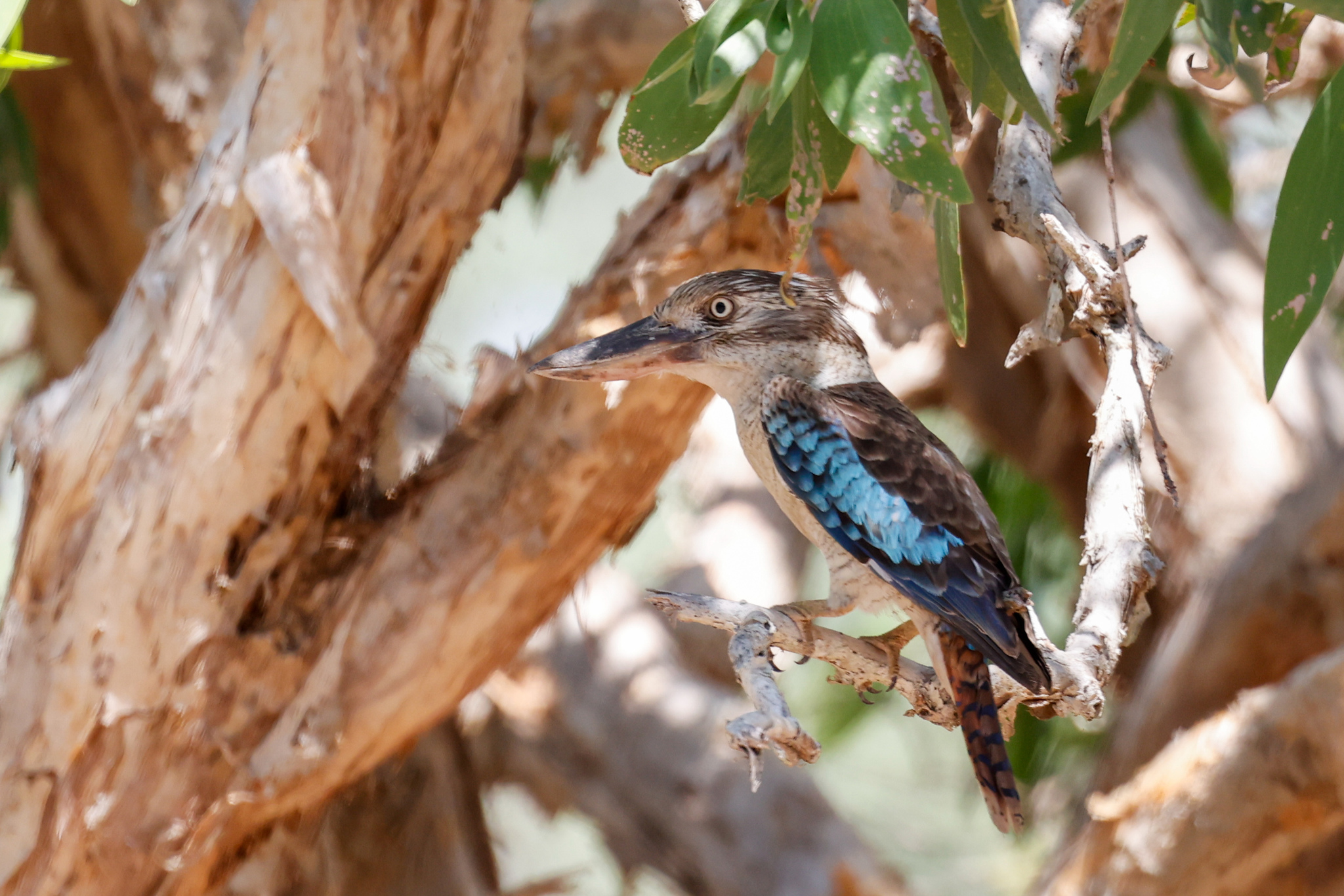 Blue-winged Kookaburra
 Rufous-bellied Kookaburra
In short
The Blue-winged Kookaburra and Rufous-bellied Kookaburra are similar in size and structure, but differ notably in plumage and habitat preferences. The Blue-winged Kookaburra is distinguished by its blue wings and tail, while the Rufous-bellied Kookaburra has a distinctive rufous belly.
Identification tips
- Look for blue wings and tail: Blue-winged Kookaburra. 2. Check for rufous belly: Rufous-bellied Kookaburra. 3. Listen for calls: Blue-winged has a cackling laugh; Rufous-bellied has a melodious call. 4. Consider habitat: Blue-winged in open areas; Rufous-bellied in dense forests.
Size
Both species are similar in size, typical of large kingfishers.
Plumage
The Blue-winged Kookaburra has striking blue wings and tail, with a pale head and underparts. In contrast, the Rufous-bellied Kookaburra features a rufous-colored belly and lacks the prominent blue wing markings.
Behaviour
Both species exhibit similar behaviors typical of kookaburras, such as perching quietly and swooping down to catch prey.
Habitat
The Blue-winged Kookaburra is often found in open woodlands and savannas, while the Rufous-bellied Kookaburra prefers dense forests and mangroves.
Voice
The Blue-winged Kookaburra's call is a loud, cackling laugh, whereas the Rufous-bellied Kookaburra has a more varied and melodious call.
Blue-winged Kookaburra · Rufous-bellied Kookaburra · My Tricky Birds