
Bristle-thighed Curlew vs Wandering Tattler
Numenius tahitiensis versus Tringa incana
Play a quiz with Bristle-thighed Curlew and Wandering Tattler
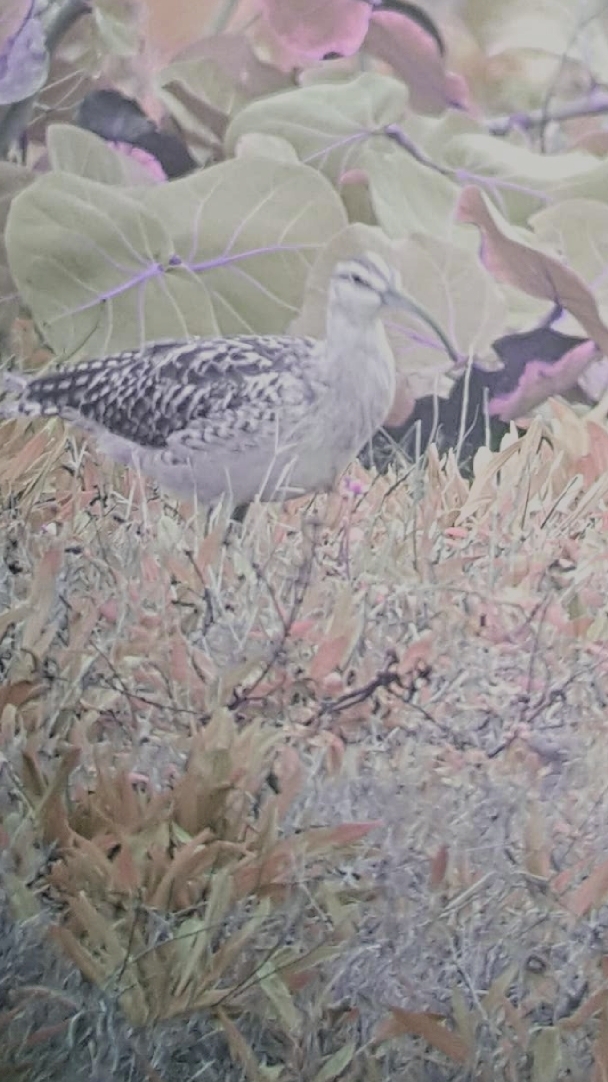 Bristle-thighed Curlew
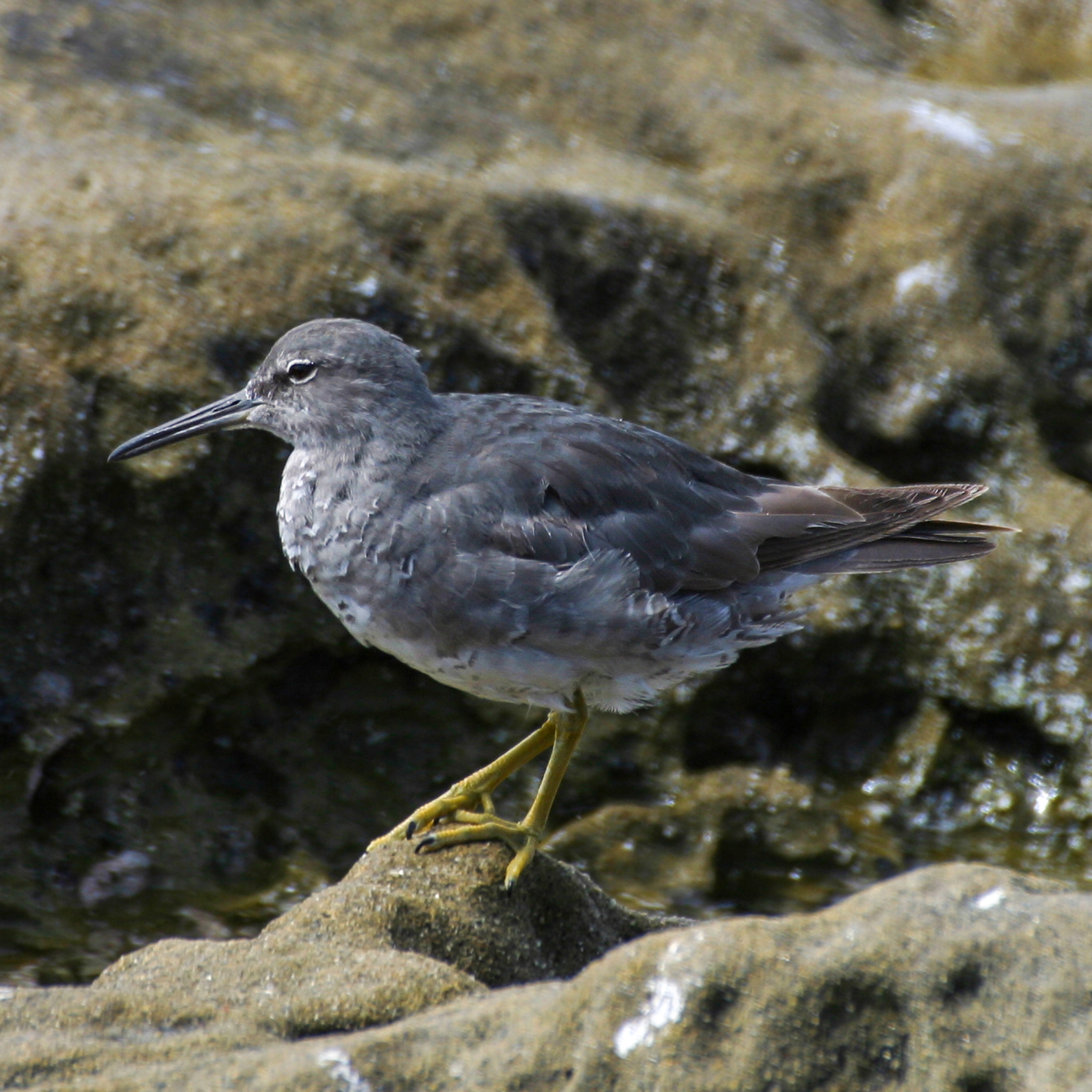 Wandering Tattler
In short
The Bristle-thighed Curlew and Wandering Tattler can be distinguished by their structure and behavior. The curlew has a long, decurved bill and distinctive bristle-like feathers on its thighs, while the tattler has a straight bill and lacks these feathers. Both species are migratory shorebirds, but the curlew is unique for its tool use and flightless molt.
Identification tips
- Bill shape: Curlew's bill is long and decurved; Tattler's is straight.
- Thigh feathers: Look for bristle-like feathers on the curlew.
- Size: Curlew is larger and more robust.
- Plumage: Curlew is mottled brown; Tattler is more uniform gray.
- Behavior: Curlew may use tools and be flightless during molt.
Size
The Bristle-thighed Curlew is larger than the Wandering Tattler, with a more robust build.
Plumage
The Bristle-thighed Curlew has a mottled brown plumage with bristle-like feathers on its thighs, which are absent in the Wandering Tattler. The tattler has a more uniform gray plumage, especially during non-breeding season.
Behaviour
Bristle-thighed Curlews are known for their unique behavior of using tools and becoming flightless during molt. Wandering Tattlers are more secretive and often remain inconspicuous outside of breeding displays.
Habitat
Bristle-thighed Curlews breed in tundra regions and winter on oceanic islands, while Wandering Tattlers breed in montane habitats and are often found on rocky shores during migration.
Voice
The Bristle-thighed Curlew has a distinctive call, but specific vocal differences with the Wandering Tattler are not well-documented.
Bristle-thighed Curlew · Wandering Tattler · My Tricky Birds