
Birdr

Cape Griffon vs Blue-cheeked Bee-eater

Gyps coprotheres versus Merops persicus

Play a quiz with Cape Griffon and Blue-cheeked Bee-eater
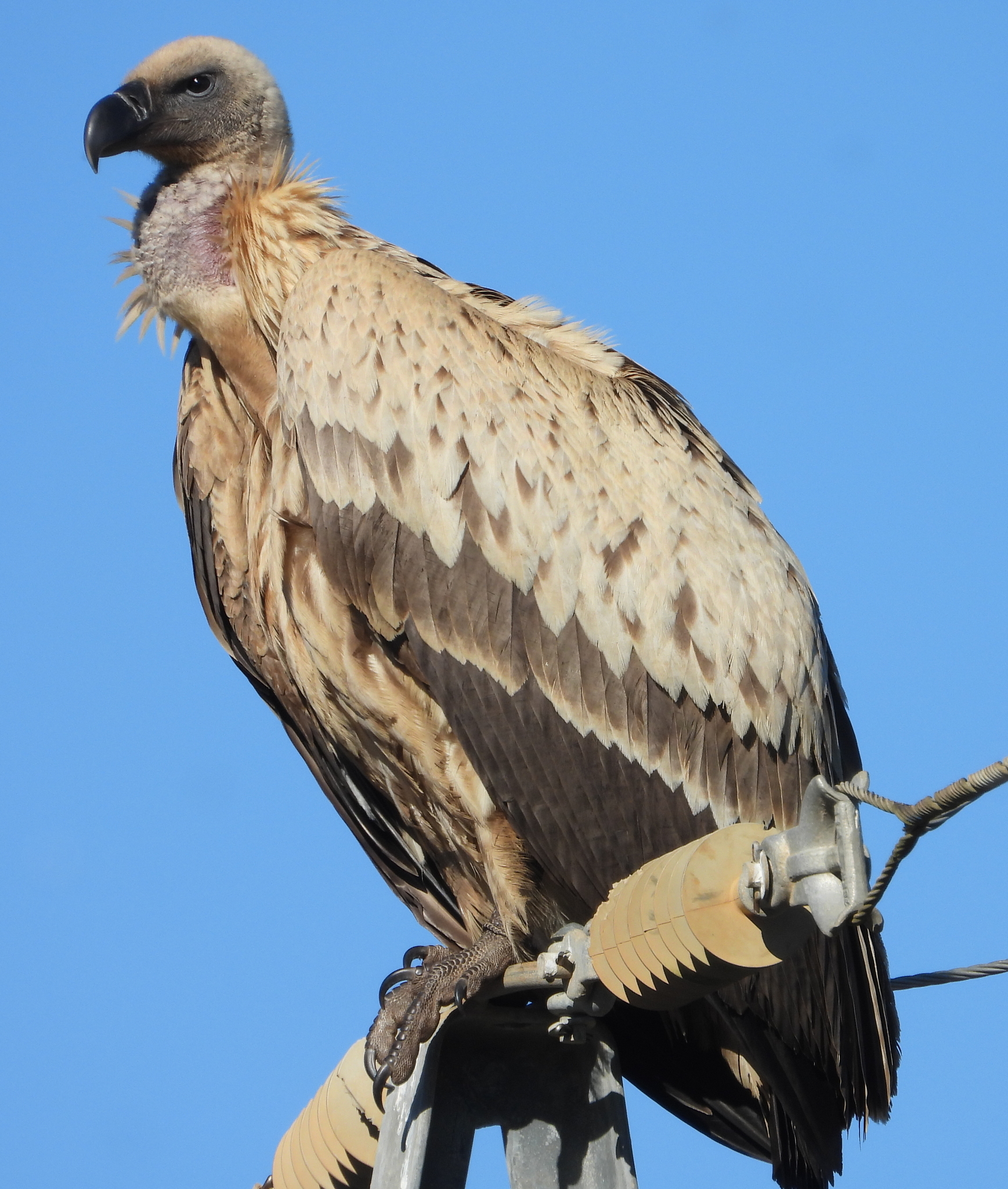
Cape Griffon (Gyps coprotheres) Cape Griffon
Blue-cheeked Bee-eater (Merops persicus) Blue-cheeked Bee-eater

Media

Loading…

In short

The Cape Griffon and the Blue-cheeked Bee-eater are vastly different in appearance and ecology. The Cape Griffon is a large vulture with a pale body and dark flight feathers, while the Blue-cheeked Bee-eater is a small, colorful bird with a green body and blue cheeks. They occupy different habitats and have distinct behaviors, making them easy to distinguish in the field.

Identification tips

1. Size and shape: Cape Griffons are much larger and bulkier than Blue-cheeked Bee-eaters. 2. Plumage: Look for the pale body and dark wings of the Cape Griffon versus the green body and blue cheeks of the Blue-cheeked Bee-eater. 3. Behavior: Note the soaring flight of the Cape Griffon compared to the agile, insect-catching flight of the Blue-cheeked Bee-eater. 4. Habitat: Consider the environment; Cape Griffons are in open, arid areas, while Blue-cheeked Bee-eaters are near water and open fields. 5. Vocalization: Listen for the Bee-eater's distinctive call, absent in the silent Cape Griffon.

Size

The Cape Griffon is significantly larger, with a wingspan that can exceed 2.5 meters, compared to the much smaller Blue-cheeked Bee-eater, which is about 28 cm in length.

Plumage

Cape Griffons have a pale cream to white body with contrasting dark brown flight feathers. In contrast, Blue-cheeked Bee-eaters are predominantly green with distinctive blue cheeks and a yellow throat.

Behaviour

Cape Griffons are soaring scavengers often seen in groups circling high in the sky, while Blue-cheeked Bee-eaters are agile flyers that catch insects in flight and are often seen perched on wires or branches.

Habitat

Cape Griffons are found in open savannas and mountainous areas where they can find carrion. Blue-cheeked Bee-eaters prefer open country with scattered trees, often near water, and are migratory.

Voice

Cape Griffons are generally silent, while Blue-cheeked Bee-eaters have a distinctive, rolling 'prrrt' call that is often heard when they are in flight.

Submit a better description

Use the same sections as the comparison. Your text is published immediately.

The Cape Griffon and the Blue-cheeked Bee-eater are vastly different in appearance and ecology. The Cape Griffon is a large vulture with a pale body and dark flight feathers, while the Blue-cheeked Bee-eater is a small, colorful bird with a green body and blue cheeks. They occupy different habitats and have distinct behaviors, making them easy to distinguish in the field.

1. Size and shape: Cape Griffons are much larger and bulkier than Blue-cheeked Bee-eaters. 2. Plumage: Look for the pale body and dark wings of the Cape Griffon versus the green body and blue cheeks of the Blue-cheeked Bee-eater. 3. Behavior: Note the soaring flight of the Cape Griffon compared to the agile, insect-catching flight of the Blue-cheeked Bee-eater. 4. Habitat: Consider the environment; Cape Griffons are in open, arid areas, while Blue-cheeked Bee-eaters are near water and open fields. 5. Vocalization: Listen for the Bee-eater's distinctive call, absent in the silent Cape Griffon.

The Cape Griffon is significantly larger, with a wingspan that can exceed 2.5 meters, compared to the much smaller Blue-cheeked Bee-eater, which is about 28 cm in length.

Cape Griffons have a pale cream to white body with contrasting dark brown flight feathers. In contrast, Blue-cheeked Bee-eaters are predominantly green with distinctive blue cheeks and a yellow throat.

Cape Griffons are soaring scavengers often seen in groups circling high in the sky, while Blue-cheeked Bee-eaters are agile flyers that catch insects in flight and are often seen perched on wires or branches.

Cape Griffons are found in open savannas and mountainous areas where they can find carrion. Blue-cheeked Bee-eaters prefer open country with scattered trees, often near water, and are migratory.

Cape Griffons are generally silent, while Blue-cheeked Bee-eaters have a distinctive, rolling 'prrrt' call that is often heard when they are in flight.

Discard your changes?

You have unsaved edits. If you leave now, those changes will be lost.

Cape Griffon · Blue-cheeked Bee-eater · My Tricky Birds