
Cape Rock Thrush vs Yellow-tufted Pipit
Monticola rupestris versus Anthus crenatus
Play a quiz with Cape Rock Thrush and Yellow-tufted Pipit
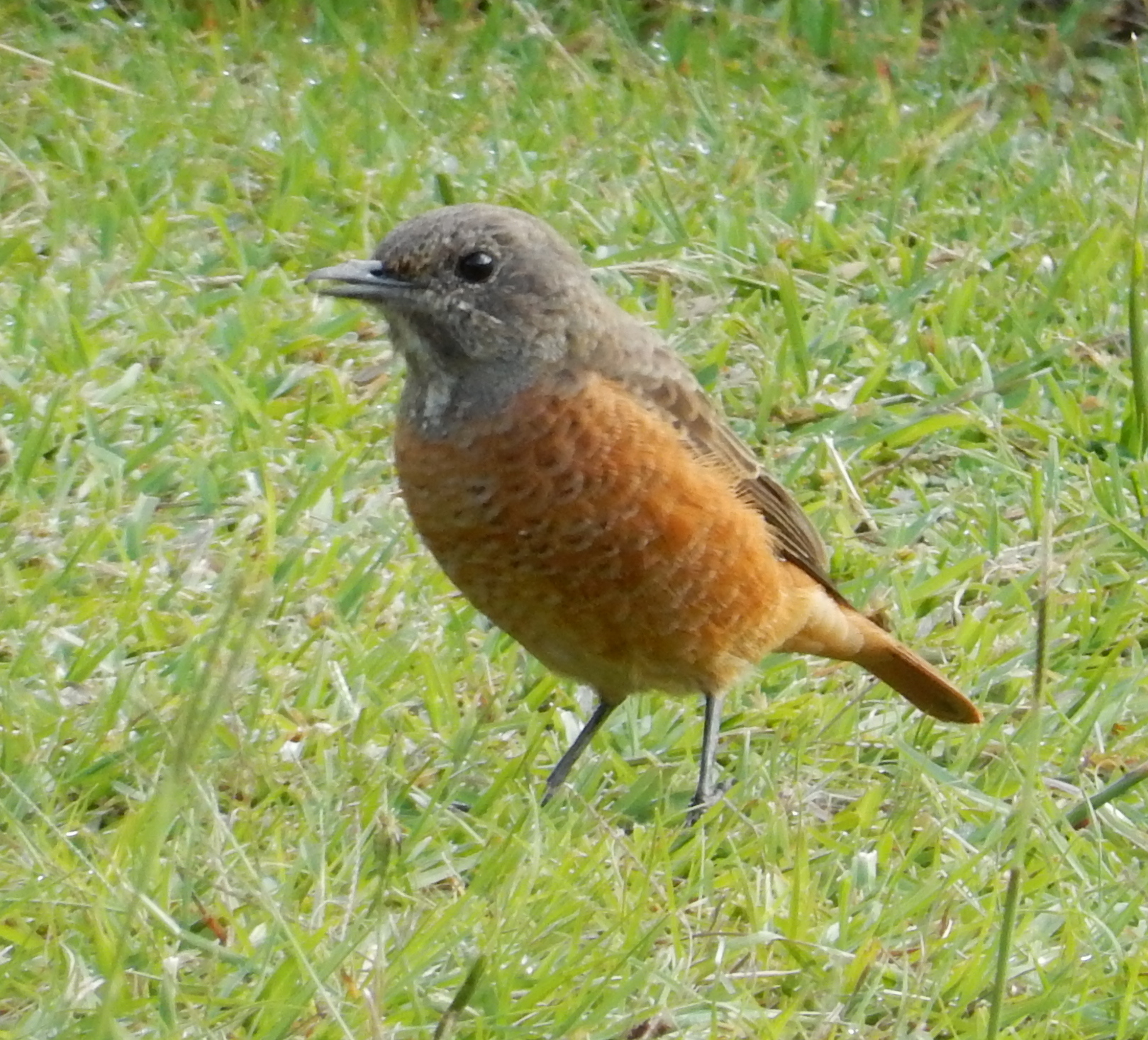 Cape Rock Thrush
 Yellow-tufted Pipit
In short
The Cape Rock Thrush and Yellow-tufted Pipit can be distinguished by their habitat preferences and vocalizations. The Cape Rock Thrush is often found in rocky areas and has a more robust, thrush-like appearance, while the Yellow-tufted Pipit, known as the 'Koppie Lark', is typically seen perched upright on boulders in open grasslands and rocky escarpments, with a distinctive 'whee-prreuuu' call.
Identification tips
- Look for the blue head and chestnut belly of the male Cape Rock Thrush.
- Note the upright posture and distinctive call of the Yellow-tufted Pipit.
- Check the habitat: rocky hillsides for Cape Rock Thrush, open grasslands and escarpments for Yellow-tufted Pipit.
- Observe behavior: Cape Rock Thrushes are more likely to forage on the ground, while Yellow-tufted Pipits perch prominently.
Size
The Cape Rock Thrush is generally larger and more robust than the Yellow-tufted Pipit, which is more slender and pipit-like.
Plumage
Cape Rock Thrush males have a striking blue head and chestnut belly, while females are more subdued. The Yellow-tufted Pipit has a more uniform brownish plumage, making it less conspicuous.
Behaviour
The Cape Rock Thrush often forages on the ground or perches on rocks, while the Yellow-tufted Pipit is known for its upright posture on boulders and characteristic head tilt.
Habitat
Cape Rock Thrushes prefer rocky hillsides and outcrops, whereas Yellow-tufted Pipits are found in open grasslands and rocky escarpments, often at higher elevations.
Voice
The Cape Rock Thrush has a melodious song, while the Yellow-tufted Pipit's call is a loud, ringing 'whee-prreuuu', often given from a prominent perch.