
Caspian Tern vs White-winged Black Tern
Hydroprogne caspia versus Chlidonias leucopterus
Play a quiz with Caspian Tern and White-winged Black Tern
 Caspian Tern
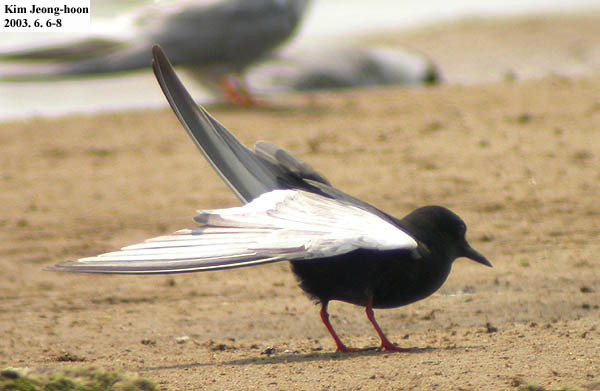 White-winged Black Tern
In short
Caspian Terns and White-winged Black Terns are both members of the Laridae family, but they differ significantly in size and plumage. The Caspian Tern is much larger and is known for its powerful build and strong flight, whereas the White-winged Black Tern is smaller and more delicate, with distinctive plumage changes between breeding and non-breeding seasons.
Identification tips
1. Size: Caspian Terns are much larger than White-winged Black Terns. 2. Bill: Look for the Caspian Tern's thick red bill versus the smaller, subtler bill of the White-winged Black Tern. 3. Plumage: Note the Caspian's consistent white body and black cap compared to the seasonal plumage changes of the White-winged Black Tern. 4. Habitat: Consider the habitat; Caspians prefer open coastal areas, while White-winged Black Terns are often in marshy wetlands. 5. Behavior: Observe flight style; Caspians soar and dive powerfully, while White-winged Black Terns flutter over water.
Size
The Caspian Tern is the largest tern, with broad wings and a robust body, while the White-winged Black Tern is considerably smaller and more slender.
Plumage
Caspian Terns have a mostly white body with a black cap and a large, thick red bill. In contrast, White-winged Black Terns in breeding plumage have a striking black head and body with white wings, while non-breeding birds have a white body with a dark cap and a more subtle bill.
Behaviour
Caspian Terns are powerful fliers, often seen soaring and plunge-diving for fish. White-winged Black Terns are more agile, often seen fluttering over wetlands and catching insects in flight.
Habitat
Caspian Terns are found along coastlines and large inland waters, nesting on flat, open areas. White-winged Black Terns prefer freshwater wetlands and marshes, often in more vegetated areas.
Voice
Caspian Terns have a loud, raucous call, especially noticeable in breeding colonies. White-winged Black Terns have softer, less conspicuous calls.