
Chestnut-backed Antbird vs Grey-headed Antbird
Poliocrania exsul versus Ampelornis griseiceps
Play a quiz with Chestnut-backed Antbird and Grey-headed Antbird
 Chestnut-backed Antbird
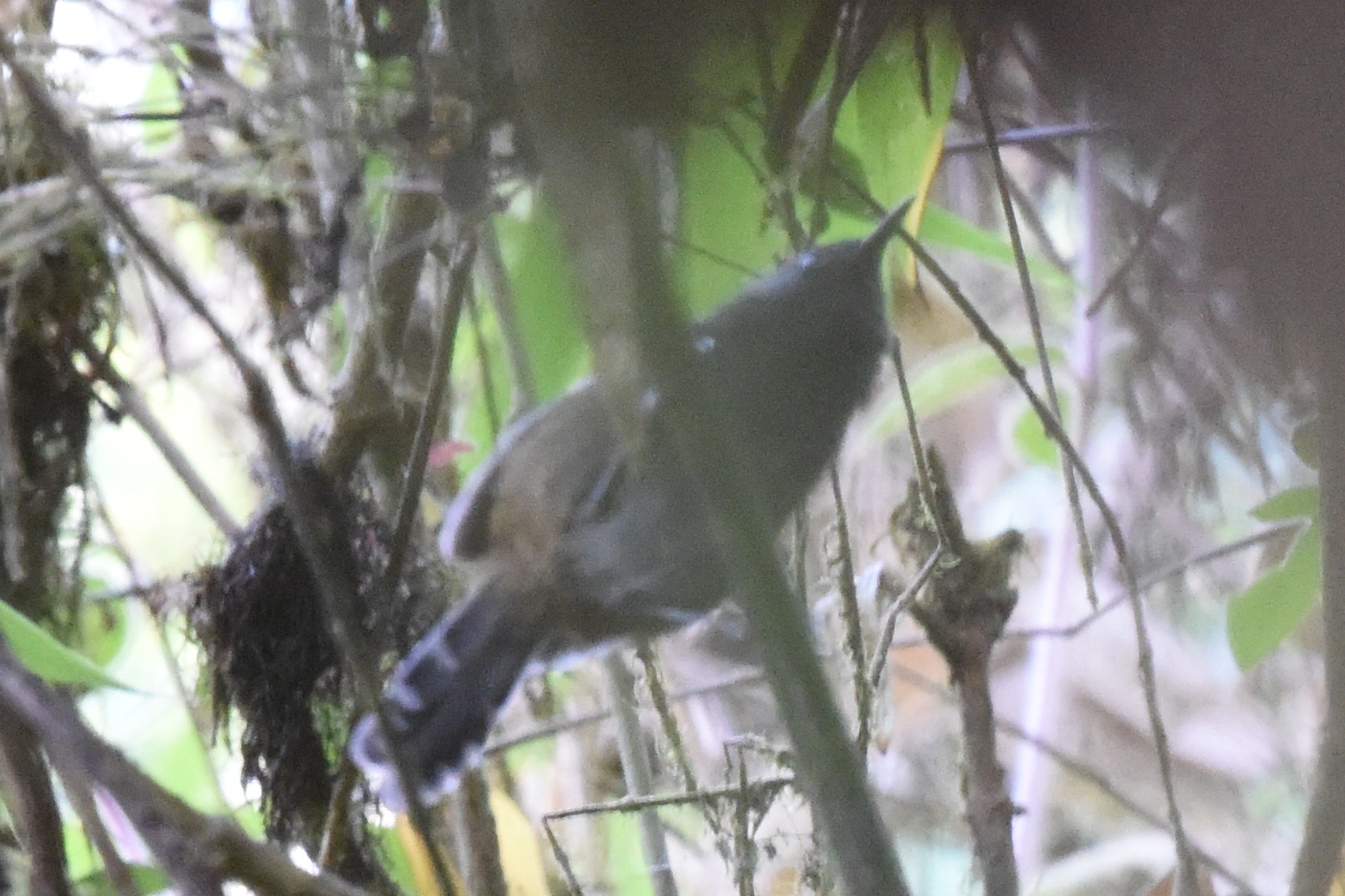 Grey-headed Antbird
In short
The Chestnut-backed Antbird and Gray-headed Antbird can be distinguished by their head and back coloration. The Chestnut-backed Antbird has a distinctive chestnut back, while the Gray-headed Antbird features a gray head and neck with a large white dorsal patch. Both species belong to the Thamnophilidae family but differ in their preferred habitats and altitudinal ranges.
Identification tips
- Look for the chestnut back on the Chestnut-backed Antbird. 2. Note the gray head and large white dorsal patch on the Gray-headed Antbird. 3. Consider the habitat: Chestnut-backed Antbirds are found in lower elevation forests, while Gray-headed Antbirds prefer higher elevation bamboo thickets.
Size
Both species are similar in size, typical of small antbirds.
Plumage
The Chestnut-backed Antbird has a chestnut back and a generally darker appearance. In contrast, the Gray-headed Antbird has a gray head and neck, a large white dorsal patch, black wing coverts with bold white spotting, and gray underparts. The female Gray-headed Antbird is paler and lacks black on the underparts.
Behaviour
Both species forage near the ground, often in pairs or small groups. The Chestnut-backed Antbird is more opportunistic at army-ant swarms, while the Gray-headed Antbird may join mixed-species flocks.
Habitat
The Chestnut-backed Antbird is adaptable to small forest patches and fragmented landscapes, often found at lower elevations. The Gray-headed Antbird is confined to bamboo and dense undergrowth at 600–2900 m.
Chestnut-backed Antbird · Grey-headed Antbird · My Tricky Birds