
Collared Flycatcher vs Common Redstart
Ficedula albicollis versus Phoenicurus phoenicurus
Play a quiz with Collared Flycatcher and Common Redstart
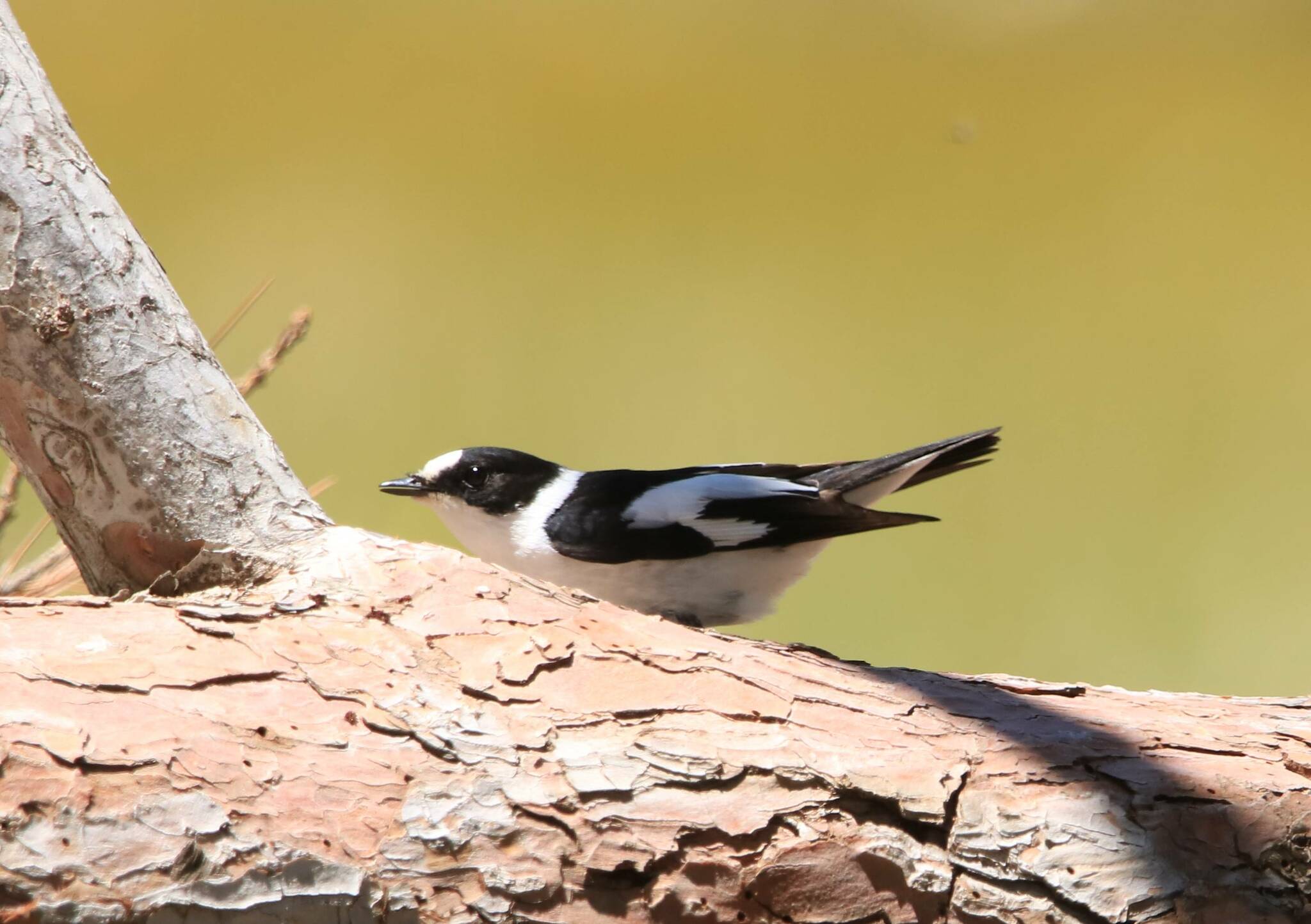 Collared Flycatcher
 Common Redstart
In short
The Collared Flycatcher and Common Redstart can be distinguished by their plumage and behavior. The Collared Flycatcher typically shows a distinctive white collar and black-and-white plumage, while the Common Redstart has a striking orange-red tail and a more colorful appearance. Both species share similar habitats but have distinct vocalizations.
Identification tips
- Look for the white collar on the Collared Flycatcher, especially in males.
- Check the tail color: a red tail indicates a Common Redstart.
- Observe behavior: tail flicking is common in Common Redstarts.
- Listen for vocalizations: familiarize yourself with the distinct songs and calls of each species.
Size
Both species are small passerines, but the Collared Flycatcher is slightly more compact with a shorter tail compared to the more elongated shape of the Common Redstart.
Plumage
The adult male Collared Flycatcher has a black-and-white plumage with a prominent white collar and forehead patch. In contrast, the male Common Redstart displays a bright orange-red tail, a black face, and a white forehead, with a gray back and orange underparts. Females of both species are more subdued, but the female Common Redstart still shows the characteristic red tail.
Behaviour
Collared Flycatchers often perch upright and sally out to catch insects, while Common Redstarts frequently flick their tails and forage more actively on the ground.
Habitat
Both species can be found in open woodlands and forest edges, but the Common Redstart is more likely to be seen in gardens and parks, especially during migration.
Voice
The Collared Flycatcher's song is a series of short, melodious phrases, while the Common Redstart has a more varied song with a mix of whistles and chattering notes. Calls of the two species are distinct, with the Common Redstart's call being a sharp 'huit'.