Birdr

Comb Duck vs Muscovy Duck

Sarkidiornis sylvicola versus Cairina moschata

Play a quiz with Comb Duck and Muscovy Duck

Comb Duck (Sarkidiornis sylvicola) Comb Duck
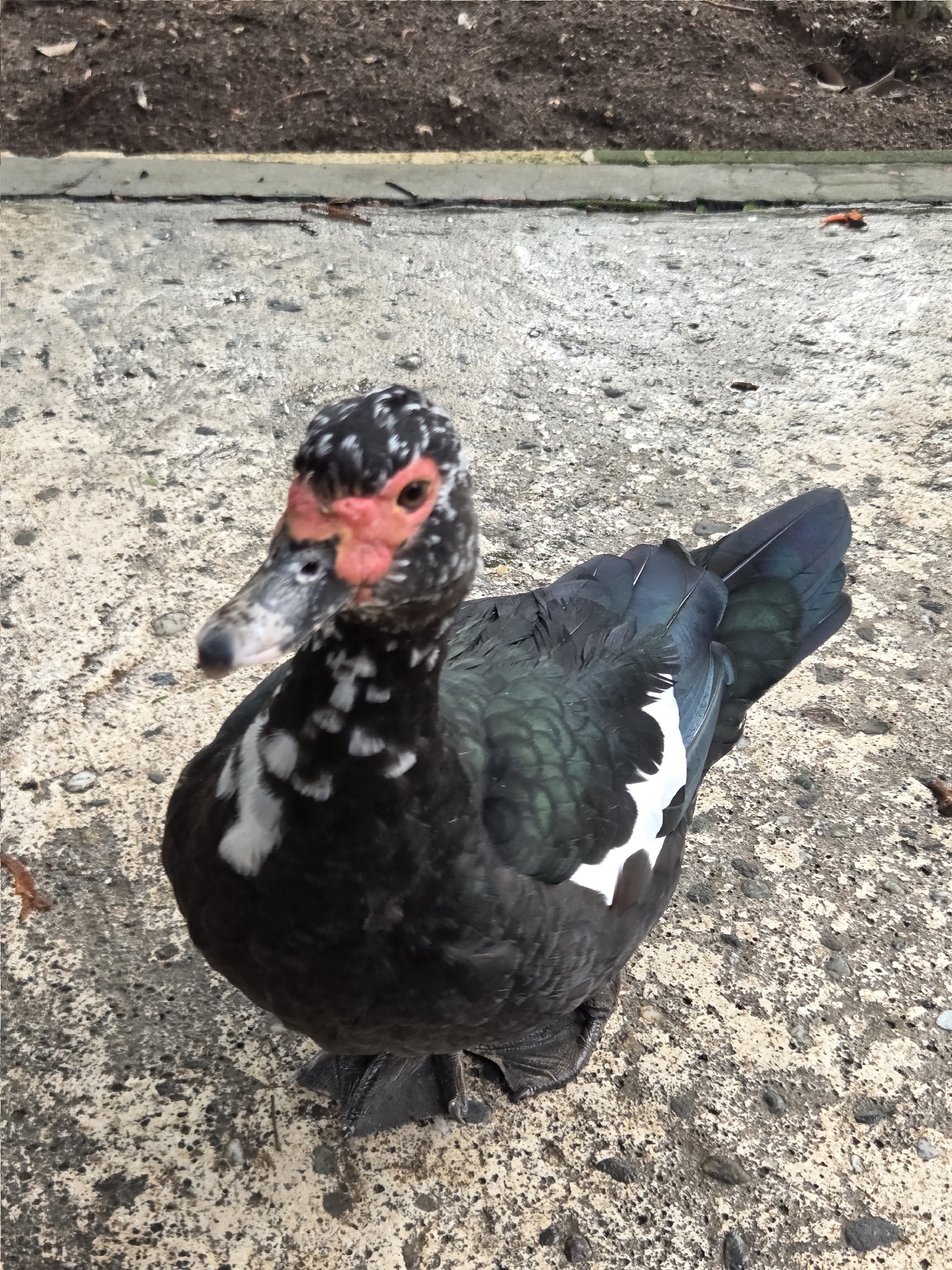
Muscovy Duck (Cairina moschata) Muscovy Duck

Media

Loading…

In short

To distinguish between the Comb Duck and Muscovy Duck, focus on the bill shape and head features. The Comb Duck male has a distinctive large, black, oblong crest above the bill, while the Muscovy Duck lacks this feature and instead has prominent red facial caruncles. Both species are large, but their behaviors and habitats offer additional clues.

Identification tips

  1. Look for the large black crest on male Comb Ducks, absent in Muscovy Ducks. 2. Check for red facial caruncles on Muscovy Ducks, especially around the eyes and bill base. 3. Observe behavior: Muscovy Ducks may be seen in trees, unlike Comb Ducks. 4. Consider habitat: Comb Ducks are more likely in open wetlands, while Muscovy Ducks favor wooded areas.

Size

Both species are large ducks, but the male Muscovy Duck is particularly hefty and larger than the female, similar to the size dimorphism seen in Comb Ducks.

Plumage

Comb Ducks are sexually dimorphic with males having a large crest, while Muscovy Ducks have similar plumage between sexes, with males being larger and having red facial caruncles.

Behaviour

Comb Ducks are often seen grazing on small fish and invertebrates by dabbling on the water surface. Muscovy Ducks, despite their size, are partially arboreal, roosting in trees and nesting in tree cavities.

Habitat

Comb Ducks are typically found in wetland areas, often seen in open water or near vegetation. Muscovy Ducks prefer wooded areas near water, utilizing trees for roosting and nesting.

Submit a better description

Use the same sections as the comparison. Your text is published immediately.

To distinguish between the Comb Duck and Muscovy Duck, focus on the bill shape and head features. The Comb Duck male has a distinctive large, black, oblong crest above the bill, while the Muscovy Duck lacks this feature and instead has prominent red facial caruncles. Both species are large, but their behaviors and habitats offer additional clues.

  1. Look for the large black crest on male Comb Ducks, absent in Muscovy Ducks. 2. Check for red facial caruncles on Muscovy Ducks, especially around the eyes and bill base. 3. Observe behavior: Muscovy Ducks may be seen in trees, unlike Comb Ducks. 4. Consider habitat: Comb Ducks are more likely in open wetlands, while Muscovy Ducks favor wooded areas.

Both species are large ducks, but the male Muscovy Duck is particularly hefty and larger than the female, similar to the size dimorphism seen in Comb Ducks.

Comb Ducks are sexually dimorphic with males having a large crest, while Muscovy Ducks have similar plumage between sexes, with males being larger and having red facial caruncles.

Comb Ducks are often seen grazing on small fish and invertebrates by dabbling on the water surface. Muscovy Ducks, despite their size, are partially arboreal, roosting in trees and nesting in tree cavities.

Comb Ducks are typically found in wetland areas, often seen in open water or near vegetation. Muscovy Ducks prefer wooded areas near water, utilizing trees for roosting and nesting.

Discard your changes?

You have unsaved edits. If you leave now, those changes will be lost.

Comb Duck · Muscovy Duck · My Tricky Birds