Birdr

Common Eider vs Red-legged Kittiwake

Somateria mollissima versus Rissa brevirostris

Play a quiz with Common Eider and Red-legged Kittiwake
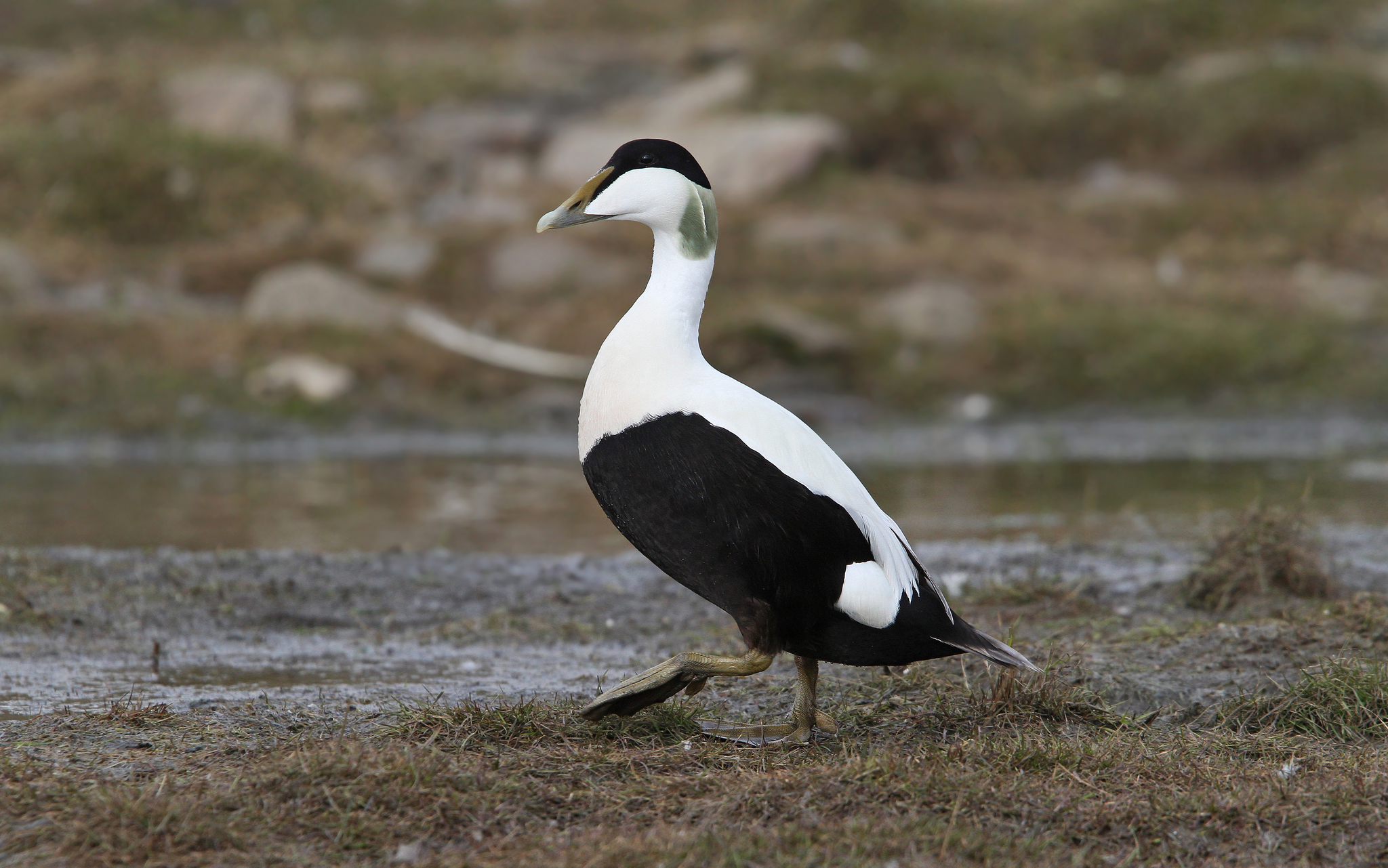
Common Eider (Somateria mollissima) Common Eider
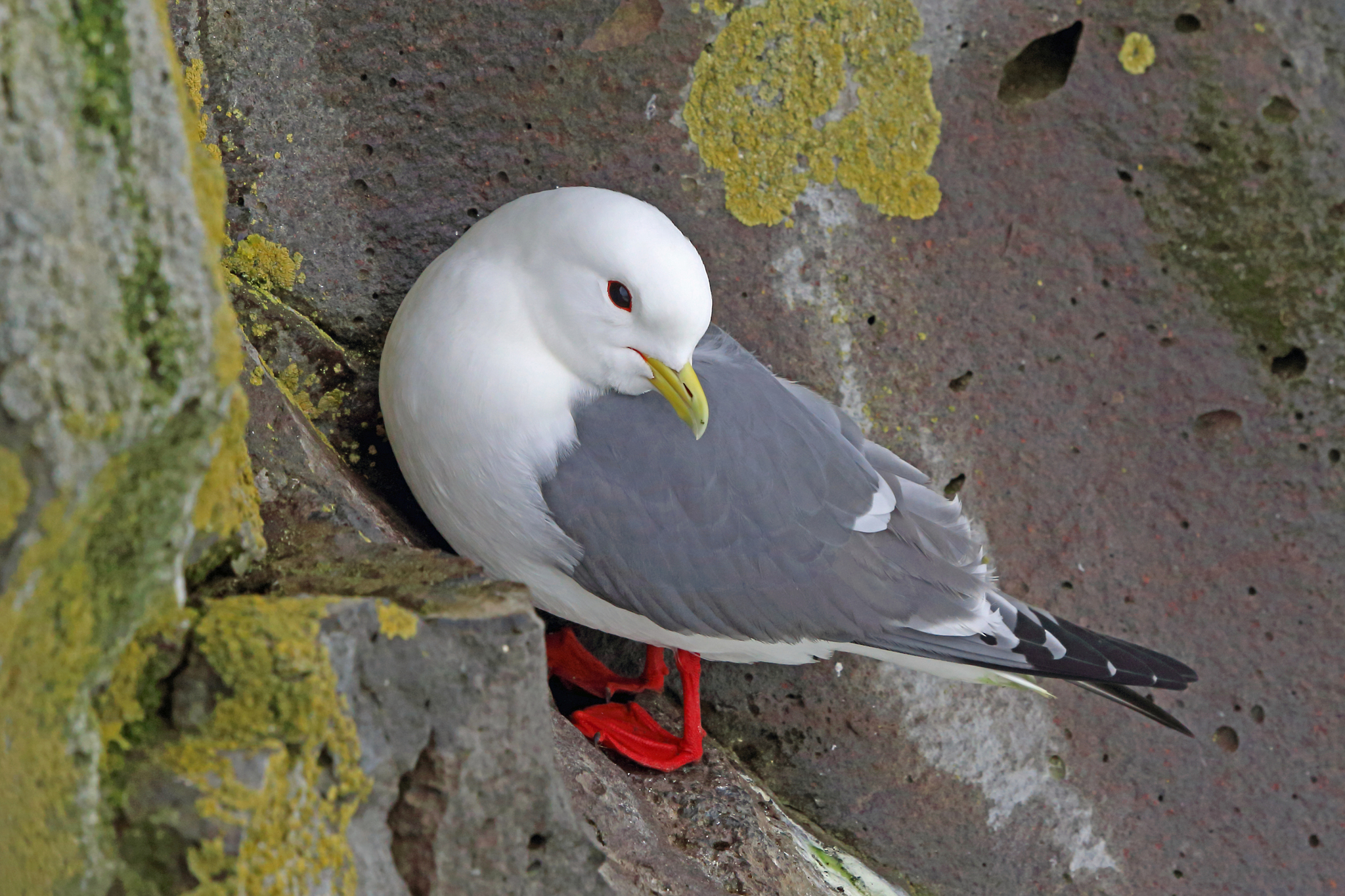
Red-legged Kittiwake (Rissa brevirostris) Red-legged Kittiwake

Media

Loading…

In short

The Common Eider and Red-legged Kittiwake are distinct in both appearance and habitat. The eider is a large sea duck with a robust body, while the kittiwake is a smaller, slender gull. Key differences include the eider's duck-like shape and the kittiwake's gull-like structure and red legs.

Identification tips

Look for the large size and duck-like shape of the Common Eider versus the smaller, gull-like shape of the Red-legged Kittiwake. Note the red legs of the kittiwake, which are a key distinguishing feature. Observe behavior: eiders dive, while kittiwakes fly and perch on cliffs. Habitat can also be a clue: eiders are more coastal, while kittiwakes prefer cliffside environments.

Size

The Common Eider is significantly larger and bulkier than the Red-legged Kittiwake.

Plumage

Common Eiders have a distinctive black and white pattern in males and a more subdued brown in females. Red-legged Kittiwakes are mostly white with a grey back and wings, and notably, red legs.

Behaviour

Common Eiders are diving ducks often seen floating in groups or diving for food. Red-legged Kittiwakes are more likely to be seen flying or perched on cliffs.

Habitat

Common Eiders are found in coastal marine environments, often near rocky shores. Red-legged Kittiwakes are typically found on cliffs in the Bering Sea region.

Voice

Common Eiders have a soft cooing call, while Red-legged Kittiwakes have a high-pitched, repetitive 'kitti-waake' call.

Submit a better description

Use the same sections as the comparison. Your text is published immediately.

The Common Eider and Red-legged Kittiwake are distinct in both appearance and habitat. The eider is a large sea duck with a robust body, while the kittiwake is a smaller, slender gull. Key differences include the eider's duck-like shape and the kittiwake's gull-like structure and red legs.

Look for the large size and duck-like shape of the Common Eider versus the smaller, gull-like shape of the Red-legged Kittiwake. Note the red legs of the kittiwake, which are a key distinguishing feature. Observe behavior: eiders dive, while kittiwakes fly and perch on cliffs. Habitat can also be a clue: eiders are more coastal, while kittiwakes prefer cliffside environments.

The Common Eider is significantly larger and bulkier than the Red-legged Kittiwake.

Common Eiders have a distinctive black and white pattern in males and a more subdued brown in females. Red-legged Kittiwakes are mostly white with a grey back and wings, and notably, red legs.

Common Eiders are diving ducks often seen floating in groups or diving for food. Red-legged Kittiwakes are more likely to be seen flying or perched on cliffs.

Common Eiders are found in coastal marine environments, often near rocky shores. Red-legged Kittiwakes are typically found on cliffs in the Bering Sea region.

Common Eiders have a soft cooing call, while Red-legged Kittiwakes have a high-pitched, repetitive 'kitti-waake' call.

Discard your changes?

You have unsaved edits. If you leave now, those changes will be lost.

Common Eider · Red-legged Kittiwake · My Tricky Birds