Birdr

Common Eider vs Velvet Scoter

Somateria mollissima versus Melanitta fusca

Play a quiz with Common Eider and Velvet Scoter
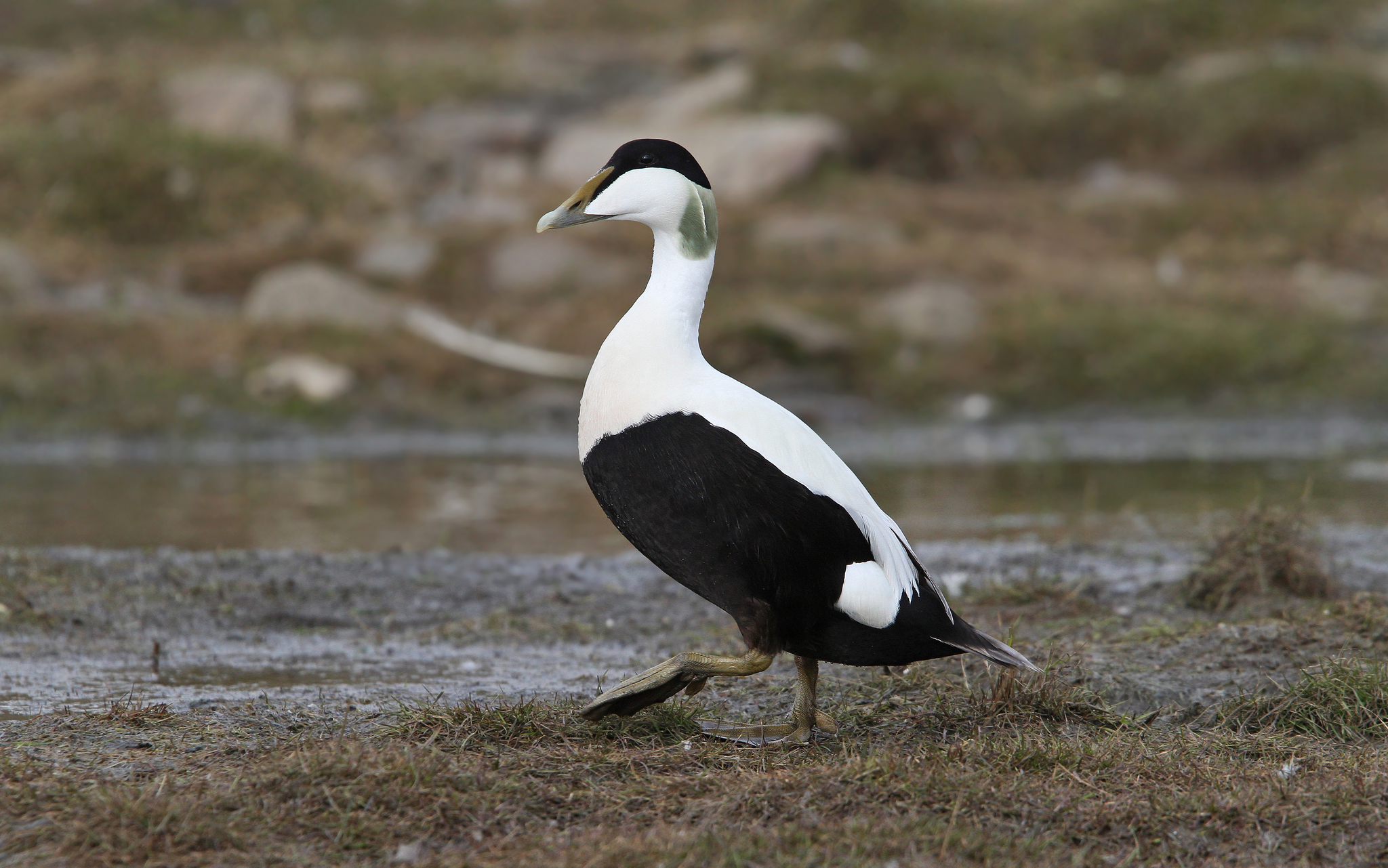
Common Eider (Somateria mollissima) Common Eider
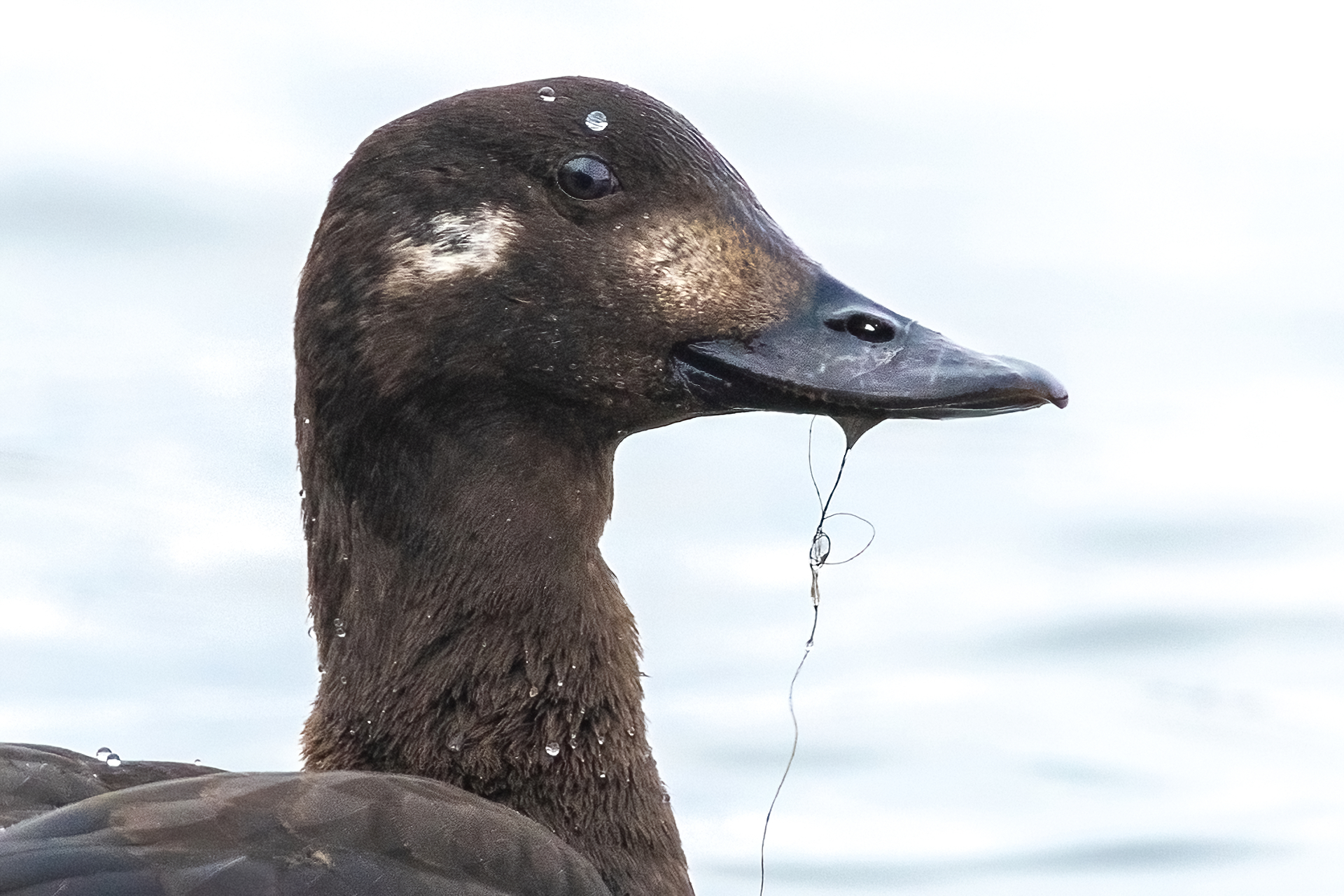
Velvet Scoter (Melanitta fusca) Velvet Scoter

Media

Loading…

In short

The Common Eider and Velvet Scoter are both large sea ducks, but they can be distinguished by their bill shape and plumage patterns. The Common Eider has a distinctive wedge-shaped bill and a more contrasting plumage, while the Velvet Scoter features a more rounded bill and a less contrasting, darker appearance.

Identification tips

  1. Look for the wedge-shaped bill of the Common Eider compared to the rounded bill of the Velvet Scoter. 2. Note the plumage contrast: the Common Eider male is black and white, while the Velvet Scoter male is mostly black with a white wing patch. 3. Observe behavior: Common Eiders often form crèches. 4. Consider habitat: Common Eiders are more likely in sheltered waters, while Velvet Scoters prefer open seas.

Size

Both species are large sea ducks, but the Common Eider is generally bulkier with a more robust body.

Plumage

The Common Eider male has a striking black and white pattern with a greenish nape, while the female is mottled brown. The Velvet Scoter male is mostly black with a white patch on the wings, and the female is dark brown with a less distinct pattern.

Behaviour

Both species dive for food, but the Common Eider often forms crèches, groups of ducklings cared for collectively, which is less common in Velvet Scoters.

Habitat

Both species inhabit coastal waters, but the Common Eider is more frequently found in sheltered bays and estuaries, while the Velvet Scoter prefers open sea areas.

Voice

The Common Eider is known for its soft cooing calls, while the Velvet Scoter has a more whistling call, though vocalizations are not the most reliable distinguishing feature.

Submit a better description

Use the same sections as the comparison. Your text is published immediately.

The Common Eider and Velvet Scoter are both large sea ducks, but they can be distinguished by their bill shape and plumage patterns. The Common Eider has a distinctive wedge-shaped bill and a more contrasting plumage, while the Velvet Scoter features a more rounded bill and a less contrasting, darker appearance.

  1. Look for the wedge-shaped bill of the Common Eider compared to the rounded bill of the Velvet Scoter. 2. Note the plumage contrast: the Common Eider male is black and white, while the Velvet Scoter male is mostly black with a white wing patch. 3. Observe behavior: Common Eiders often form crèches. 4. Consider habitat: Common Eiders are more likely in sheltered waters, while Velvet Scoters prefer open seas.

Both species are large sea ducks, but the Common Eider is generally bulkier with a more robust body.

The Common Eider male has a striking black and white pattern with a greenish nape, while the female is mottled brown. The Velvet Scoter male is mostly black with a white patch on the wings, and the female is dark brown with a less distinct pattern.

Both species dive for food, but the Common Eider often forms crèches, groups of ducklings cared for collectively, which is less common in Velvet Scoters.

Both species inhabit coastal waters, but the Common Eider is more frequently found in sheltered bays and estuaries, while the Velvet Scoter prefers open sea areas.

The Common Eider is known for its soft cooing calls, while the Velvet Scoter has a more whistling call, though vocalizations are not the most reliable distinguishing feature.

Discard your changes?

You have unsaved edits. If you leave now, those changes will be lost.

Common Eider · Velvet Scoter · My Tricky Birds