Birdr

Common Pheasant vs Red Junglefowl

Phasianus colchicus versus Gallus gallus

Play a quiz with Common Pheasant and Red Junglefowl
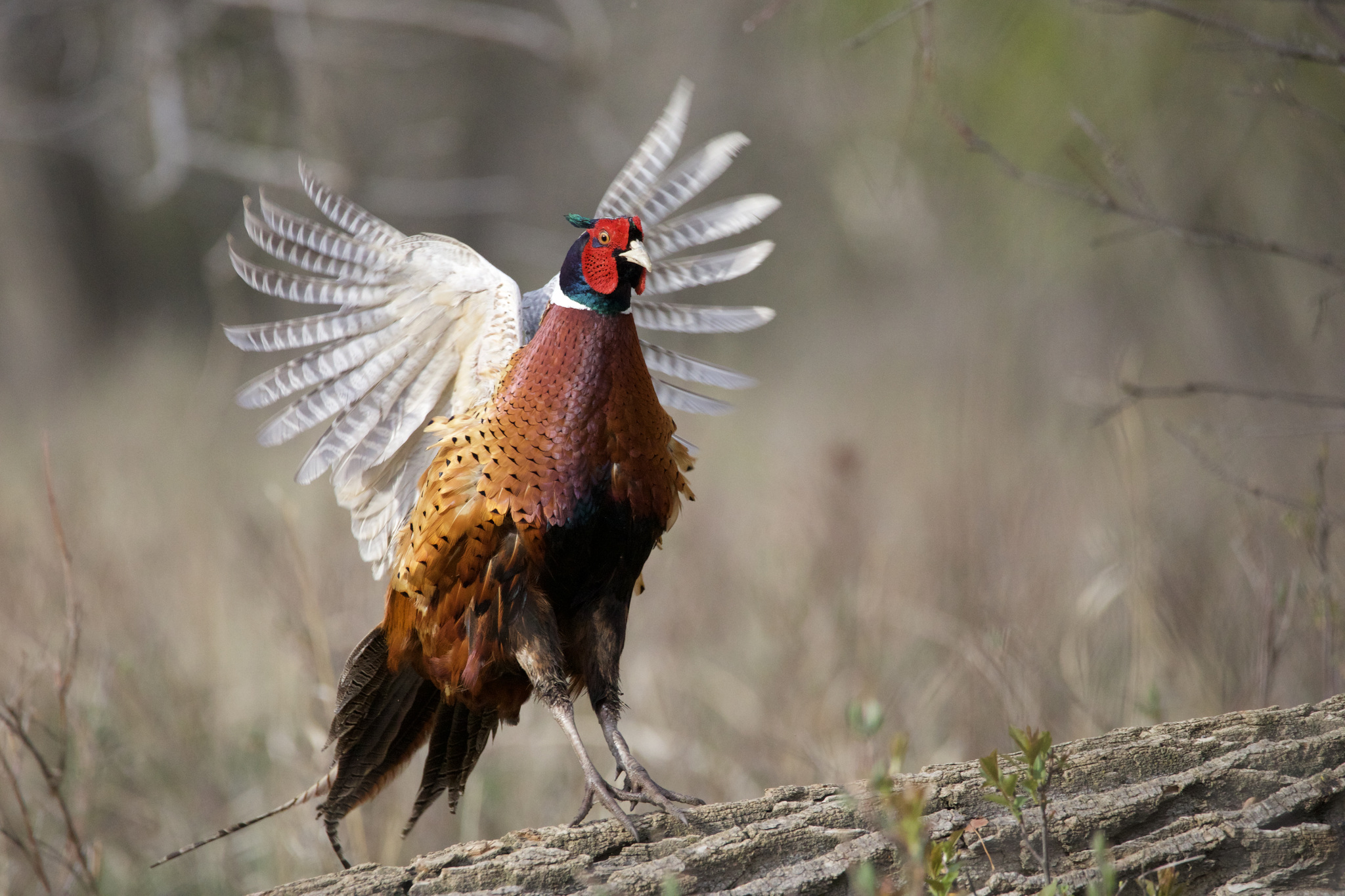
Common Pheasant (Phasianus colchicus) Common Pheasant
Red Junglefowl (Gallus gallus) Red Junglefowl

Media

Loading…

In short

The Common Pheasant and Red Junglefowl can be distinguished primarily by their habitat preferences and plumage characteristics. Common Pheasants are often found in open agricultural areas, while Red Junglefowl prefer forested environments. In terms of appearance, male Common Pheasants have a distinctive white neck ring and iridescent plumage, whereas male Red Junglefowl resemble domestic chickens with a prominent red comb and wattles.

Identification tips

  1. Habitat: Look for Common Pheasants in open fields and agricultural areas, while Red Junglefowl are more likely in forests. 2. Plumage: Check for the white neck ring and iridescent colors on male Common Pheasants. 3. Behavior: Observe the bird's behavior; pheasants are more likely to be seen in open areas, while junglefowl are more secretive. 4. Vocalizations: Listen for the distinct crowing; pheasants have a harsher call compared to the junglefowl's rooster-like crow.

Size

Both species are similar in size, but the Common Pheasant is generally bulkier and has a longer tail compared to the more compact Red Junglefowl.

Plumage

Male Common Pheasants have a striking iridescent plumage with a white neck ring, while male Red Junglefowl have a more uniform appearance with a red comb and wattles, similar to domestic chickens. Females of both species are more cryptically colored, but the pheasant's plumage is generally more mottled.

Behaviour

Common Pheasants are often seen in open fields and are known for their explosive flight when flushed. Red Junglefowl are more secretive, often foraging on the ground in forested areas and capable of short bursts of flight.

Habitat

Common Pheasants are typically found in agricultural areas with nearby cover like hedges and woods. Red Junglefowl prefer dense forest habitats and are less likely to be seen in open fields.

Voice

The Common Pheasant's call is a loud, harsh crowing, often heard in the early morning. Red Junglefowl have a more familiar crowing sound, similar to domestic roosters.

Submit a better description

Use the same sections as the comparison. Your text is published immediately.

The Common Pheasant and Red Junglefowl can be distinguished primarily by their habitat preferences and plumage characteristics. Common Pheasants are often found in open agricultural areas, while Red Junglefowl prefer forested environments. In terms of appearance, male Common Pheasants have a distinctive white neck ring and iridescent plumage, whereas male Red Junglefowl resemble domestic chickens with a prominent red comb and wattles.

  1. Habitat: Look for Common Pheasants in open fields and agricultural areas, while Red Junglefowl are more likely in forests. 2. Plumage: Check for the white neck ring and iridescent colors on male Common Pheasants. 3. Behavior: Observe the bird's behavior; pheasants are more likely to be seen in open areas, while junglefowl are more secretive. 4. Vocalizations: Listen for the distinct crowing; pheasants have a harsher call compared to the junglefowl's rooster-like crow.

Both species are similar in size, but the Common Pheasant is generally bulkier and has a longer tail compared to the more compact Red Junglefowl.

Male Common Pheasants have a striking iridescent plumage with a white neck ring, while male Red Junglefowl have a more uniform appearance with a red comb and wattles, similar to domestic chickens. Females of both species are more cryptically colored, but the pheasant's plumage is generally more mottled.

Common Pheasants are often seen in open fields and are known for their explosive flight when flushed. Red Junglefowl are more secretive, often foraging on the ground in forested areas and capable of short bursts of flight.

Common Pheasants are typically found in agricultural areas with nearby cover like hedges and woods. Red Junglefowl prefer dense forest habitats and are less likely to be seen in open fields.

The Common Pheasant's call is a loud, harsh crowing, often heard in the early morning. Red Junglefowl have a more familiar crowing sound, similar to domestic roosters.

Discard your changes?

You have unsaved edits. If you leave now, those changes will be lost.

Common Pheasant · Red Junglefowl · My Tricky Birds