
Common Pochard vs Ring-necked Duck
Aythya ferina versus Aythya collaris
Play a quiz with Common Pochard and Ring-necked Duck
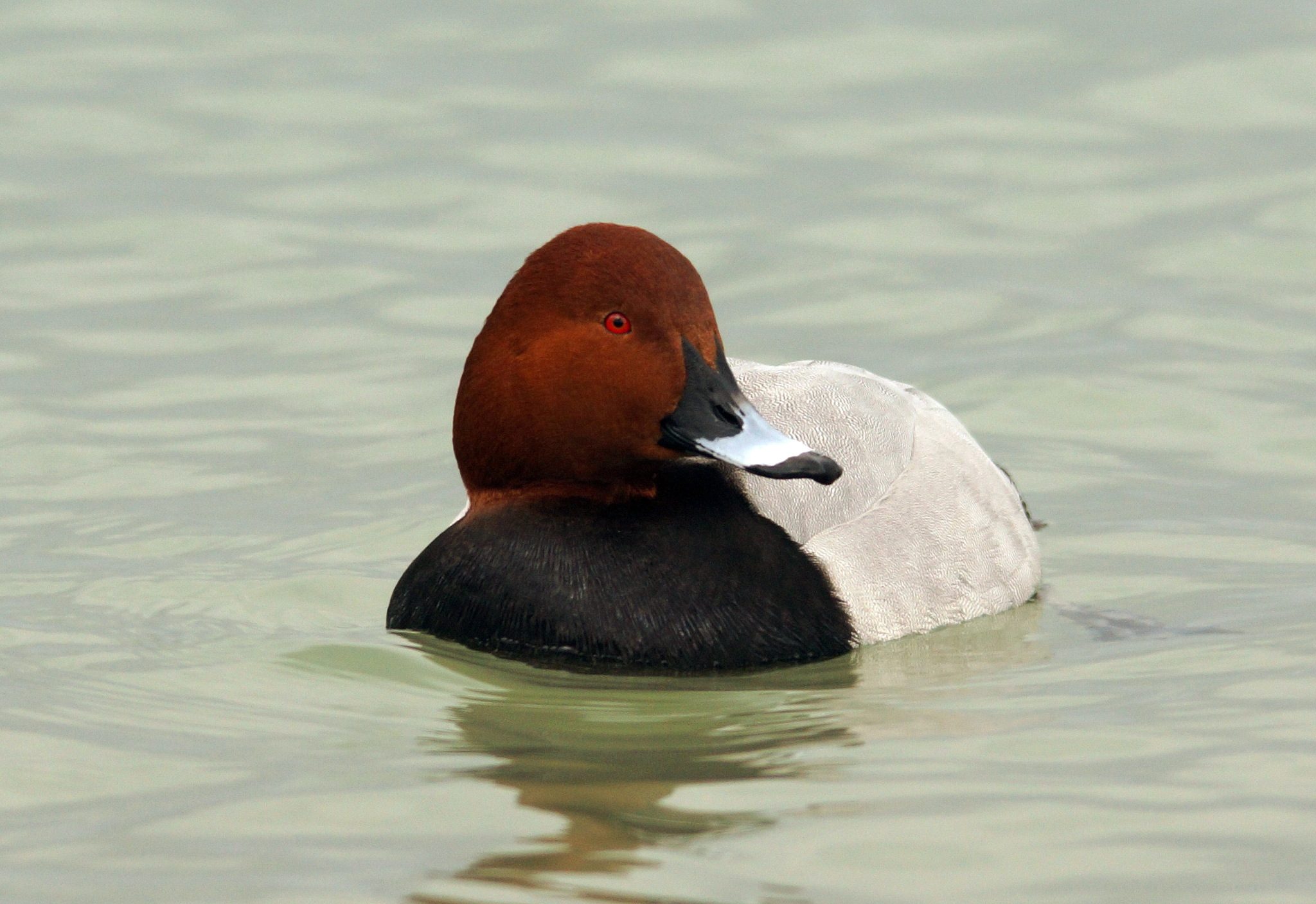 Common Pochard
 Ring-necked Duck
In short
The Common Pochard and Ring-necked Duck are both medium-sized diving ducks, but they can be distinguished by their head shape and bill markings. The Ring-necked Duck has a distinctive white ring on its bill and an angular head profile due to a short crest, while the Common Pochard has a more rounded head and lacks the bill ring.
Identification tips
- Look for the white ring on the bill of the Ring-necked Duck. 2. Note the angular head shape of the Ring-necked Duck compared to the rounded head of the Common Pochard. 3. Observe the plumage color: red head for male Common Pochard vs. black head for male Ring-necked Duck. 4. Check for habitat: Common Pochard in larger water bodies vs. Ring-necked Duck in shallow wetlands. 5. Be aware of geographic location: Common Pochard in Eurasia, Ring-necked Duck in North America.
Size
Both species are similar in size, typical of medium-sized diving ducks.
Plumage
The male Common Pochard has a striking red head and gray body, whereas the male Ring-necked Duck has a black head, chest, and back with gray sides. Females of both species are more subdued in color but can be differentiated by the Ring-necked Duck's more pronounced facial contrast and bill markings.
Behaviour
Both species are diving ducks, but the Ring-necked Duck is known for its preference for shallow, freshwater wetlands, often diving in shallow water.
Habitat
The Common Pochard is more widespread in Eurasia, often found in larger bodies of water, while the Ring-necked Duck is native to North America, preferring shallow wetlands with abundant vegetation.
Voice
Vocalizations are not a primary distinguishing feature between these species in the field.