Birdr

Common Quail vs Rock Partridge

Coturnix coturnix versus Alectoris graeca

Play a quiz with Common Quail and Rock Partridge
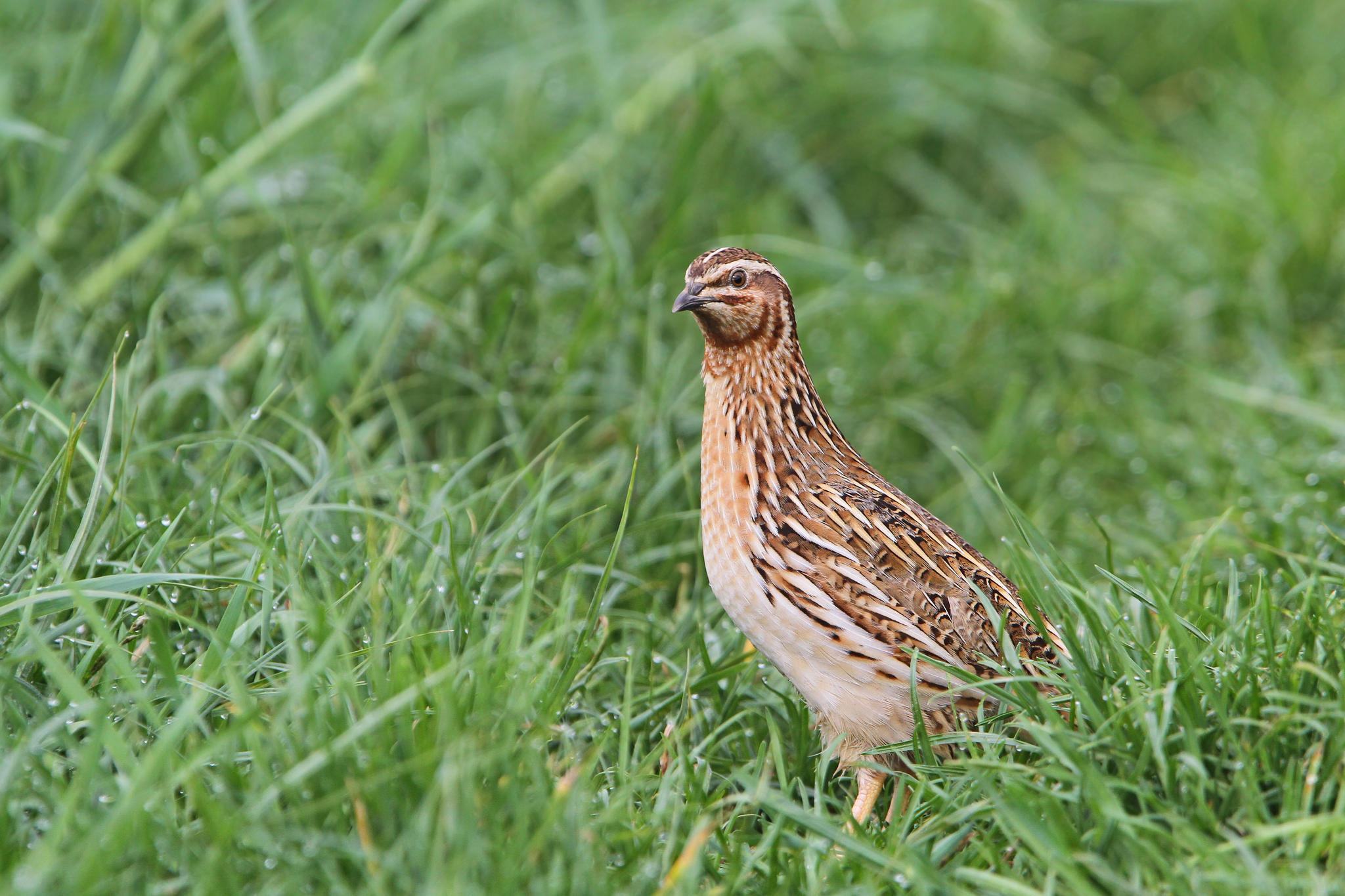
Common Quail (Coturnix coturnix) Common Quail
Rock Partridge (Alectoris graeca) Rock Partridge

Media

Loading…

In short

The Common Quail and Rock Partridge can be distinguished by size and habitat preferences. The Rock Partridge is noticeably larger and favors rocky, mountainous areas, while the Common Quail is smaller and more often found in grasslands and fields. Vocalizations also differ, with the Common Quail having a distinctive 'wet-my-lips' call.

Identification tips

  1. Size: Look for the larger size of the Rock Partridge. 2. Habitat: Note the habitat; Rock Partridges are in rocky areas, Common Quails in grasslands. 3. Facial markings: Rock Partridges have a bold face pattern. 4. Vocalizations: Listen for the Common Quail's 'wet-my-lips' call. 5. Behavior: Common Quails are more likely to stay hidden.

Size

The Rock Partridge is larger and more robust compared to the smaller, more compact Common Quail.

Plumage

Both species have cryptic plumage, but the Rock Partridge has more distinct facial markings with a bold black and white face pattern, while the Common Quail is more uniformly brown and streaked.

Behaviour

Common Quails are more secretive and often remain hidden in vegetation, while Rock Partridges are more likely to be seen in open rocky areas.

Habitat

Common Quails prefer open grasslands and agricultural fields, whereas Rock Partridges are typically found in rocky, mountainous regions.

Voice

The Common Quail is known for its repetitive 'wet-my-lips' call, while the Rock Partridge's call is a series of loud, harsh notes.

Submit a better description

Use the same sections as the comparison. Your text is published immediately.

The Common Quail and Rock Partridge can be distinguished by size and habitat preferences. The Rock Partridge is noticeably larger and favors rocky, mountainous areas, while the Common Quail is smaller and more often found in grasslands and fields. Vocalizations also differ, with the Common Quail having a distinctive 'wet-my-lips' call.

  1. Size: Look for the larger size of the Rock Partridge. 2. Habitat: Note the habitat; Rock Partridges are in rocky areas, Common Quails in grasslands. 3. Facial markings: Rock Partridges have a bold face pattern. 4. Vocalizations: Listen for the Common Quail's 'wet-my-lips' call. 5. Behavior: Common Quails are more likely to stay hidden.

The Rock Partridge is larger and more robust compared to the smaller, more compact Common Quail.

Both species have cryptic plumage, but the Rock Partridge has more distinct facial markings with a bold black and white face pattern, while the Common Quail is more uniformly brown and streaked.

Common Quails are more secretive and often remain hidden in vegetation, while Rock Partridges are more likely to be seen in open rocky areas.

Common Quails prefer open grasslands and agricultural fields, whereas Rock Partridges are typically found in rocky, mountainous regions.

The Common Quail is known for its repetitive 'wet-my-lips' call, while the Rock Partridge's call is a series of loud, harsh notes.

Discard your changes?

You have unsaved edits. If you leave now, those changes will be lost.

Common Quail · Rock Partridge · My Tricky Birds