
Common Ringed Plover vs Black-fronted Dotterel
Charadrius hiaticula versus Thinornis melanops
Play a quiz with Common Ringed Plover and Black-fronted Dotterel
 Common Ringed Plover
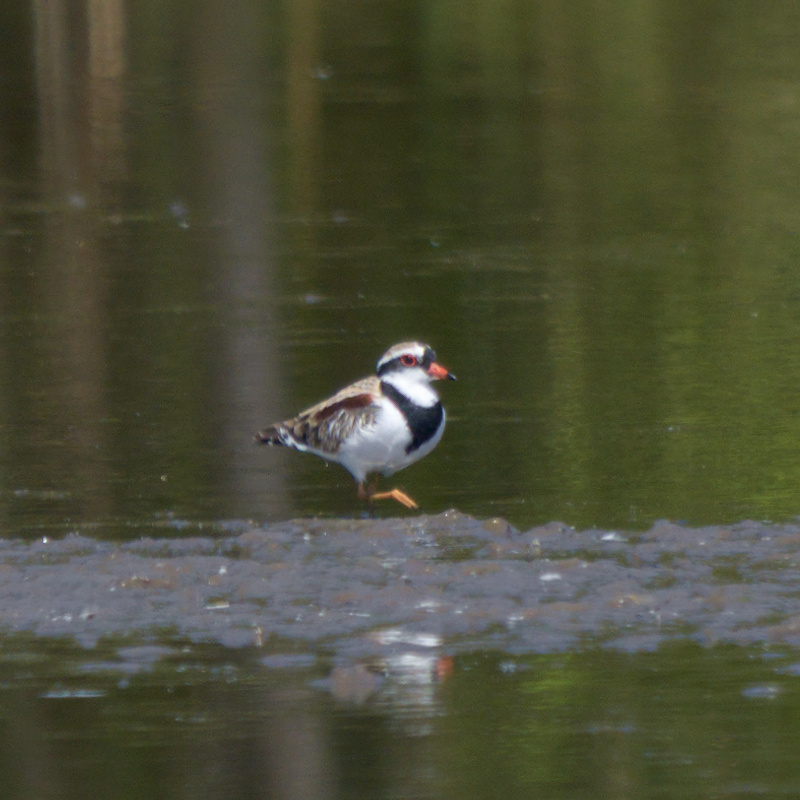 Black-fronted Dotterel
In short
The Common Ringed Plover and Black-fronted Dotterel can be distinguished by their facial markings and habitat preferences. The Common Ringed Plover has a more uniform appearance with a distinct black band across the chest, while the Black-fronted Dotterel features a striking black mask and a white forehead. Both species belong to the Charadriidae family, but their differences in plumage and behavior are key to telling them apart.
Identification tips
- Look for the black mask and white forehead on the Black-fronted Dotterel. 2. Check for the black chest band and uniform brown back on the Common Ringed Plover. 3. Observe habitat: coastal for Common Ringed Plover, freshwater for Black-fronted Dotterel. 4. Listen for calls: 'peep' for Common Ringed Plover, 'pip-pip' for Black-fronted Dotterel.
Size
Both species are small plovers, but the Common Ringed Plover is slightly bulkier with a more robust build compared to the more delicate Black-fronted Dotterel.
Plumage
The Common Ringed Plover has a black band across its chest and a white collar, with a brown back and wings. The Black-fronted Dotterel is notable for its black facial mask, white forehead, and a black band that runs from the bill through the eyes, contrasting with its white underparts and brown upperparts.
Behaviour
Both species exhibit typical plover behavior, such as running and stopping abruptly while foraging. However, the Black-fronted Dotterel is often seen near freshwater habitats, while the Common Ringed Plover is more coastal.
Habitat
The Common Ringed Plover is typically found in coastal areas, including sandy beaches and mudflats. In contrast, the Black-fronted Dotterel prefers freshwater environments like riverbanks and wetlands.
Voice
The Common Ringed Plover has a distinctive 'peep' call, while the Black-fronted Dotterel's call is a softer, more musical 'pip-pip'.
Common Ringed Plover · Black-fronted Dotterel · My Tricky Birds