
Common Scoter vs Bufflehead
Melanitta nigra versus Bucephala albeola
Play a quiz with Common Scoter and Bufflehead
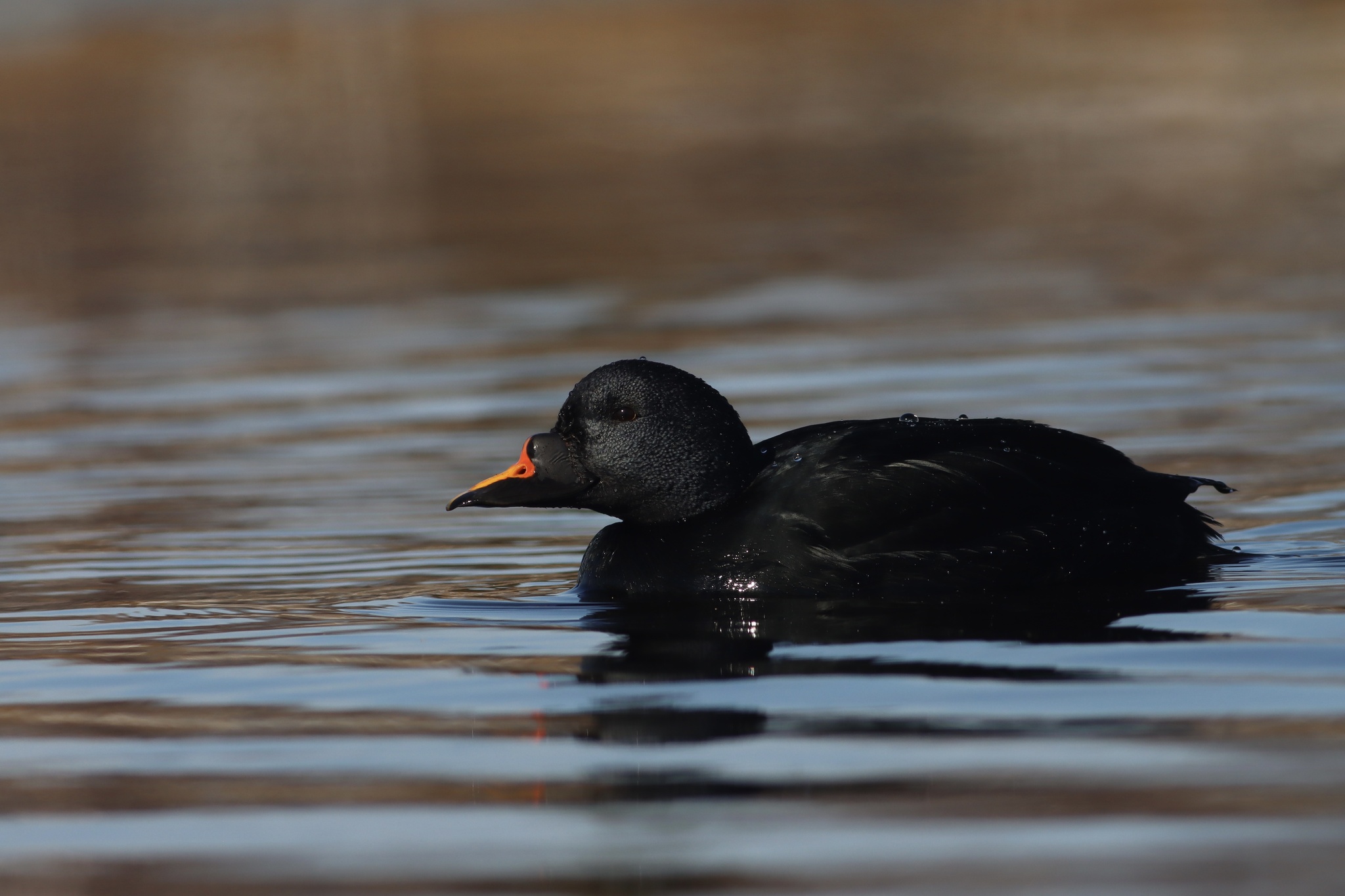 Common Scoter
 Bufflehead
In short
The Common Scoter and Bufflehead are both small, dark sea ducks, but they can be distinguished by their size, bill shape, and plumage. The Common Scoter is larger with a more uniform dark plumage, while the Bufflehead is smaller with distinctive white patches on the head and body.
Identification tips
- Size: Common Scoter is larger.
- Bill: Common Scoter has a dull black bill with a yellow patch, while Bufflehead has a small, dark bill.
- Plumage: Look for the Bufflehead's distinctive white head patch and body markings.
- Habitat: Consider the environment; Common Scoters are more marine, Buffleheads more freshwater.
- Flight: Common Scoter has a direct flight with a long-necked appearance; Bufflehead has rapid wingbeats.
Size
The Common Scoter is significantly larger, with a wingspan of 79–90 cm, compared to the smaller Bufflehead.
Plumage
Male Common Scoters are sooty black with a yellow patch on the bill, while Buffleheads have striking white patches on their head and body, with males showing a large white patch on the back of the head.
Behaviour
Common Scoters have a light, fast, and direct flight, often seen in large flocks at sea. Buffleheads are more likely to be seen in smaller groups and are known for their rapid wingbeats.
Habitat
Common Scoters are typically found in marine environments, especially in winter, while Buffleheads prefer freshwater lakes and ponds during breeding and coastal waters in winter.
Voice
Common Scoters are usually silent but can produce thin, piping whistles, whereas Buffleheads are also generally quiet but may emit a soft, squeaky call.