Birdr

Common Starling vs Mistle Thrush

Sturnus vulgaris versus Turdus viscivorus

Play a quiz with Common Starling and Mistle Thrush

Common Starling (Sturnus vulgaris) Common Starling
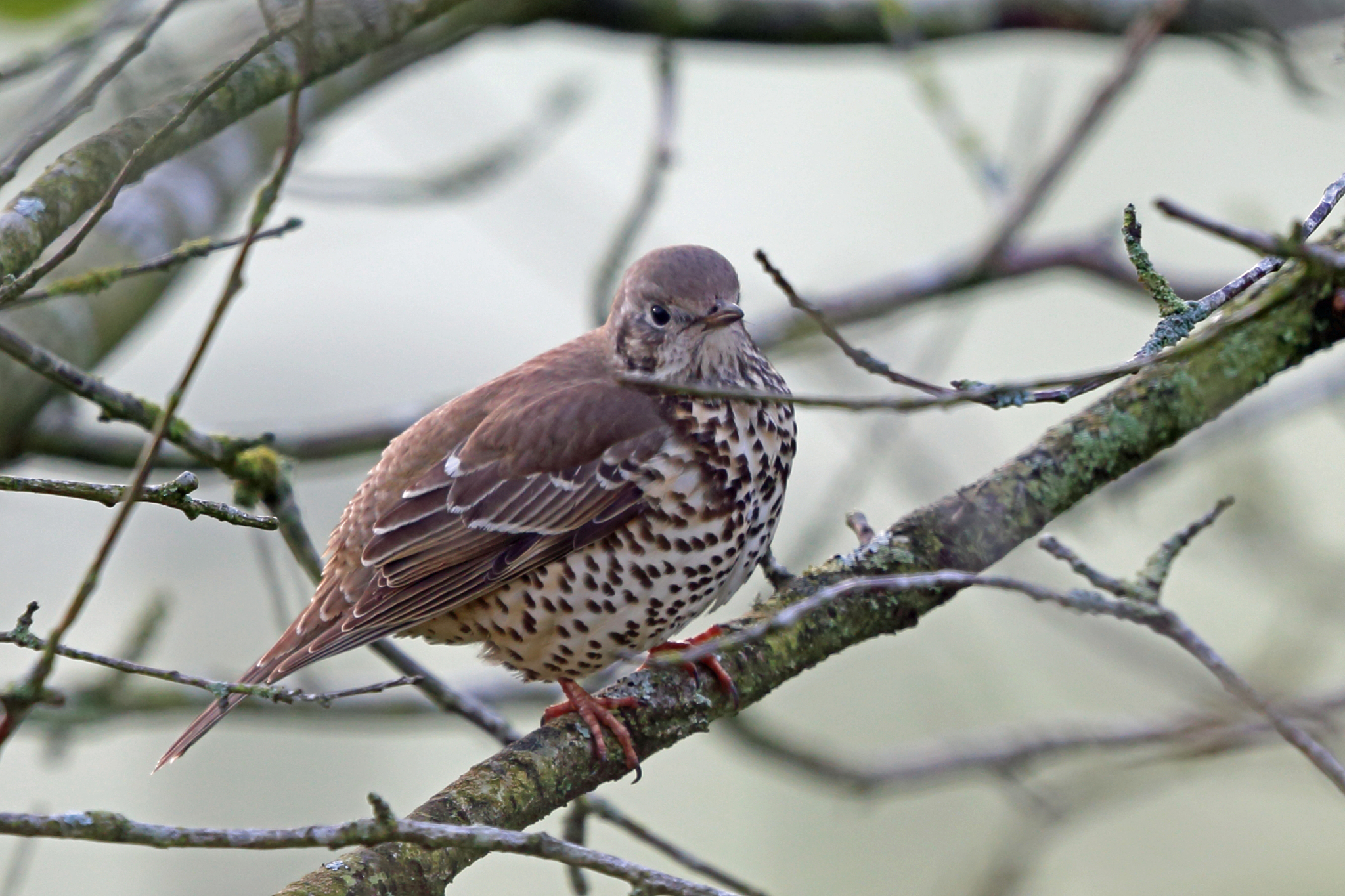
Mistle Thrush (Turdus viscivorus) Mistle Thrush

Media

Loading…

In short

The Common Starling (Sturnus vulgaris) and Mistle Thrush (Turdus viscivorus) can be distinguished by size and plumage. The Mistle Thrush is larger and has a more spotted appearance, while the Common Starling is smaller with iridescent plumage. Both species have distinct vocalizations that can aid in identification.

Identification tips

  1. Size: Look for the larger size of the Mistle Thrush. 2. Plumage: Note the iridescent sheen of the Common Starling versus the spotted appearance of the Mistle Thrush. 3. Behavior: Observe flocking behavior; starlings are more gregarious. 4. Vocalization: Listen for the mimicking song of the starling compared to the fluty song of the thrush.

Size

The Mistle Thrush is noticeably larger than the Common Starling.

Plumage

The Common Starling has iridescent plumage with a sheen that can appear green or purple, especially in sunlight, and is more uniform in color. The Mistle Thrush has a more spotted and mottled appearance with a pale underbelly and dark spots.

Behaviour

Common Starlings are often seen in large, noisy flocks, especially during migration and in winter. Mistle Thrushes are more solitary or seen in pairs, often perching prominently.

Habitat

Both species can be found in open areas, but the Mistle Thrush prefers more wooded habitats, while the Common Starling is more adaptable and often found in urban areas.

Voice

The Common Starling is known for its varied and mimicking song, often incorporating sounds from its environment. The Mistle Thrush has a loud, fluty song that is more melodious and less varied.

Submit a better description

Use the same sections as the comparison. Your text is published immediately.

The Common Starling (Sturnus vulgaris) and Mistle Thrush (Turdus viscivorus) can be distinguished by size and plumage. The Mistle Thrush is larger and has a more spotted appearance, while the Common Starling is smaller with iridescent plumage. Both species have distinct vocalizations that can aid in identification.

  1. Size: Look for the larger size of the Mistle Thrush. 2. Plumage: Note the iridescent sheen of the Common Starling versus the spotted appearance of the Mistle Thrush. 3. Behavior: Observe flocking behavior; starlings are more gregarious. 4. Vocalization: Listen for the mimicking song of the starling compared to the fluty song of the thrush.

The Mistle Thrush is noticeably larger than the Common Starling.

The Common Starling has iridescent plumage with a sheen that can appear green or purple, especially in sunlight, and is more uniform in color. The Mistle Thrush has a more spotted and mottled appearance with a pale underbelly and dark spots.

Common Starlings are often seen in large, noisy flocks, especially during migration and in winter. Mistle Thrushes are more solitary or seen in pairs, often perching prominently.

Both species can be found in open areas, but the Mistle Thrush prefers more wooded habitats, while the Common Starling is more adaptable and often found in urban areas.

The Common Starling is known for its varied and mimicking song, often incorporating sounds from its environment. The Mistle Thrush has a loud, fluty song that is more melodious and less varied.

Discard your changes?

You have unsaved edits. If you leave now, those changes will be lost.

Common Starling · Mistle Thrush · My Tricky Birds